
How the Immortal Jellyfish Cheats Death Through Biology

Ageing is considered one of life's few certainties. Every living creature grows older, becomes weaker and eventually dies. However, hidden beneath the ocean's surface is a tiny jellyfish that appears to break this universal rule. Known as the immortal jellyfish , Turritopsis dohrnii has the astonishing ability to reverse its life cycle when faced with injury, starvation or environmental stress. Instead of continuing towards death, it transforms itself back into a much younger stage of development and begins life all over again. This remarkable process has fascinated scientists for decades and is providing valuable insights into ageing, cell biology and the extraordinary resilience of life.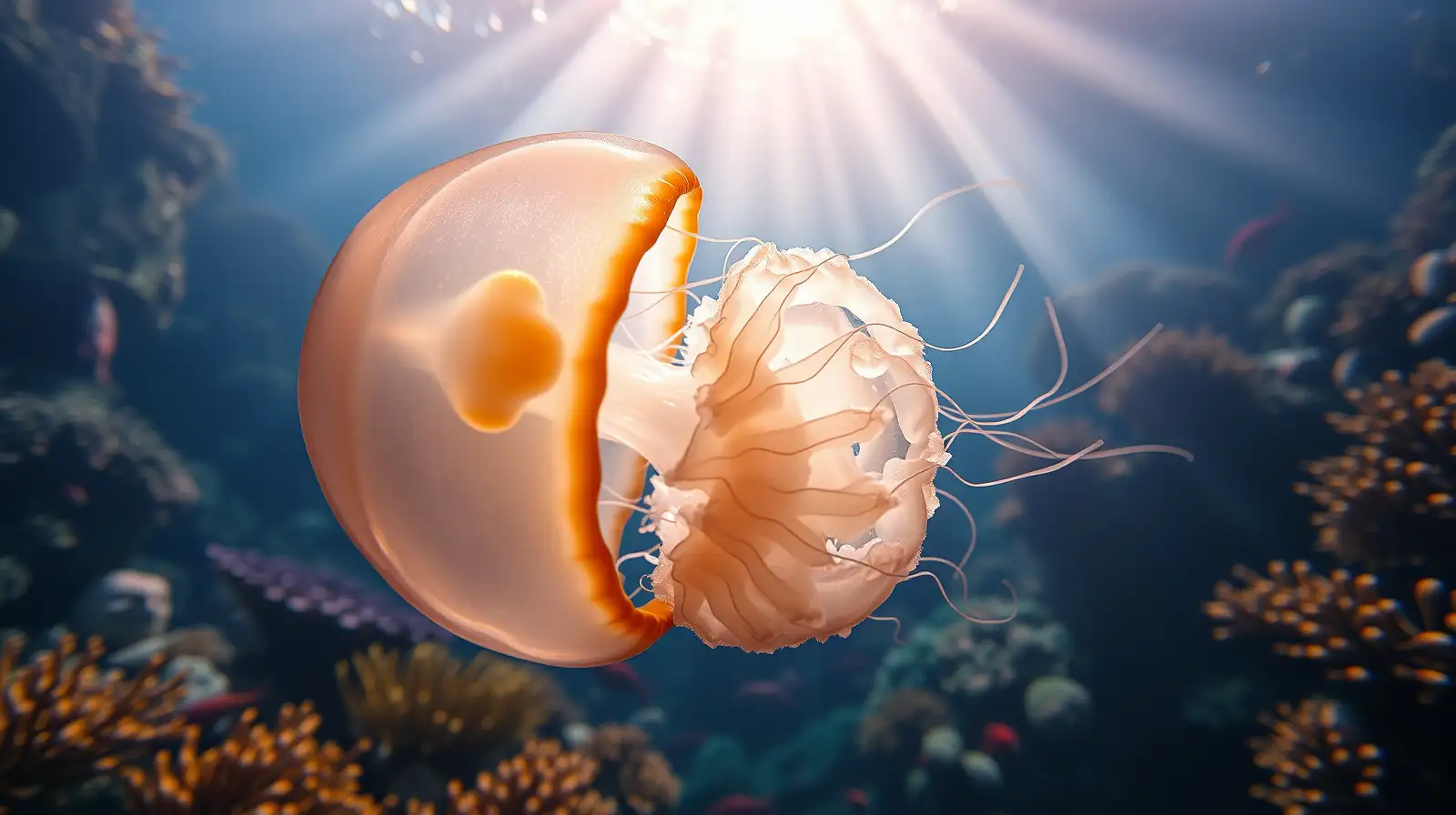
Turritopsis dohrnii follows the same pattern until something extraordinary happens. When conditions become unfavourable, the adult jellyfish can reverse its development instead of dying.
It shrinks, settles onto a surface and transforms back into a juvenile polyp, effectively restarting its entire life cycle.
This phenomenon is unique among known animals.
This allows the jellyfish to rebuild its body from an adult form into a juvenile colony capable of producing new jellyfish.
Scientists believe this cellular flexibility is one of the reasons Turritopsis dohrnii has attracted so much interest from ageing researchers around the world.
Although the jellyfish can repeatedly restart its life cycle, it is not truly invincible. It can still be eaten by predators, die from disease or succumb to environmental changes.
In theory, an individual jellyfish could repeat this rejuvenation process many times under favourable conditions. Laboratory observations have confirmed that the species can cycle between adulthood and youth multiple times.
This makes it one of the few known animals capable of reversing its biological age instead of simply slowing the ageing process.
It remains one of the most remarkable discoveries in marine biology.
Although humans are vastly more complex, insights gained from this tiny jellyfish may eventually contribute to research into regenerative medicine, age-related diseases and tissue repair.
Scientists stress that the goal is not to make humans biologically immortal but to better understand the mechanisms that keep cells healthy.
The jellyfish has become an unexpected source of inspiration for modern biomedical research.
Studying naturally long-lived or biologically unusual animals offers valuable clues about how evolution has solved problems that medicine is still trying to understand.
The immortal jellyfish demonstrates that nature often holds answers in the most unexpected places.
Jellyfish That Can Reverse Their Age
A Life Cycle Unlike Any Other
Most jellyfish begin life as tiny larvae before attaching to a surface and developing into polyps. These polyps eventually produce free-swimming adult jellyfish, known as medusae, which reproduce and complete the life cycle.Turritopsis dohrnii follows the same pattern until something extraordinary happens. When conditions become unfavourable, the adult jellyfish can reverse its development instead of dying.
It shrinks, settles onto a surface and transforms back into a juvenile polyp, effectively restarting its entire life cycle.
This phenomenon is unique among known animals.
How Does It Reverse Ageing ?
The secret lies in a biological process called transdifferentiation. During this process, specialised adult cells change directly into entirely different types of cells without first becoming stem cells.This allows the jellyfish to rebuild its body from an adult form into a juvenile colony capable of producing new jellyfish.
Scientists believe this cellular flexibility is one of the reasons Turritopsis dohrnii has attracted so much interest from ageing researchers around the world.
Although the jellyfish can repeatedly restart its life cycle, it is not truly invincible. It can still be eaten by predators, die from disease or succumb to environmental changes.
Why Scientists Call It the Immortal Jellyfish
The nickname "immortal jellyfish" refers to its ability to escape death from old age rather than its inability to die.In theory, an individual jellyfish could repeat this rejuvenation process many times under favourable conditions. Laboratory observations have confirmed that the species can cycle between adulthood and youth multiple times.
This makes it one of the few known animals capable of reversing its biological age instead of simply slowing the ageing process.
It remains one of the most remarkable discoveries in marine biology.
What This Means for Medical Research
Researchers are studying Turritopsis dohrnii in the hope of understanding how cells repair themselves, regenerate damaged tissue and maintain their function over time.You may also like
- Bathroom smells? This easy salt hack could help freshen your toilet overnight
- FD vs. RD: Which is the True 'Money Partner'? Find Out Which Offers Better Benefits
- UP Solar Panel News: Big news for solar panel users in UP; where does the state stand in electricity generation?
- Australia's Victoria University to Open Campus in India; Classes to Begin in Gurugram from August
- COVID-19: The coronavirus pandemic is striking again. Know how many patients were found in July, have the days of wearing masks arrived?
Although humans are vastly more complex, insights gained from this tiny jellyfish may eventually contribute to research into regenerative medicine, age-related diseases and tissue repair.
Scientists stress that the goal is not to make humans biologically immortal but to better understand the mechanisms that keep cells healthy.
The jellyfish has become an unexpected source of inspiration for modern biomedical research.
Why This Matters Today
As populations around the world continue to age, scientists are searching for better ways to prevent diseases linked to ageing rather than simply extending lifespan.Studying naturally long-lived or biologically unusual animals offers valuable clues about how evolution has solved problems that medicine is still trying to understand.
The immortal jellyfish demonstrates that nature often holds answers in the most unexpected places.






Loving Newspoint? Download the app now
