
The sitcoms we love to judge


When Rainn Wilson said recently that The Office would be difficult to make today, he was not making a new argument. That may be exactly why it travelled so quickly.
“I do feel like you couldn’t make The Office today. I think that would be too hard to be as politically incorrect as the show was,” Wilson, who played Dwight Schrute, told Fox News Digital. The comment returned the sitcom to one of pop culture’s most familiar debates: can older sitcoms survive the scrutiny of a newer, more self-aware audience?
 In the streaming era, they have little choice. Sitcoms no longer end when their final episode airs. They are clipped, memed, reposted, rewatched and tried daily in the court of social media. A Michael Scott joke, a Barney Stinson pick-up line, a Carrie Bradshaw decision or a Lorelai Gilmore parenting choice can become fresh evidence in an old argument.
The shows have remained the same. Their audiences have not.
That is why The Office, Friends , How I Met Your Mother, Sex and the City and Gilmore Girls keep returning to public conversation. Once loved for their warmth, wit, fantasy or comfort, they are now watched through newer ideas of gender, race, work culture, consent, parenting and emotional boundaries.
Dr Shuchi Yadav, Associate Professor at the Centre for Media Studies, JNU, says the claim that older sitcoms could not be made today reflects broader shifts in how audiences consume culture, "Viewers have become much more sensitive. What audiences consume today is far more layered. We've moved towards a more polarised society where everyone has an opinion."
"There is also a greater democratisation of media, which has made consumption more widespread. There is a cultural anxiety that creators need to address. They cannot overlook it," she adds. "They need to navigate this increasingly sensitive climate and tackle issues differently from how creators did two decades ago."
The public rewatch
These shows were never obscure. Friends and The Office were cultural juggernauts, with mass audiences, awards, strong syndication runs and long streaming afterlives. But the experience of watching them has changed.
An episode that might once have been discussed at work or college the next morning is now debated on X, Reddit, Instagram and TikTok. A joke is no longer just a joke; it is a screenshot, a reel, a reaction video, a takedown or a defence. Streaming has made the archive endlessly available. Social media has made the rewatch public.
This second life has altered how several characters are remembered. Gilmore Girls, once celebrated for its mother-daughter bond, is now often reconsidered as a story about blurred emotional boundaries. Lorelai’s cool-mom charm is no longer read only as quirky; to some viewers, it looks careless.

One Reddit user, revisiting the show as an adult, wrote, "I love Lorelai, but the way she treats Rory in the beginning of the series is honestly neglectful and a lot of times selfish. I get the whole 'we’re friends first' but a girl needs a mother."
The reassessment is not limited to one show. Wilson’s comments have revived arguments around The Office, with some viewers suggesting that the issue is not just political incorrectness but a changed understanding of workplace culture. What once seemed absurd about Dunder Mifflin may not feel quite as distant in an age of HR trainings, toxic-boss discourse and workplace burnout.
As one X user put it, “The Office could still be made today. It just wouldn’t seem as funny because it wouldn’t seem as outlandish anymore.”
The internet’s second opinion
Few shows have experienced this second opinion as visibly as Friends. For years, it was treated as comfort television: familiar, funny and endlessly rewatchable. But as younger audiences discovered it on streaming platforms, the show also became a starting point for conversations about racial exclusion, fat jokes, gender stereotypes and queer representation.
Its co-creator Marta Kauffman has since acknowledged some of that criticism. “I’ve learned a lot in the last 20 years,” she told the LA Times in 2022. “Admitting and accepting guilt is not easy. I’m embarrassed that I didn’t know better 25 years ago.”
How I Met Your Mother, once seen by many as the next Friends, has faced a similar reassessment. Much of the criticism centres on Barney Stinson, who was once treated as a breakout comic figure and is now described as misogynistic.
One Reddit user wrote after a rewatch, “I cannot wrap my head around the way Ted and Barney approach women. A lot of problematic and misogynist stuff casually written as jokes.”
Co-creator Craig Thomas has defended the character on X, arguing that Barney was written as a parody of toxic masculinity rather than an endorsement of it. “Barney was always written as a parody of toxic masculinity,” he wrote, adding that the show spent nine seasons showing his evolution.
But that defence also reveals one of the central problems of older sitcoms: the gap between intention and reception. A character written as satire can still be consumed, quoted and loved without irony. The rewatch asks not only what the writers meant, but what the audience absorbed.
Sex and the City has endured a similar fate. Its fashion, friendships and frank conversations about women’s desire remain influential. Yet Carrie Bradshaw, once positioned as aspirational, is now one of television’s most frequently dissected protagonists.
Sarah Jessica Parker has questioned why Carrie attracts such particular condemnation. “It’s always interesting to me that (Carrie is) so condemned, but a male lead on a show can be a murderer, and people love him,” she told HuffPost UK in 2025. Still, she also acknowledged the force of that response, saying strong feelings, positive or negative, are evidence of connection.
That may be the point. These characters endure not because they are beyond criticism, but because viewers still care enough to argue about them.
Critique is not cancellation
The easiest reading of these debates is that old sitcoms are being “cancelled.” But the evidence suggests something more complicated. These shows have not disappeared. They are still streamed, quoted, memed and recommended. In some cases, the criticism has only made them more visible.
What has changed is the way viewers relate to them. The modern audience is often capable of holding two reactions at once: affection and discomfort. A viewer may still find Friends comforting while noticing its lack of diversity. They may laugh at The Office while recognising the cruelty of Michael Scott’s behaviour. They may enjoy Sex and the City while finding Carrie selfish, class-blind or emotionally reckless.
The internet has not killed these shows. It has turned them into shared cultural archives, where each generation returns to measure what it finds funny, forgivable or embarrassing.
Some of that endurance comes from how streaming platforms and social media keep recirculating old television for new audiences. Media behaviour expert Pamela Rutledge told the Rolling Stones in 2023 that short-form clips can encourage viewers to engage more deeply with the original content. "Your brain is being rewarded by this continual watch and reward and, you know, finding out what's going on. So it's perfectly happy to just go along and watch another one," she said while discussing the resurgence of older television shows on TikTok.
"I don't see this as a lack of attention. I see this as people facing a buffet of choice and personalizing their experience," Rutledge said.
So it appears that criticism has not pushed these sitcoms away from relevance. If anything, the platforms that host these discussions help in keeping the shows alive.
Why viewers keep coming back
Despite the criticism, these conversations rarely lead to a simple rejection of the shows. In many cases, they fuel more rewatches. Fans return with affection and discomfort at the same time.
For some, the appeal lies in nostalgia. For others, it is the rhythm of the sitcom itself: familiar apartments, recurring jokes, characters who remain unchanged even when the viewer’s own life has moved on.
Unnati Dixit, a marketing student in her 20s, says it is too easy to judge a 1990s show through a 2026 lens. “Friends featured a lesbian couple as recurring characters, depicted a lesbian wedding on prime-time television, and promoted emotional openness in ways that weren’t always common at the time,” she says.
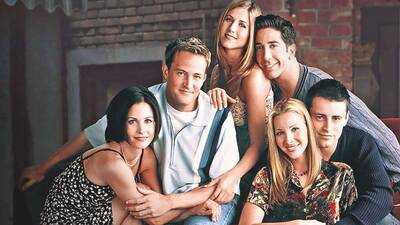
“The reason I keep returning to it isn’t that I agree with every joke or storyline,” she adds. “Trends change, humour evolves, but the desire for connection and belonging doesn’t.”
Anushka Dey, an investment planner in her early 30s, feels similarly. “Friends and even SATC were made in the 90s, and people were not so politically correct at that time. Same with Gilmore Girls. A lot of people will say the bond between Lorelai and Rory is toxic. But the language we speak today is very new. Judging a past show through that lens will only reveal its problematic parts. The idea is to be critical without being judgmental.”
For Smita Singh, an educator in her 40s, the return to Friends is less intellectual and more emotional. “It is a vessel for personal memory,” she says. “Like comfort food, what you want to have when you are happy or sad. And like you don’t see sugar and fat when you are indulging, you don’t question racial diversity or other serious issues in your go-to sitcom very actively.”
In other words, viewers are not always choosing between love and critique. Increasingly, they are doing both.
What are we really debating?
The debates around these sitcoms are rarely only about the shows. They are about the values viewers bring to them now.
A conversation about Barney Stinson becomes a conversation about consent and the treatment of women. A takedown of Carrie Bradshaw becomes a debate about whether flawed female characters are allowed the same grace as flawed male ones. A rewatch of Friends becomes a way of discussing who was visible in mainstream television and who was not. A debate about The Office becomes a question about whether discomfort can still be funny.
That is why Wilson’s comment landed so neatly. “You couldn’t make this today” has become shorthand for a larger anxiety: that comedy, once treated as a place of exaggeration and bad behaviour, now has to answer to a more self-aware audience.
But contemporary comedy has not disappeared. It has changed its targets. Shows such as Abbott Elementary, Hacks, Superstore, Derry Girls, Schitt’s Creek and Fleabag still build humour around flawed people, awkwardness and discomfort. What has shifted is the framing. The joke is more likely to punch at systems, self-delusion or hypocrisy than at identities that earlier sitcoms treated casually.
That does not mean comedy has become more restricted. Mike Schur, creator of shows such as The Good Place and a writer-producer on The Office (US), has stated that comedy often evolves with its audience. In an interview with news.com.au in 2021, Schur said, "No, (political correctness and cancel culture) are not strangling. It’s never been easier and better to be a comedy writer in America or the world. There’s never been a generation that didn’t complain about the generation that came after it, and that’s all that this is. You can be edgy and you can tell great stories and you can be really funny without objectifying people or making them feel less than. And that’s always been true."
“I do feel like you couldn’t make The Office today. I think that would be too hard to be as politically incorrect as the show was,” Wilson, who played Dwight Schrute, told Fox News Digital. The comment returned the sitcom to one of pop culture’s most familiar debates: can older sitcoms survive the scrutiny of a newer, more self-aware audience?
The shows have remained the same. Their audiences have not.
That is why The Office, Friends , How I Met Your Mother, Sex and the City and Gilmore Girls keep returning to public conversation. Once loved for their warmth, wit, fantasy or comfort, they are now watched through newer ideas of gender, race, work culture, consent, parenting and emotional boundaries.
Dr Shuchi Yadav, Associate Professor at the Centre for Media Studies, JNU, says the claim that older sitcoms could not be made today reflects broader shifts in how audiences consume culture, "Viewers have become much more sensitive. What audiences consume today is far more layered. We've moved towards a more polarised society where everyone has an opinion."
"There is also a greater democratisation of media, which has made consumption more widespread. There is a cultural anxiety that creators need to address. They cannot overlook it," she adds. "They need to navigate this increasingly sensitive climate and tackle issues differently from how creators did two decades ago."
The public rewatch
These shows were never obscure. Friends and The Office were cultural juggernauts, with mass audiences, awards, strong syndication runs and long streaming afterlives. But the experience of watching them has changed.
This second life has altered how several characters are remembered. Gilmore Girls, once celebrated for its mother-daughter bond, is now often reconsidered as a story about blurred emotional boundaries. Lorelai’s cool-mom charm is no longer read only as quirky; to some viewers, it looks careless.
One Reddit user, revisiting the show as an adult, wrote, "I love Lorelai, but the way she treats Rory in the beginning of the series is honestly neglectful and a lot of times selfish. I get the whole 'we’re friends first' but a girl needs a mother."
The reassessment is not limited to one show. Wilson’s comments have revived arguments around The Office, with some viewers suggesting that the issue is not just political incorrectness but a changed understanding of workplace culture. What once seemed absurd about Dunder Mifflin may not feel quite as distant in an age of HR trainings, toxic-boss discourse and workplace burnout.
The internet’s second opinion
Few shows have experienced this second opinion as visibly as Friends. For years, it was treated as comfort television: familiar, funny and endlessly rewatchable. But as younger audiences discovered it on streaming platforms, the show also became a starting point for conversations about racial exclusion, fat jokes, gender stereotypes and queer representation.
How I Met Your Mother, once seen by many as the next Friends, has faced a similar reassessment. Much of the criticism centres on Barney Stinson, who was once treated as a breakout comic figure and is now described as misogynistic.
One Reddit user wrote after a rewatch, “I cannot wrap my head around the way Ted and Barney approach women. A lot of problematic and misogynist stuff casually written as jokes.”
Co-creator Craig Thomas has defended the character on X, arguing that Barney was written as a parody of toxic masculinity rather than an endorsement of it. “Barney was always written as a parody of toxic masculinity,” he wrote, adding that the show spent nine seasons showing his evolution.
Sex and the City has endured a similar fate. Its fashion, friendships and frank conversations about women’s desire remain influential. Yet Carrie Bradshaw, once positioned as aspirational, is now one of television’s most frequently dissected protagonists.
Critique is not cancellation
The easiest reading of these debates is that old sitcoms are being “cancelled.” But the evidence suggests something more complicated. These shows have not disappeared. They are still streamed, quoted, memed and recommended. In some cases, the criticism has only made them more visible.
Some of that endurance comes from how streaming platforms and social media keep recirculating old television for new audiences. Media behaviour expert Pamela Rutledge told the Rolling Stones in 2023 that short-form clips can encourage viewers to engage more deeply with the original content. "Your brain is being rewarded by this continual watch and reward and, you know, finding out what's going on. So it's perfectly happy to just go along and watch another one," she said while discussing the resurgence of older television shows on TikTok.
"I don't see this as a lack of attention. I see this as people facing a buffet of choice and personalizing their experience," Rutledge said.
So it appears that criticism has not pushed these sitcoms away from relevance. If anything, the platforms that host these discussions help in keeping the shows alive.
Why viewers keep coming back
Despite the criticism, these conversations rarely lead to a simple rejection of the shows. In many cases, they fuel more rewatches. Fans return with affection and discomfort at the same time.
Unnati Dixit, a marketing student in her 20s, says it is too easy to judge a 1990s show through a 2026 lens. “Friends featured a lesbian couple as recurring characters, depicted a lesbian wedding on prime-time television, and promoted emotional openness in ways that weren’t always common at the time,” she says.
“The reason I keep returning to it isn’t that I agree with every joke or storyline,” she adds. “Trends change, humour evolves, but the desire for connection and belonging doesn’t.”
Anushka Dey, an investment planner in her early 30s, feels similarly. “Friends and even SATC were made in the 90s, and people were not so politically correct at that time. Same with Gilmore Girls. A lot of people will say the bond between Lorelai and Rory is toxic. But the language we speak today is very new. Judging a past show through that lens will only reveal its problematic parts. The idea is to be critical without being judgmental.”
What are we really debating?
The debates around these sitcoms are rarely only about the shows. They are about the values viewers bring to them now.
A conversation about Barney Stinson becomes a conversation about consent and the treatment of women. A takedown of Carrie Bradshaw becomes a debate about whether flawed female characters are allowed the same grace as flawed male ones. A rewatch of Friends becomes a way of discussing who was visible in mainstream television and who was not. A debate about The Office becomes a question about whether discomfort can still be funny.
But contemporary comedy has not disappeared. It has changed its targets. Shows such as Abbott Elementary, Hacks, Superstore, Derry Girls, Schitt’s Creek and Fleabag still build humour around flawed people, awkwardness and discomfort. What has shifted is the framing. The joke is more likely to punch at systems, self-delusion or hypocrisy than at identities that earlier sitcoms treated casually.
That does not mean comedy has become more restricted. Mike Schur, creator of shows such as The Good Place and a writer-producer on The Office (US), has stated that comedy often evolves with its audience. In an interview with news.com.au in 2021, Schur said, "No, (political correctness and cancel culture) are not strangling. It’s never been easier and better to be a comedy writer in America or the world. There’s never been a generation that didn’t complain about the generation that came after it, and that’s all that this is. You can be edgy and you can tell great stories and you can be really funny without objectifying people or making them feel less than. And that’s always been true."
Next Story