
The Surprising Connection Between Your Skin and Your Perfume

Perfume is usually thought of as the final touch before leaving home, something sprayed on the wrists, neck or clothing to create a pleasant scent. But the relationship between fragrance and skin is much more complicated. Your skin can influence how perfume develops, how long it lasts and even whether it causes irritation. Moisture, natural oils, skincare products and the condition of the skin barrier all have a role. That means the same fragrance may smell subtly different from one person to another. It also explains why changing your skincare routine can unexpectedly change the way your favourite perfume performs.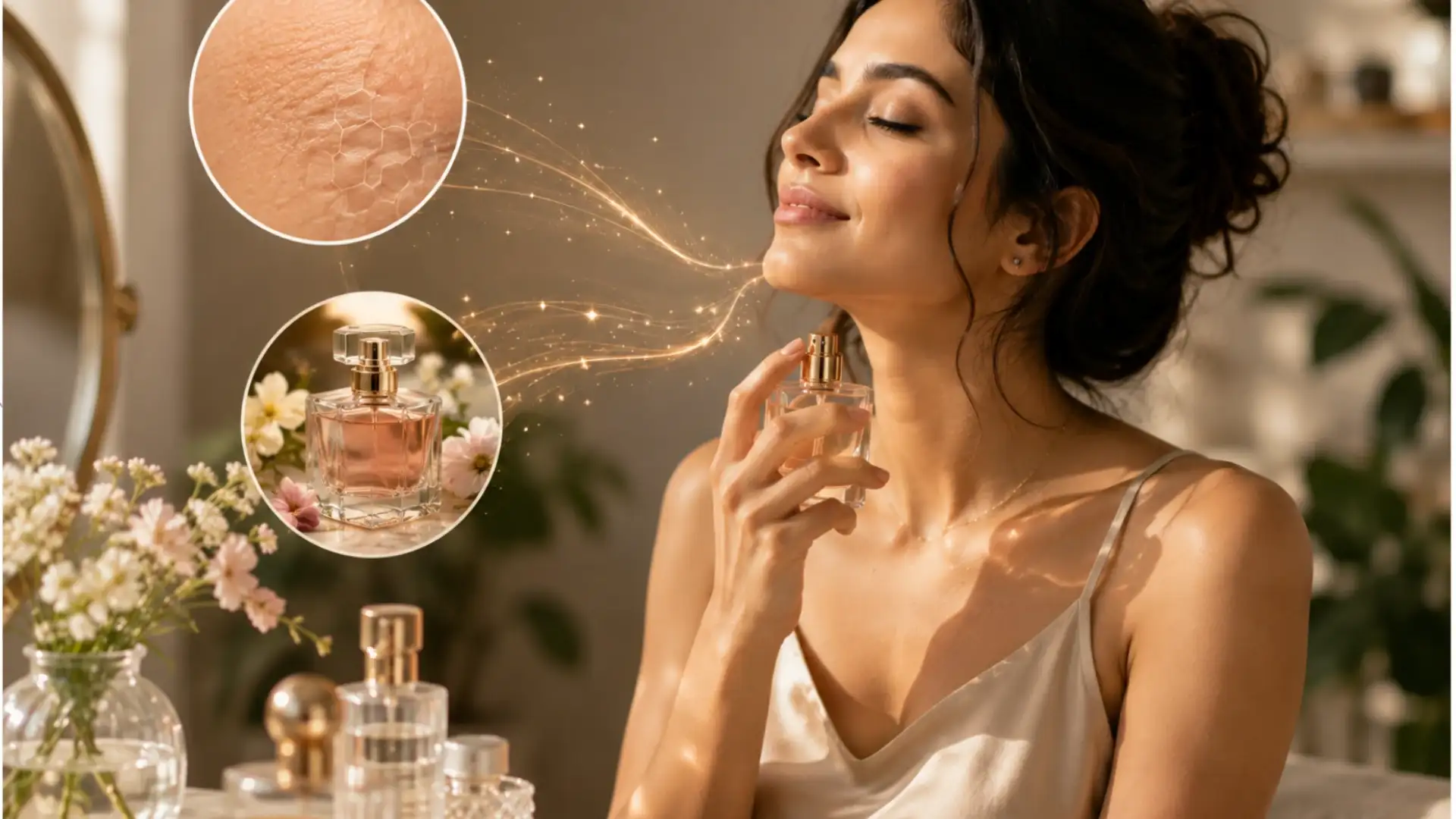
Natural skin oils can influence how fragrance develops and how long certain notes remain noticeable. Dry skin, meanwhile, may provide less of an oily surface for fragrance to cling to, which can make a scent seem shorter-lived.
This does not mean dry skin makes perfume disappear instantly, but it can influence its performance.
This approach is particularly useful for people with dry skin. Dermatologists recommend applying moisturiser after bathing while the skin is still damp to help retain moisture.
However, strongly scented body lotions can compete with your perfume and alter its overall character.
People with sensitive skin may therefore prefer fragrance-free skincare products and avoid applying perfume directly to irritated or broken skin.
If your perfume suddenly smells different, check what else you are putting on your skin. If your skin becomes itchy or irritated after using fragrance, stop using the suspected product and consider speaking to a dermatologist.
Ultimately, perfume is not simply something you wear. It becomes part of an interaction between fragrance, skin and environment, which is why the same bottle can tell a slightly different story every time.
Your Skin Is Part of the Fragrance Experience
Perfume is made from a mixture of aromatic substances that evaporate at different speeds. Once applied to the skin, these compounds interact with the skin's surface and gradually become airborne.Natural skin oils can influence how fragrance develops and how long certain notes remain noticeable. Dry skin, meanwhile, may provide less of an oily surface for fragrance to cling to, which can make a scent seem shorter-lived.
This does not mean dry skin makes perfume disappear instantly, but it can influence its performance.
Moisturiser Can Help Fragrance Last
One practical trick is to moisturise before applying perfume. An unscented moisturiser creates a more comfortable, conditioned surface without introducing another strong fragrance.You may also like
- "Why wouldn't he?”: Akshay Kumar says his son Aarav is working for Rs 4,500 while learning fashion; the parenting lesson Indian parents can take from it
- PM SVANidhi Yojana: Street vendors and hawkers can also get a credit card—here's the process..
- Green leafy vegetables are beneficial for health, but take these necessary precautions during the rainy season..
- Hariyali Teej 2026: Have you also observed the Savani Teej fast? It is incomplete without these 3 vows..
- Who is Captain Sonia Singh Chauhan? The army officer who assisted PM Modi in hoisting the flag at the 80th Independence Day celebrations
This approach is particularly useful for people with dry skin. Dermatologists recommend applying moisturiser after bathing while the skin is still damp to help retain moisture.
However, strongly scented body lotions can compete with your perfume and alter its overall character.
Perfume Can Also Affect Your Skin
The relationship works in the opposite direction too. Fragrance ingredients can irritate some people's skin or trigger allergic contact dermatitis. DermNet notes that fragrances are among the common causes of cosmetic contact dermatitis, with reactions potentially including redness, itching and dryness.People with sensitive skin may therefore prefer fragrance-free skincare products and avoid applying perfume directly to irritated or broken skin.
Why This Matters in Everyday Life
The growing popularity of layered skincare and fragrance routines makes this connection particularly relevant. A scented cleanser, body lotion, hair product and perfume can create a surprisingly complicated mixture of aromas.If your perfume suddenly smells different, check what else you are putting on your skin. If your skin becomes itchy or irritated after using fragrance, stop using the suspected product and consider speaking to a dermatologist.
Ultimately, perfume is not simply something you wear. It becomes part of an interaction between fragrance, skin and environment, which is why the same bottle can tell a slightly different story every time.






Loving Newspoint? Download the app now
