
Why Indians Celebrate Good News with Mithai: The Custom of Muh Meetha

A promotion letter lands in the inbox. Before the phone calls are made, before the celebration is planned, someone is already asking: mithai kahan se laayein? The custom moves faster than the decision to follow it. That speed is the first clue that muh meetha karna is not a polite formality, it is a reflex with deep roots.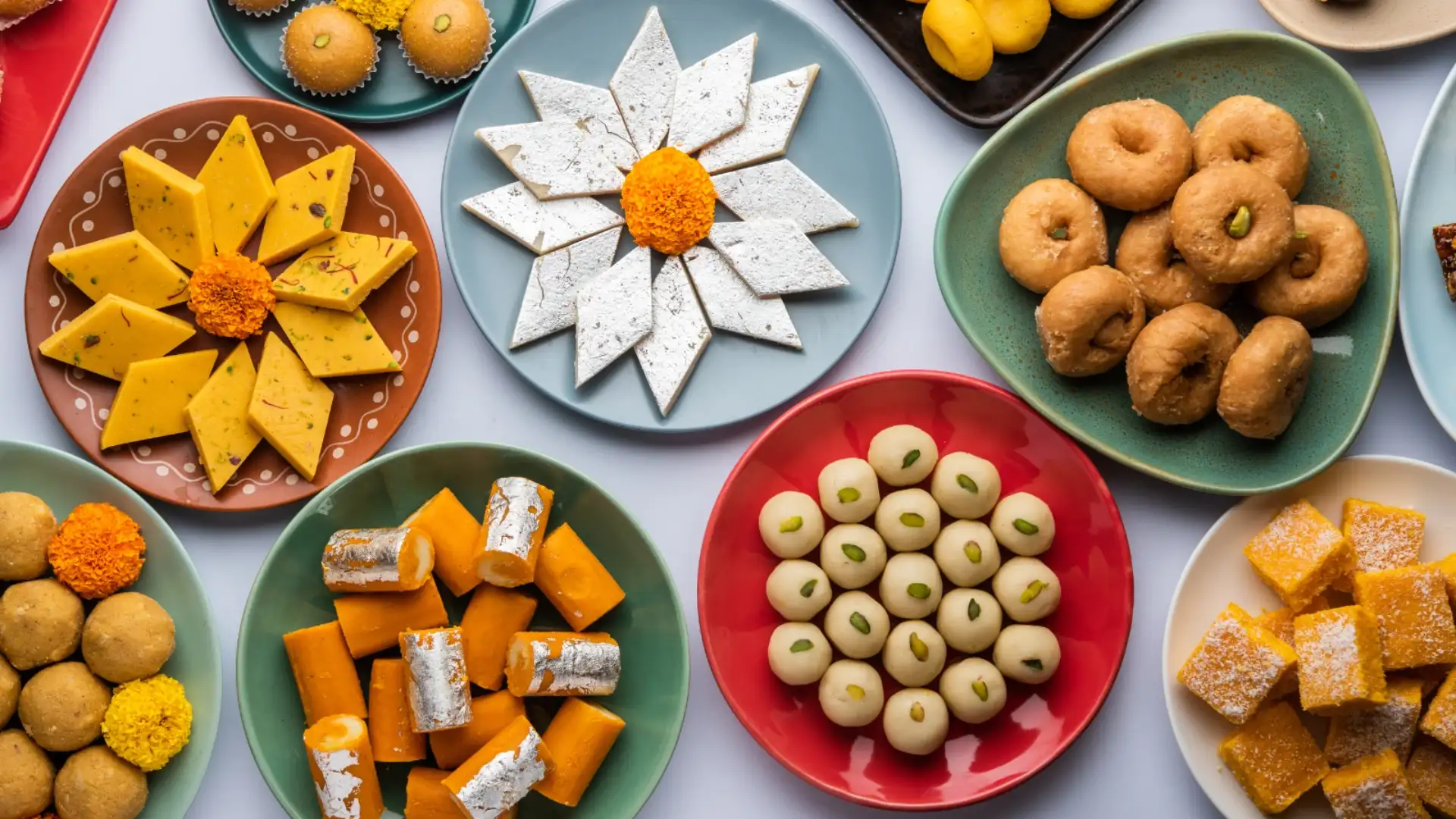
What the Phrase Actually Means
Muh meetha karna translates literally as "to sweeten the mouth." But in everyday use it means something closer to marking a moment as good. The sweet is not a gift in the usual sense. It is a signal, to the person receiving it and to everyone watching, that something worth celebrating has happened. The act of placing something sweet in someone's mouth, or handing them a piece and watching them eat it, is a small ritual of shared acknowledgment. The news becomes real when the mithai is distributed.The Ritual Logic Behind Sweetness
In Indian ceremonial life, sweetness has long carried a specific meaning. Prasad offered at a temple is sweet, modak, ladoo, peda, because sweetness signals auspiciousness, not indulgence. The logic runs through Ayurvedic thinking too, where the madhura rasa, the sweet taste, is associated with nourishment, satisfaction, and the completion of something. When a ritual begins or ends well, something sweet marks the boundary. Muh meetha borrows this grammar. It places an ordinary piece of news inside the same frame as a religious offering, not with the same solemnity, but with the same underlying idea that a good thing deserves a sweet punctuation.How the Body Responds to Sweetness
There is also something straightforwardly physical happening. Sugar triggers the release of dopamine, the brain's signal for reward and pleasure. Sharing something sweet at the moment of good news links the two experiences in memory. The taste and the feeling arrive together, and the mind files them that way. This is not a modern discovery, it is a pattern that cultures around the world stumbled onto independently, which is why sweets appear at celebrations from Eid to Diwali to a Greek wedding. The Indian tradition simply named it and made it a deliberate act rather than an incidental one.What Gets Chosen and Why It Varies
The choice of mithai is rarely random. A birth in the family traditionally calls for something yellow, kesar peda, motichoor ladoo, because yellow carries associations with prosperity and new beginnings in many North Indian households. A wedding announcement might warrant something more elaborate: a box of mixed sweets from a halwai, presented with both hands. In South Indian households, the equivalent custom often involves payasam or a piece of jaggery rather than a shop-bought sweet, because the sweetness matters more than the form. In Gujarati homes, a small piece of sugar crystal, sakar, is sometimes enough. The custom holds across regions; the ingredient shifts with what each community already considers auspicious.Why the Custom Has Stayed
Muh meetha survives because it does something that words alone cannot. Good news, announced plainly, can feel abstract. The sweet makes it physical and shared. The person who hands over the mithai has to be present. The person who receives it has to stop and acknowledge the moment. For a few seconds, both people are doing the same thing at the same time, which is what a celebration actually is before it becomes an event. The custom also travels well, a small box of ladoos carries across a neighbourhood, an office floor, a family WhatsApp group turned into a doorbell. It scales from one person to a hundred without losing its meaning. That combination of simplicity, physicality, and shared acknowledgment is why a custom this old still moves faster than the decision to follow it.Next Story