
5 Reasons Saffron Has Been India's Most Treasured Spice for Centuries

Pull a pinch of saffron from its tin and hold it to the light. Each thread is the dried stigma of a crocus flower, hand-picked before dawn during a harvest window that lasts barely two weeks a year. It takes roughly 150,000 flowers to fill a single kilogram. That labour, that fragility, and that concentrated intensity of flavour and colour are what make saffron unlike anything else in an Indian spice cabinet.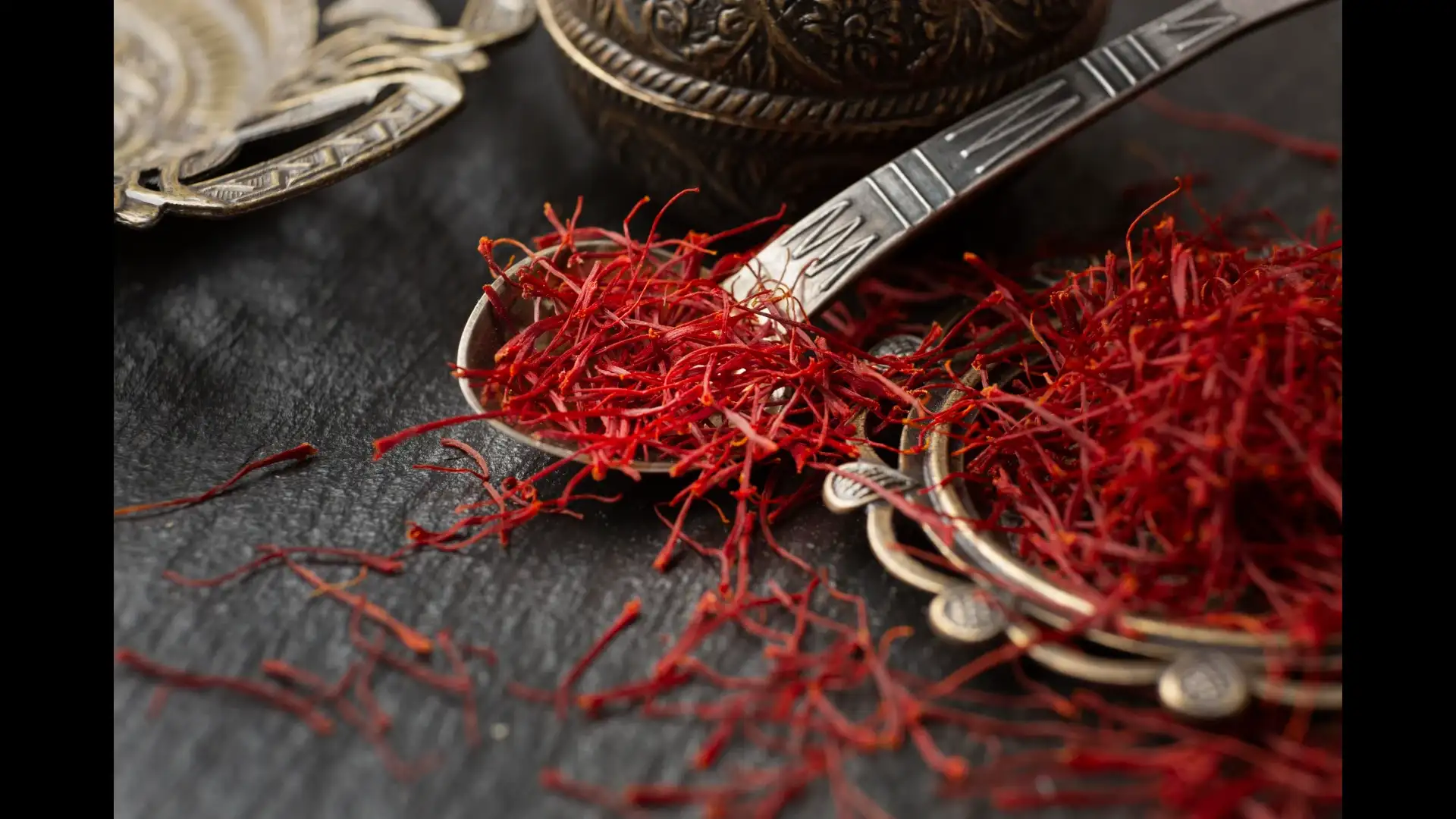
The harvest is done in the early morning, families working through rows of purple flowers in the cold, and the stigmas are separated and dried the same day. This is why saffron is expensive wherever it is sold, and why the Kashmiri variety carries a particular reputation: the altitude, the soil, and the cold nights produce a thread with a higher concentration of the compound crocin, which is responsible for the depth of colour it releases.
In Indian cooking, that gold has always carried meaning beyond aesthetics. Kesari, the Sanskrit and Hindi word for saffron, is also the word for the colour itself, a saffron robe, a saffron flag. The colour is embedded in the language because the spice arrived early enough to name the shade.
Artificial saffron flavouring in cheap products smells sweet and flat, nothing like the real thing. Indian cooks know this, which is why the spice is used in small, precise quantities, a few threads in a kheer, a quarter-teaspoon of steeped liquid in a biryani, rather than by the spoonful. The restraint is part of the craft. Too much saffron and the dish turns medicinal; the right amount and the flavour sits just below conscious recognition, lifting everything around it.
In Kashmiri Pandit cooking, it goes into the wedding rice. In Rajasthani tradition, a pinch finds its way into the milk offered to guests of honour. Across these contexts, royal, devotional, ceremonial, saffron's role is consistent: it marks an occasion as significant. Its cost made it a natural signal of care and respect, and that association has lasted long enough to become cultural reflex. When a family adds saffron to a dish today, they are often continuing a habit that predates anyone alive who taught it to them.
The warmth of the milk releases the fat-soluble compounds in saffron more efficiently than cold liquid would. The colour deepens, the aroma opens, and the resulting drink is genuinely pleasant in a way that is hard to explain to someone who has not had it. Whether or not the specific health claims attached to it hold up to scrutiny, the drink itself has survived because it works as an experience, warming, fragrant, and distinctly comforting.
That longevity in daily life, across centuries and across communities that otherwise cook very differently, says something about how deeply the spice has rooted itself in Indian domestic culture. Saffron is expensive enough that using it is always a small act of generosity. That is probably why it has never stopped meaning something.
It Comes from One of the World's Most Demanding Harvests
In India, saffron grows almost entirely in the Pampore region of Kashmir, a stretch of land sometimes called the saffron bowl of the world. The Crocus sativus plant blooms for only a few weeks in autumn. Each flower holds three stigmas, and they must be picked by hand within hours of the flower opening, delay means the stigmas wilt and the volatile compounds that give saffron its aroma begin to break down. No machine has replaced the human hand here.The harvest is done in the early morning, families working through rows of purple flowers in the cold, and the stigmas are separated and dried the same day. This is why saffron is expensive wherever it is sold, and why the Kashmiri variety carries a particular reputation: the altitude, the soil, and the cold nights produce a thread with a higher concentration of the compound crocin, which is responsible for the depth of colour it releases.
The Colour It Gives Is Unlike Any Other Natural Dye
Steep a few threads in warm water or warm milk for twenty minutes and the liquid turns a deep, clear amber-gold. That colour comes from crocin, a water-soluble carotenoid pigment. What makes it unusual is the intensity: a fraction of a gram colours an entire pot of biryani or a cup of milk evenly and permanently. No other natural food colourant achieves this at such a low quantity.In Indian cooking, that gold has always carried meaning beyond aesthetics. Kesari, the Sanskrit and Hindi word for saffron, is also the word for the colour itself, a saffron robe, a saffron flag. The colour is embedded in the language because the spice arrived early enough to name the shade.
Its Flavour Cannot Be Faked or Substituted
Saffron's flavour comes from two compounds working together: safranal, which gives the floral, slightly medicinal aroma, and picrocrocin, which gives the faint bitterness that keeps the fragrance from being cloying. Together they produce something that is instantly recognisable and impossible to replicate with any other spice. Turmeric gives colour but none of the fragrance.Artificial saffron flavouring in cheap products smells sweet and flat, nothing like the real thing. Indian cooks know this, which is why the spice is used in small, precise quantities, a few threads in a kheer, a quarter-teaspoon of steeped liquid in a biryani, rather than by the spoonful. The restraint is part of the craft. Too much saffron and the dish turns medicinal; the right amount and the flavour sits just below conscious recognition, lifting everything around it.
It Has Moved Through Kitchens, Courts, and Rituals for Centuries
Saffron appears in Sanskrit texts as a dye and a flavouring. Mughal court records describe its use in biryanis, halwas, and sherbets served to royalty. It coloured the robes of Buddhist monks and the offerings placed before deities.In Kashmiri Pandit cooking, it goes into the wedding rice. In Rajasthani tradition, a pinch finds its way into the milk offered to guests of honour. Across these contexts, royal, devotional, ceremonial, saffron's role is consistent: it marks an occasion as significant. Its cost made it a natural signal of care and respect, and that association has lasted long enough to become cultural reflex. When a family adds saffron to a dish today, they are often continuing a habit that predates anyone alive who taught it to them.
The Tradition of Saffron Milk Carries Its Own Quiet Logic
Across India, saffron steeped in warm milk, kesar doodh, is given to guests, to children on cold mornings, and to those recovering from illness. The practice is old enough that its origins are hard to pin to a single tradition; it appears in Ayurvedic texts, in household custom, and in regional folk medicine across very different parts of the country.The warmth of the milk releases the fat-soluble compounds in saffron more efficiently than cold liquid would. The colour deepens, the aroma opens, and the resulting drink is genuinely pleasant in a way that is hard to explain to someone who has not had it. Whether or not the specific health claims attached to it hold up to scrutiny, the drink itself has survived because it works as an experience, warming, fragrant, and distinctly comforting.
That longevity in daily life, across centuries and across communities that otherwise cook very differently, says something about how deeply the spice has rooted itself in Indian domestic culture. Saffron is expensive enough that using it is always a small act of generosity. That is probably why it has never stopped meaning something.
Next Story