
Why a Traditional Bengali Meal Moves from Bitter to Sweet

A Bengali meal has a direction. It moves. Sit down at a proper thali and the first thing placed before you isn't the fish curry or the dal, it's shukto, a bitter-vegetable medley cooked in mustard and milk, or a plate of fried neem leaves, or bitter gourd prepared simply. The meal closes, always, with something sweet: mishti doi, a rasgolla, a slice of sandesh. Between those two poles, the courses follow a sequence that has stayed largely intact across generations.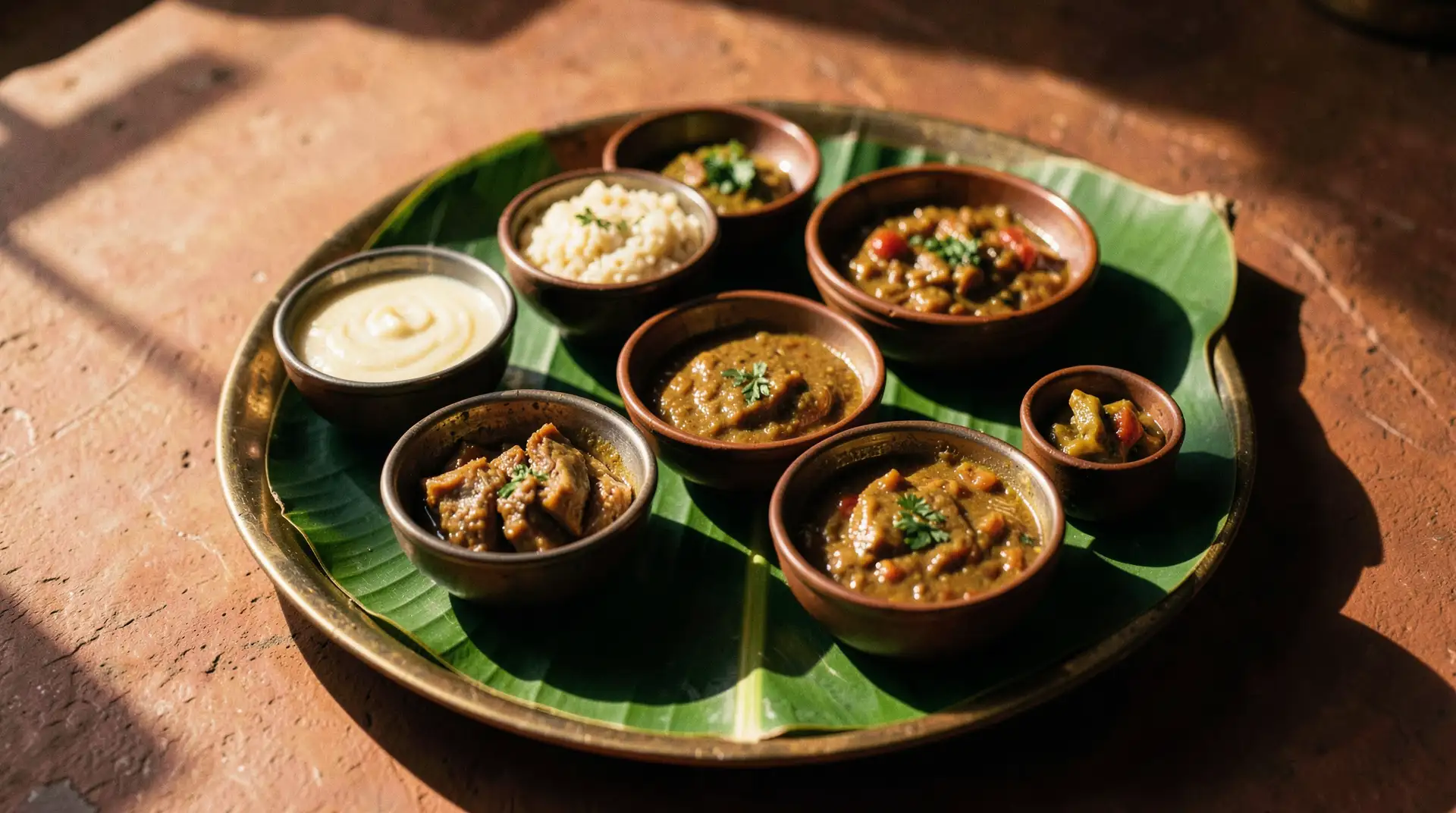
The Bitter Beginning and What It Does
Shukto is the canonical opener of a formal Bengali meal. It contains bitter gourd, drumstick, raw banana, and other vegetables, brought together with mustard paste and finished with a little milk. The bitterness is real and intentional. In Ayurvedic tradition, bitter tastes are understood to kindle digestive fire, to wake the stomach up before heavier food arrives. Whether or not one accepts that framework, the physiology underneath it is sound: bitter compounds stimulate bile production and prime the digestive system for the work ahead. Starting a meal with the hardest thing to digest, fried fish, mustard-heavy curries, rich dal, before the stomach is ready creates a different kind of burden. Shukto, in this reading, is preparation, not punishment.The Middle Courses and Their Logic
After the bitter opener, the meal builds in richness. Dal comes next, typically a light masoor or moong, followed by a fried vegetable preparation, then fish, and in a full meal, meat toward the end. The movement from light to heavy mirrors how digestion actually works: the gut handles simpler foods first and is better equipped for complex proteins and fats once it is fully engaged. The fried preparations, beguni, aloo bhaja, appear not as starters in the Western sense but as textural counterpoints mid-meal, giving the palate a rest between liquid courses. Each course has a position and a reason for that position. Swapping them doesn't merely change the experience; it changes how the body processes the meal.Chutney as the Bridge
Just before the sweet arrives, a Bengali meal places chutney, usually tomato, tamarind, or raw mango, cooked with a little sugar and sometimes dried fruit. This is the trans jitional course, and it does something specific. The sourness and mild sweetness of chutney signals the stomach that the savoury portion is over. It also cleanses the palate of mustard oil, fish, and spice, so the sweet that follows reads cleanly. In a long meal, chutney is the comma before the full stop. Papor, papadum, often accompanies it, adding a dry, crunchy note that further clears the mouth. The sequence bitter, savoury, sour, sweet is not four separate experiences. It is one arc.Why the Meal Ends Sweet
The Bengali relationship with mishti, sweets, runs deep enough that it shapes the structure of the meal itself. But the placement of sweetness at the close is not only cultural affection. Sweetness after a full savoury meal has a settling effect. In Ayurvedic thought, sweet taste is considered grounding and satisfying, it signals completion to the body in a way that savoury alone does not. There is also a practical reason: ending with a small, sweet, often dairy-based preparation, mishti doi is set yoghurt sweetened with date palm jaggery, introduces probiotics and a mild acidity that aids the digestion of everything that came before it. The sweet is not a reward. It is the last functional step.What the Sequence Preserves
This meal structure developed in a climate and a food culture where preservation mattered, where mustard oil was the dominant fat, where fish was the primary protein, and where seasonal vegetables, many of them bitter, were the foundation of daily eating. The sequence encoded practical knowledge about digestion into something that felt like tradition. Families passed it on not as a health protocol but as the correct way to eat. The knowledge survived because the form survived. A Bengali grandmother who insists the dal must come before the fish is not being arbitrary. She is holding the structure that makes the meal work, even if neither she nor anyone at the table could articulate precisely why.Next Story