
5 Eco-Friendly Ways to Dispose of Diwali Fireworks Waste

Every Diwali morning, neighbourhoods across India wake up to the same sight: gutters lined with charred paper tubes, blackened flower-pot casings, and tangled sparkler wire. The celebration is over, but what those remnants do next, washed into drains, burned in open piles, or tossed into mixed waste, is a quieter problem that unfolds long after the last rocket goes up.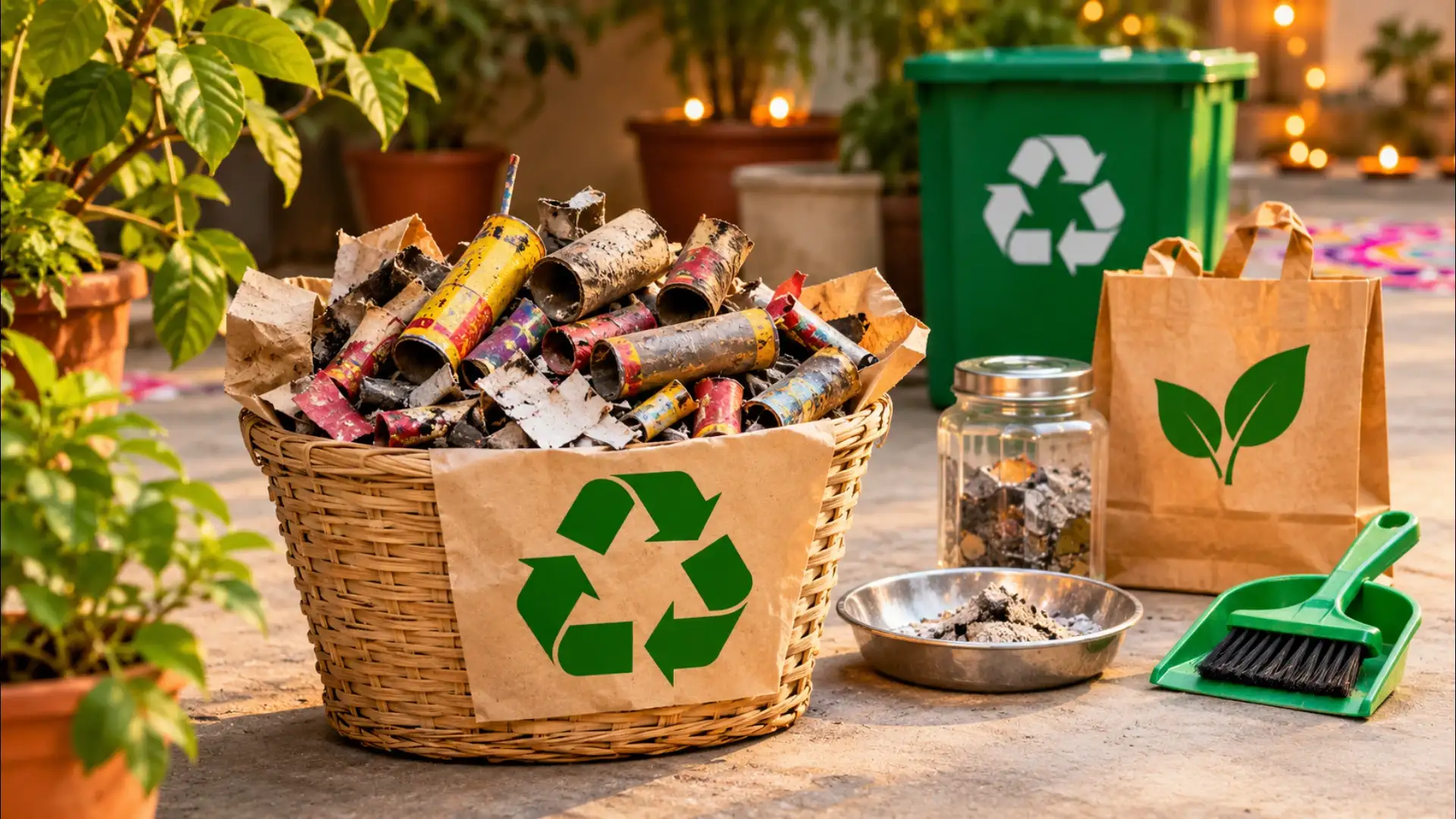
Spent fireworks are not a single category of waste, they are three or four different materials that happen to arrive together on the same night. Treating them that way, sorting by material, sealing what is active, and using the municipal systems that exist for hazardous pickup, is what keeps a festival's footprint from outlasting its memory.
Let the Debris Cool Completely Before Touching It
A spent firework casing can hold heat and unburned chemical compound for several hours. Picking it up too soon risks a flare-up or a chemical burn. Leave all debris on a dry, open surface overnight. If it rained, wait until the pile has dried, wet chemical residue soaking into soil is a separate problem, but a damp casing that reignites in a bin is worse. Once cool and dry, handle with thick cotton gloves, not synthetic ones that can melt.Separate the Materials Before Disposal
Fireworks are made of several different materials, paper, cardboard, thin wire, clay plugs, and chemical powder, and each needs a different route. Paper and cardboard tubes that are fully spent and free of residue can go into dry waste. Metal wire from sparklers belongs in scrap metal, not mixed rubbish. Clay and sand plugs from flower pots can be scattered in a garden bed rather than a bin. The chemical powder left in a partially-burned casing is the one thing that should never go loose into any bin; it needs to be sealed first.You may also like
- Shraddha Kapoor's minimal Diwali look has a fashion lesson for every wedding guest
- Delhi air pollution: Levels hit 60 times WHO limit, but can policy change?
- Inside The RAGE 90s in Abu Dhabi where old memories met a new generation
- Diwali 2026 Photoshoot Ideas: 5 Beautiful and Aesthetic Poses to Make Your Festive Pictures Instagram-Worthy
- Diwali Special Skincare: Try These 4 Easy Homemade Face Packs for a Fresh, Radiant Glow Before Your Festive Celebrations
Seal Unburned or Partially Burned Pieces Separately
A firework that failed to ignite, or one that burned only partway, still carries active chemical compound. Do not try to relight it. Soak it in a bucket of water for at least twenty minutes until the casing is visibly saturated, then seal it in a double plastic bag before placing it in dry waste. This one step prevents the compound from reacting with moisture or heat inside a garbage truck. Many municipal corporations in larger Indian cities run post-Diwali hazardous waste drives in the days following the festival; a quick check with your local ward office or resident welfare association will tell you if one is scheduled in your area.Use Newspaper as a Collection Layer
Spread old newspaper on the ground before the evening begins. Spent debris lands on the paper rather than on soil or concrete, which makes collection faster and keeps chemical residue off the ground surface. Once the celebration is done, fold the newspaper over the debris, roll it tightly, and tie it. This bundle goes into dry waste as a single contained unit. It is a small habit that takes thirty seconds to set up and cuts cleanup time significantly.Compost the Pure Paper and Cardboard
Firework tubes made entirely of plain paper or cardboard, with no chemical residue remaining, can go into a home compost bin or a community composting point. Tear or shred them into smaller pieces first so they break down faster. The condition is that the casing must be genuinely spent: no powder smell, no discolouration from active compound. If there is any doubt, seal and bin it rather than composting it. Paper that has absorbed chemical compound does not belong in compost.Spent fireworks are not a single category of waste, they are three or four different materials that happen to arrive together on the same night. Treating them that way, sorting by material, sealing what is active, and using the municipal systems that exist for hazardous pickup, is what keeps a festival's footprint from outlasting its memory.






Loving Newspoint? Download the app now
