
7 Houseplants That Thrive on Indian Balconies with Little Sun

A balcony that gets two hours of indirect light in the morning and spends the rest of the day in shade is not a problem to solve, it is a habitat with its own logic. The plants below are chosen because they match that habitat: low direct-light needs, tolerance for the temperature swings between an Indian summer afternoon and a winter night, and the kind of resilience that survives an owner who occasionally forgets to water.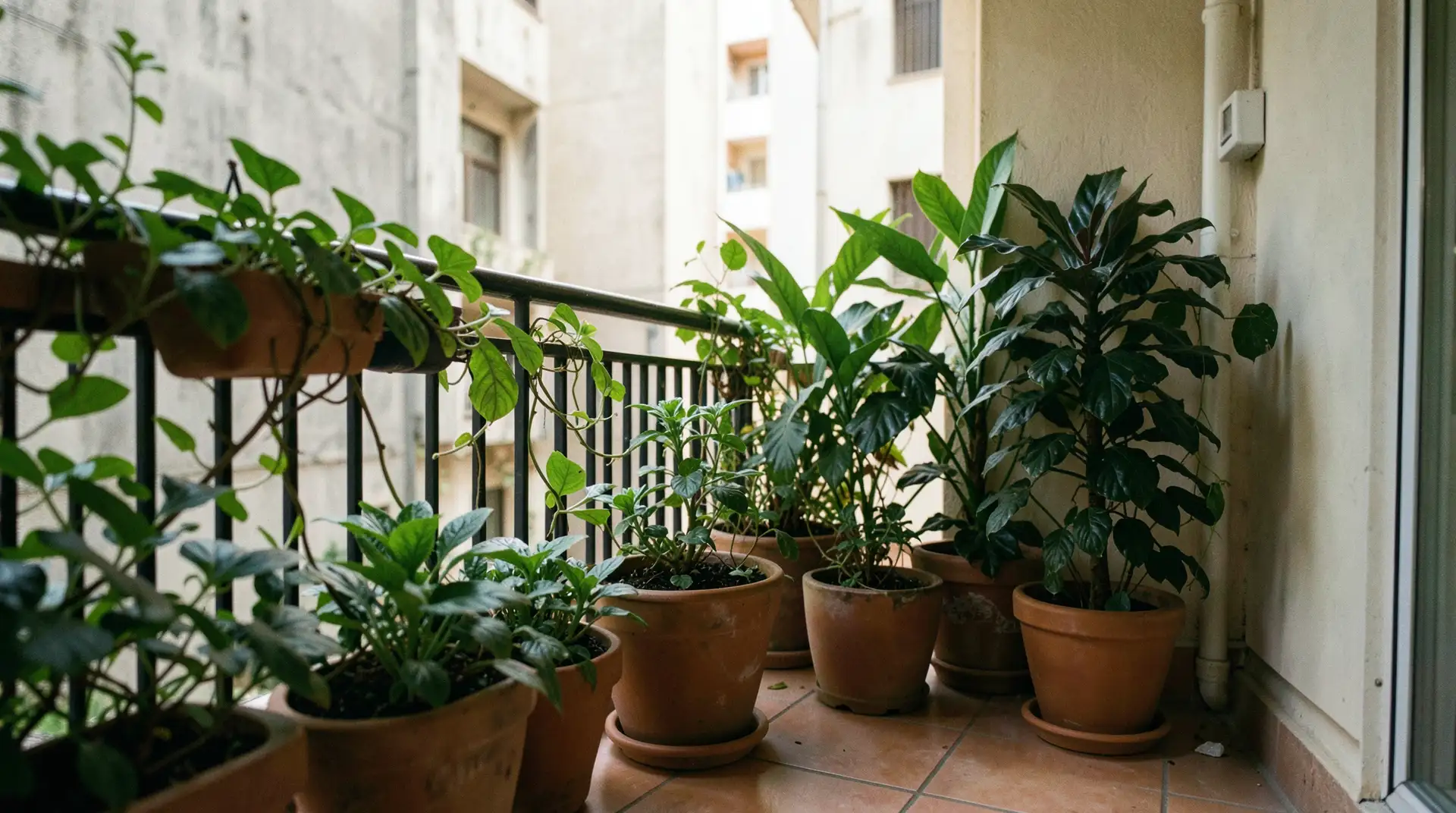
The common thread across all seven is that they evolved in forest understories or tropical interiors where filtered light is the norm, not the exception. A shaded Indian balcony, with its ambient warmth and occasional humidity from monsoon air, is closer to that environment than it might look. The adjustment most balcony gardeners need to make is not finding more sun, it is learning to underwater rather than over.
1. Money Plant (Epipremnum aureum)
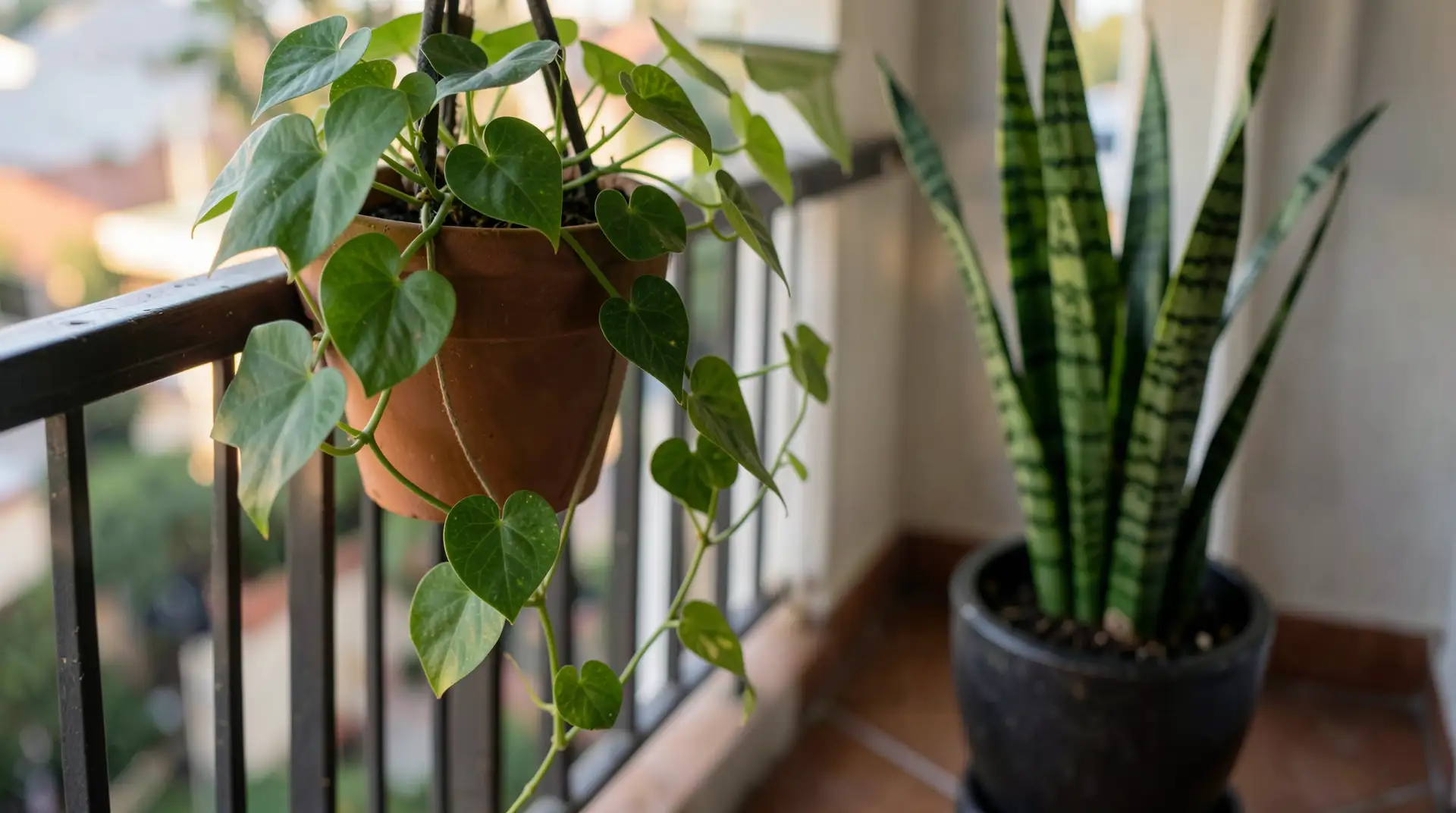
The money plant is the most forgiving plant on this list. Its heart-shaped leaves can photosynthesize in light levels that would kill most other species. On a shaded balcony, place it in a hanging pot or let it trail down a railing. It grows in soil or in a bottle of water with equal ease. The only thing that slows it down is waterlogged soil, let the top layer dry between waterings. In low light the variegation fades toward solid green, which is the plant doing what it needs to do, not a sign of trouble.2. Snake Plant (Sansevieria trifasciata)
The snake plant stores water in its thick, upright leaves and can go weeks without attention. It tolerates shade, irregular watering, and the kind of dry air that a concrete balcony produces in April. It grows slowly in low light, which is actually an advantage, it will not outgrow its pot for years. Water it once every ten to fourteen days in summer, once a month in winter. Overwatering is the one reliable way to kill it: the roots rot quietly at the base before any visible sign appears above soil.3. Peace Lily (Spathiphyllum wallisii)
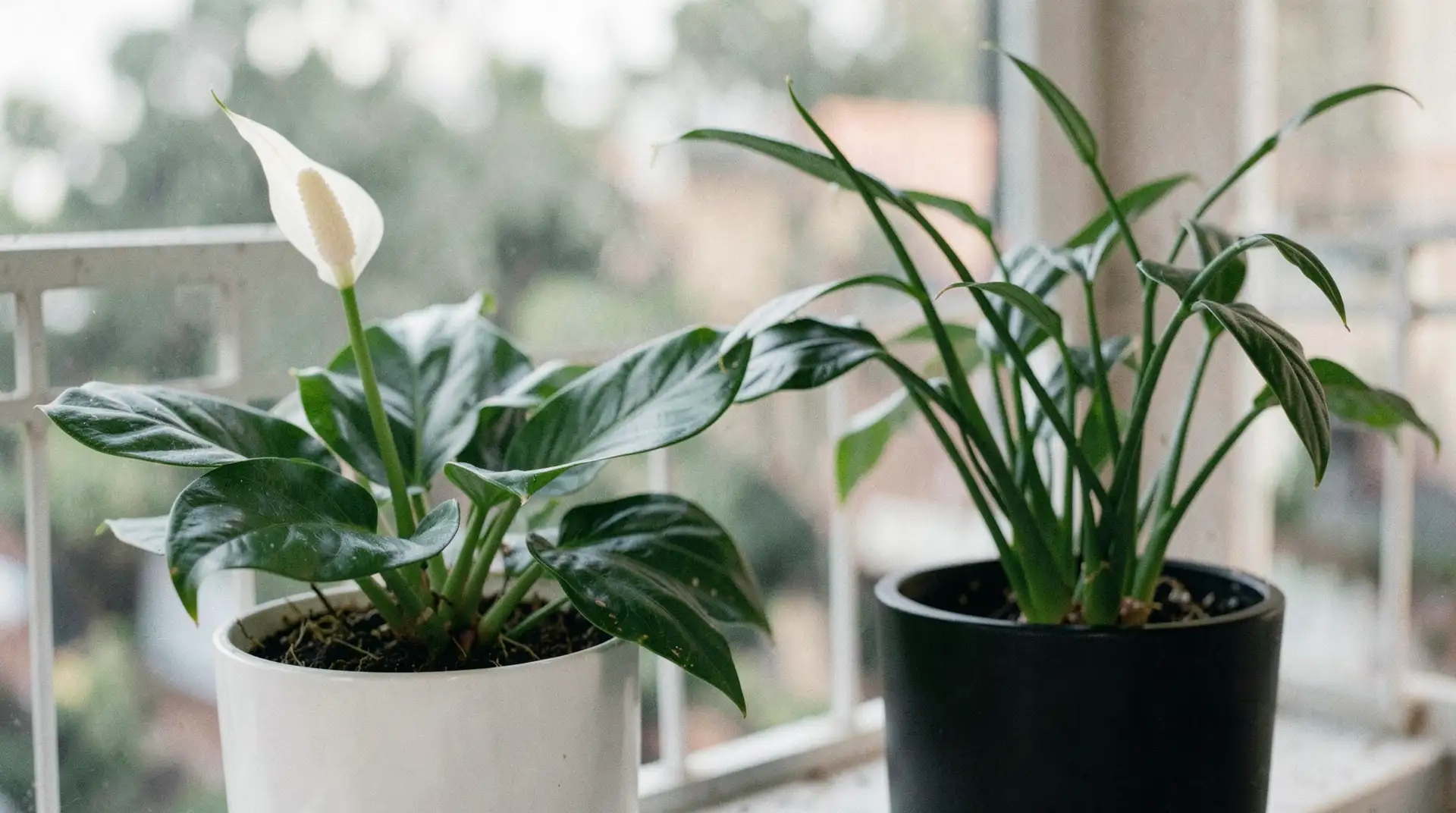
The peace lily is one of the few low-light plants that flowers reliably without direct sun. The white spathe blooms appear in spring and sometimes again in autumn. It communicates clearly: when it needs water, the leaves droop visibly, and they recover within an hour of a good drink. On a balcony, keep it away from the railing edge where wind desiccates leaves. It prefers consistently moist soil but not standing water. The leaves are toxic if eaten, which matters if there are young children or pets who reach the balcony.4. ZZ Plant (Zamioculcas zamiifolia)
The ZZ plant stores water in rhizomes underground, which is why it survives neglect that would finish most potted plants. Its glossy dark-green leaves reflect what little light reaches them, making the plant look fuller than it is. It is slow-growing, drought-tolerant, and genuinely indifferent to low humidity. The one limitation: it is toxic if any part is ingested, and the sap can irritate skin, so wear gloves when repotting. On a shaded balcony it asks for almost nothing, water every two to three weeks and an occasional wipe of the leaves to clear dust.5. Areca Palm (Dypsis lutescens)
The areca palm is a common sight in Indian hotel lobbies for a reason: it tolerates indoor light levels while maintaining the look of something tropical. On a north-facing or partially shaded balcony it does well, though it grows more slowly than it would in full sun. It prefers its soil to dry out slightly between waterings and dislikes fluoride, which means tap water left overnight in an open container works better than water poured straight from the tap. The fronds collect dust; a gentle rinse every few weeks keeps the plant breathing properly.6. Spider Plant (Chlorophytum comosum)
The spider plant produces long arching leaves and, once established, sends out runners that dangle baby plantlets, a feature that makes a hanging basket on a shaded balcony look genuinely alive. It tolerates low light, irregular watering, and the kind of benign neglect that busy households provide. Brown tips on the leaves are usually a sign of fluoride sensitivity or dry air, not a disease. Trim the tips with clean scissors if they bother you; the plant does not care. The babies can be rooted in a small pot of soil or a glass of water.7. Pothos N'Joy or Marble Queen (Epipremnum aureum cultivars)
These are cultivars of the same species as the money plant, but with stronger variegation, patches of white or cream against green. They need slightly more light than a plain money plant to hold their variegation, so they suit a balcony that gets an hour or two of morning brightness rather than complete shade. In very low light the white patches shrink as the plant produces more chlorophyll to compensate. They trail beautifully over a railing or climb a small moss stick. Water when the top two centimetres of soil are dry.The common thread across all seven is that they evolved in forest understories or tropical interiors where filtered light is the norm, not the exception. A shaded Indian balcony, with its ambient warmth and occasional humidity from monsoon air, is closer to that environment than it might look. The adjustment most balcony gardeners need to make is not finding more sun, it is learning to underwater rather than over.
Next Story