
7 Iconic Forts of India Where Ancient Battles, Royal Secrets and Architecture Come Alive

To step into the forts of India is to walk through the living veins of a history defined by defiant pride and unparalleled artistic vision. These are not merely crumbling ruins; they are "stone sentinels" that have survived centuries of cannon fire, royal betrayals, and the relentless march of time. Across the Indian landscape, these architectural titans served as more than just military shields they were thriving self-contained cities where the fierce strategy of war met the delicate refinement of royal courts. From the sprawling "Great Wall" of Rajasthan to island fortresses that challenge the tides of the Arabian Sea, here are seven legendary citadels where every weathered stone has a story to tell.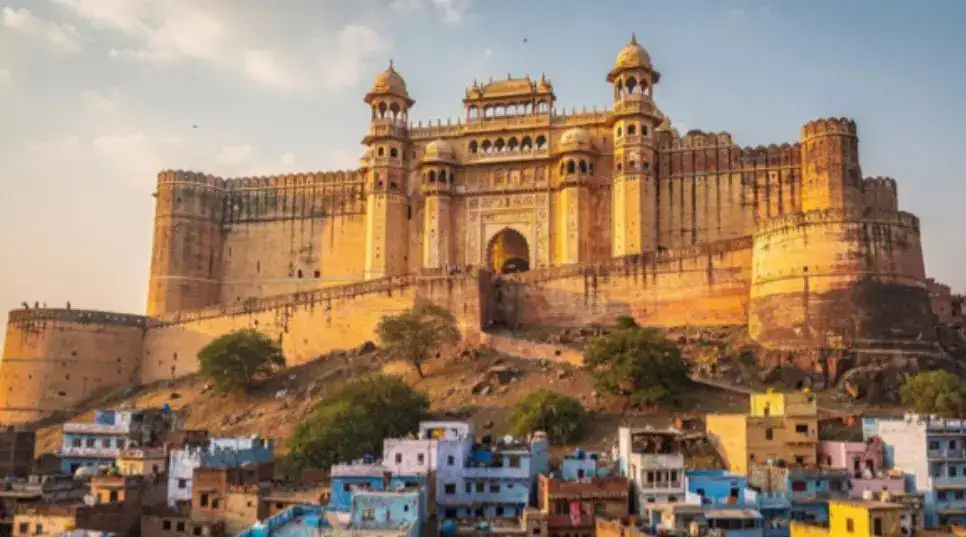
1. Mehrangarh Fort: The Citadel of the Sun (Jodhpur)
Rising 410 feet above the "Blue City," Mehrangarh is perhaps the most imposing fort in India. Rudyard Kipling described it as "the work of giants," and it’s easy to see why. Its massive walls still bear the scars of cannonball hits from past sieges. As you walk through the seven gates, the transition from rugged battlements to the delicate, lace-like carvings of the Moti Mahal (Pearl Palace) reveals the dual nature of Rajput life: fierce in war, but exquisitely refined in peace.
2. Kumbhalgarh Fort: The Eye of Mewar (Rajsamand)
Hidden deep within the Aravalli Range, Kumbhalgarh boasts the second-longest continuous wall in the world, stretching 36 km. Known as the "unconquered fort," it was designed so cleverly that its high palace, the Badal Mahal, remains invisible until you are practically at the gates. It served as a refuge for the rulers of Mewar in times of danger and stands today as a hauntingly beautiful monument to resilience and isolation.
3. Gwalior Fort: The Pearl of Castles (Gwalior)
Described by the first Mughal Emperor, Babur, as "the pearl in the necklace of the castles of Hind," this fort is a visual feast. Its most striking feature is the Man Mandir Palace, decorated with brilliant blue, yellow, and green tiles depicting ducks, elephants, and crocodiles. Beyond its beauty, the fort is home to the world’s oldest recorded inscription of the number "zero" in its 9th-century temple, linking ancient defense with ancient science.
4. Golconda Fort: The Shepherd’s Hill (Hyderabad)
Once the capital of the medieval Sultanate and the center of the world's diamond trade, Golconda is an acoustic marvel. A simple clap at the grand portico can be heard clearly at the 'Bala Hissar'the highest point nearly a kilometer away. This "sound-based warning system" allowed the kings to stay ahead of assassins and invaders. At night, the light and sound show brings to life the days when the Hope and Koh-i-Noor diamonds were stored within these very walls.
5. Sindhudurg Fort: The Ocean Fortress (Malvan)
While most Indian forts dominate the hills, Sindhudurg rose to dominate the sea. Built by the Maratha King Chhatrapati Shivaji Maharaj, this fortress sits on a rocky island in the Arabian Sea. Over 4,000 pounds of iron were used to cast the foundations to withstand the punishing ocean tides. It remains one of the few places where you can see the handprints and footprints of the great king himself, preserved in the stone.
6. Chittorgarh Fort: The Land of Jauhar (Chittorgarh)
Sprawling over 700 acres, this is the largest fort in India and the site of some of history’s most tragic and heroic legends. It is the land of Queen Padmini and the poet-saint Mirabai. The iconic Vijay Stambha (Tower of Victory) towers over the ruins, a nine-story monument to Rajput pride. To walk through Chittorgarh is to walk through the echoes of Jauhar (self-immolation) and the unbreakable spirit of those who chose death over surrender.
7. Agra Fort: The Red City (Agra)
Often overshadowed by its neighbor, the Taj Mahal, the Agra Fort is a masterpiece in its own right. This "walled city" of red sandstone was the seat of the Mughal Empire at its zenith. It is here that Shah Jahan was eventually imprisoned by his son, Aurangzeb, spending his final years gazing out from a marble balcony at the Taj Mahal, the tomb of his beloved wife. It is a place of brutal power and heartbreaking romance.
The forts of India were more than just military barracks; they were thriving ecosystems that housed entire cities, sophisticated irrigation systems, and world-class artistic hubs.
The 7 Mighty Citadels of India
1. Mehrangarh Fort: The Citadel of the Sun (Jodhpur)
Rising 410 feet above the "Blue City," Mehrangarh is perhaps the most imposing fort in India. Rudyard Kipling described it as "the work of giants," and it’s easy to see why. Its massive walls still bear the scars of cannonball hits from past sieges. As you walk through the seven gates, the transition from rugged battlements to the delicate, lace-like carvings of the Moti Mahal (Pearl Palace) reveals the dual nature of Rajput life: fierce in war, but exquisitely refined in peace.
2. Kumbhalgarh Fort: The Eye of Mewar (Rajsamand)
Hidden deep within the Aravalli Range, Kumbhalgarh boasts the second-longest continuous wall in the world, stretching 36 km. Known as the "unconquered fort," it was designed so cleverly that its high palace, the Badal Mahal, remains invisible until you are practically at the gates. It served as a refuge for the rulers of Mewar in times of danger and stands today as a hauntingly beautiful monument to resilience and isolation.
3. Gwalior Fort: The Pearl of Castles (Gwalior)
Described by the first Mughal Emperor, Babur, as "the pearl in the necklace of the castles of Hind," this fort is a visual feast. Its most striking feature is the Man Mandir Palace, decorated with brilliant blue, yellow, and green tiles depicting ducks, elephants, and crocodiles. Beyond its beauty, the fort is home to the world’s oldest recorded inscription of the number "zero" in its 9th-century temple, linking ancient defense with ancient science.
4. Golconda Fort: The Shepherd’s Hill (Hyderabad)
Once the capital of the medieval Sultanate and the center of the world's diamond trade, Golconda is an acoustic marvel. A simple clap at the grand portico can be heard clearly at the 'Bala Hissar'the highest point nearly a kilometer away. This "sound-based warning system" allowed the kings to stay ahead of assassins and invaders. At night, the light and sound show brings to life the days when the Hope and Koh-i-Noor diamonds were stored within these very walls.
You may also like
- Quote of the day for kids by Sundar Pichai: "It is important to follow your dreams and heart. Do..."
- Chennithala loses what could be his final chance at Kerala CM post
- Gold Prices Jump Sharply After Import Duty Hike; Rates Surge From Delhi to Chennai, Silver Also Climbs
- Effective Parenting Strategies for Child Development
- The Rise of Statement Bags in Celebrity Fashion for 2026
5. Sindhudurg Fort: The Ocean Fortress (Malvan)
While most Indian forts dominate the hills, Sindhudurg rose to dominate the sea. Built by the Maratha King Chhatrapati Shivaji Maharaj, this fortress sits on a rocky island in the Arabian Sea. Over 4,000 pounds of iron were used to cast the foundations to withstand the punishing ocean tides. It remains one of the few places where you can see the handprints and footprints of the great king himself, preserved in the stone.
6. Chittorgarh Fort: The Land of Jauhar (Chittorgarh)
Sprawling over 700 acres, this is the largest fort in India and the site of some of history’s most tragic and heroic legends. It is the land of Queen Padmini and the poet-saint Mirabai. The iconic Vijay Stambha (Tower of Victory) towers over the ruins, a nine-story monument to Rajput pride. To walk through Chittorgarh is to walk through the echoes of Jauhar (self-immolation) and the unbreakable spirit of those who chose death over surrender.
7. Agra Fort: The Red City (Agra)
Often overshadowed by its neighbor, the Taj Mahal, the Agra Fort is a masterpiece in its own right. This "walled city" of red sandstone was the seat of the Mughal Empire at its zenith. It is here that Shah Jahan was eventually imprisoned by his son, Aurangzeb, spending his final years gazing out from a marble balcony at the Taj Mahal, the tomb of his beloved wife. It is a place of brutal power and heartbreaking romance.
Why These Walls Still Talk
The forts of India were more than just military barracks; they were thriving ecosystems that housed entire cities, sophisticated irrigation systems, and world-class artistic hubs.
- Architectural Genius: Rulers adapted to their geography building Giri-durga (Hill Forts) in the desert to spot enemies from miles away and Jala-durga (Sea Forts) on the coast to repel naval invasions.
- Cultural Fusion: These sites showcase the "Indo-Saracenic" style, where Hindu motifs like lotus petals and elephants meet Islamic arches and grand domes, creating a style found nowhere else on Earth.






More from our partners


Loving Newspoint? Download the app now
