
What Makes Warli Art Special? Exploring Its Shapes, Stories and Traditions

Warli painting demonstrates how a small set of shapes can communicate stories about people, nature and everyday activities. Associated with the Warli community of Maharashtra, this traditional art form uses simplified figures and carefully arranged patterns rather than highly detailed human portraits.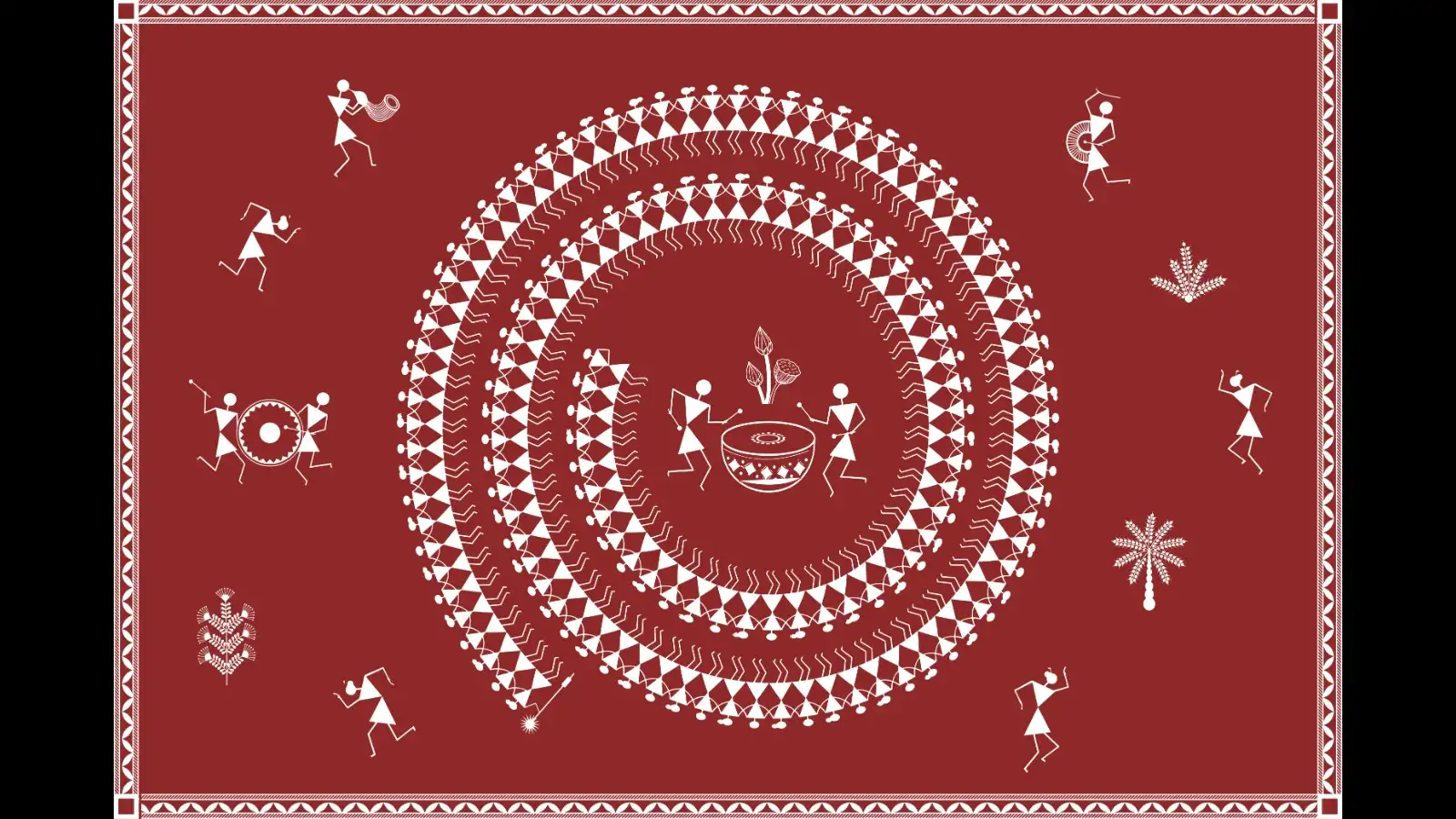
The art's visual style makes it recognisable, but its cultural significance goes beyond appearance. Traditional Warli paintings are connected with the experiences, environment and artistic practices of the community that produces them.
The National Crafts Museum and Hastkala Academy describes Warli painting as a folk art tradition from Maharashtra that commonly uses geometric forms and depicts elements such as trees, birds, animals and the landscape.
These forms can be combined to create human figures, animals, trees, huts and scenes of collective activity. The simplicity of the shapes allows the artist to organise a busy composition without relying on realistic proportions.
A circle may appear in depictions of the sun or moon, while triangular forms can help shape figures and other elements. The interpretation of individual symbols depends on the painting and its context, so it is best not to assume that every shape has exactly the same meaning in every work.
The overall composition may show people working, dancing, celebrating or interacting with their surroundings.
A National Crafts Museum description notes that bamboo sticks have been used as painting tools, with their ends prepared to provide a brush-like texture.
Materials and methods can vary between artists and contemporary applications. Paintings produced on paper, canvas, wood or textiles may use different surfaces and pigments from those used for traditional wall work.
This distinction matters when describing a painting as traditional. The appearance may remain recognisable even when the materials and production process change.
Scenes may represent agriculture, village activities, animals, trees, music or dance. The figures often appear as part of a larger arrangement, giving the painting a sense of movement and shared participation.
The cultural context helps explain why these scenes are more than decorative motifs. They can reflect the relationship between community activities, the surrounding landscape and local traditions.
The exact meaning of a particular painting should be understood through the artist or a knowledgeable source rather than assumed from the image alone.
This wider visibility has introduced the style to new audiences, but it also makes it important to distinguish between original works by Warli artists and products that simply borrow the visual style.
The Government of India's Tribal Cooperative Marketing Development Federation lists Warli painting among the craft activities associated with Warli communities in Maharashtra.
Where possible, choose original work from artists, recognised cooperatives or sellers who can provide information about the maker. Give credit when discussing a specific artist's work, and avoid presenting a community's artistic tradition as an anonymous decorative pattern.
Warli painting remains a valuable example of India's diverse art traditions. Its distinctive use of shape and composition offers a way to explore how visual storytelling can emerge from everyday life, collective memory and a close relationship with the natural world.
The art's visual style makes it recognisable, but its cultural significance goes beyond appearance. Traditional Warli paintings are connected with the experiences, environment and artistic practices of the community that produces them.
The National Crafts Museum and Hastkala Academy describes Warli painting as a folk art tradition from Maharashtra that commonly uses geometric forms and depicts elements such as trees, birds, animals and the landscape.
Understanding the visual language
Warli paintings frequently use basic geometric shapes, including circles, triangles and squares.These forms can be combined to create human figures, animals, trees, huts and scenes of collective activity. The simplicity of the shapes allows the artist to organise a busy composition without relying on realistic proportions.
A circle may appear in depictions of the sun or moon, while triangular forms can help shape figures and other elements. The interpretation of individual symbols depends on the painting and its context, so it is best not to assume that every shape has exactly the same meaning in every work.
The overall composition may show people working, dancing, celebrating or interacting with their surroundings.
Traditional materials and techniques
Traditional wall paintings have used a mud-coloured background and a white pigment made from rice flour or rice paste mixed with water and a binding material.A National Crafts Museum description notes that bamboo sticks have been used as painting tools, with their ends prepared to provide a brush-like texture.
Materials and methods can vary between artists and contemporary applications. Paintings produced on paper, canvas, wood or textiles may use different surfaces and pigments from those used for traditional wall work.
This distinction matters when describing a painting as traditional. The appearance may remain recognisable even when the materials and production process change.
The subjects behind the art
Many Warli compositions focus on community life and the natural world.Scenes may represent agriculture, village activities, animals, trees, music or dance. The figures often appear as part of a larger arrangement, giving the painting a sense of movement and shared participation.
The cultural context helps explain why these scenes are more than decorative motifs. They can reflect the relationship between community activities, the surrounding landscape and local traditions.
You may also like
- Forced to drop out of school for a year when her father could not pay the fees, Mavis Tak failed the UPSC exam twice before clearing it and is now a 2022-batch IPS officer serving as ASP in Uttar Pradesh's Sonbhadra
- Cancer: diagnoses rise across India.. what drives it?
- High blood pressure during pregnancy can raise a woman's future risk of heart disease by up to 2.7 times; why postpartum monitoring matters
- Why Did Lord Shiva Save the Moon From Daksha's Curse?
- She failed UPSC 6 times, and her decade-long dream collapsed at 30; today she has taught around 900 kids and employed nearly 30 women: Meet Shruti Srivastava
The exact meaning of a particular painting should be understood through the artist or a knowledgeable source rather than assumed from the image alone.
Warli art today
Warli-inspired designs now appear on several contemporary products, including textiles, stationery, home decor and painted objects.This wider visibility has introduced the style to new audiences, but it also makes it important to distinguish between original works by Warli artists and products that simply borrow the visual style.
The Government of India's Tribal Cooperative Marketing Development Federation lists Warli painting among the craft activities associated with Warli communities in Maharashtra.
How to appreciate it respectfully
When purchasing Warli artwork, ask who made it, where it was produced and which materials were used.Where possible, choose original work from artists, recognised cooperatives or sellers who can provide information about the maker. Give credit when discussing a specific artist's work, and avoid presenting a community's artistic tradition as an anonymous decorative pattern.
Warli painting remains a valuable example of India's diverse art traditions. Its distinctive use of shape and composition offers a way to explore how visual storytelling can emerge from everyday life, collective memory and a close relationship with the natural world.






Loving Newspoint? Download the app now
