
6 Spices in the Indian Masala Dabba and What Each One Does

The masala dabba is not a collection of flavours. It is a set of tools, each one built for a different job inside the pot. The same six spices appear in a dal and a sabzi and a rice dish and produce something completely different each time, because what they do depends on when they go in, what fat they meet, and what else is in the pan with them.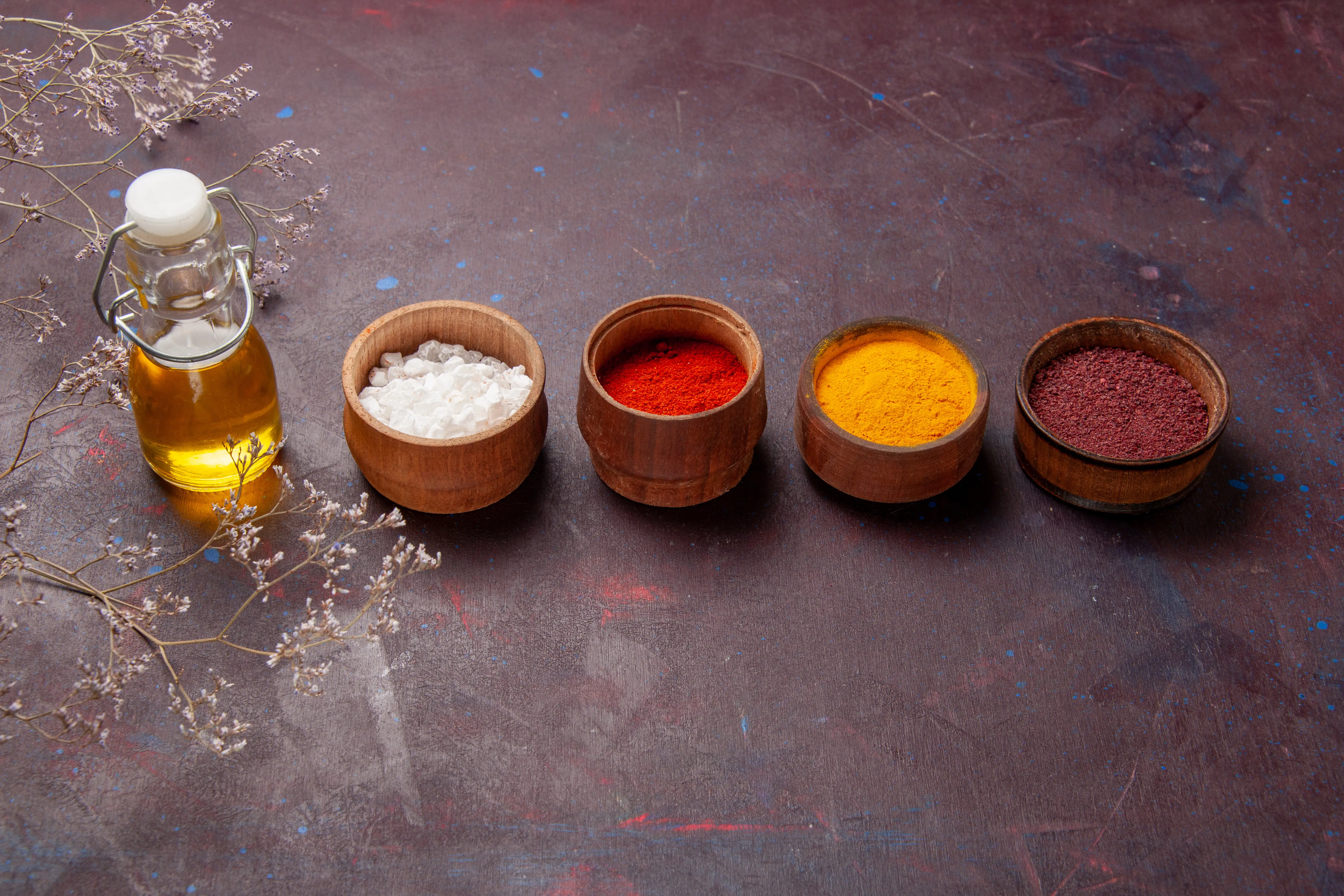
Turmeric also does something quieter: it suppresses certain grassy or raw-meat smells in vegetables and proteins. A pinch in boiling dal is not decoration. It is doing a job on the smell of the lentils before they are cooked through.
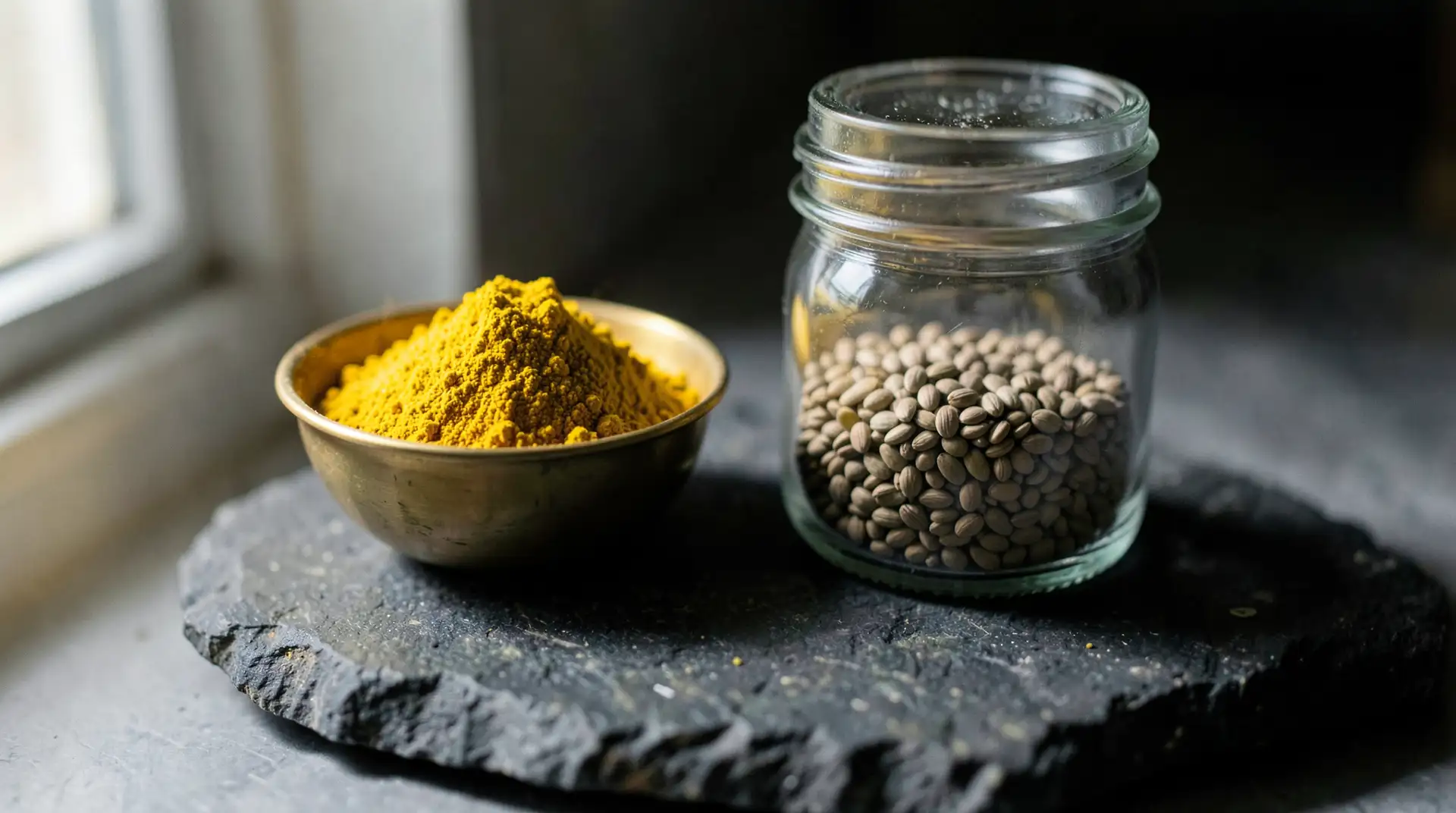
Ground cumin, added later, adds a different quality: earthier, denser, less aromatic. Many dishes use both forms at different stages for exactly this reason.
Whole coriander seeds, dry-roasted and cracked, behave differently: they stay bright and slightly floral, used as a finishing note rather than a base.
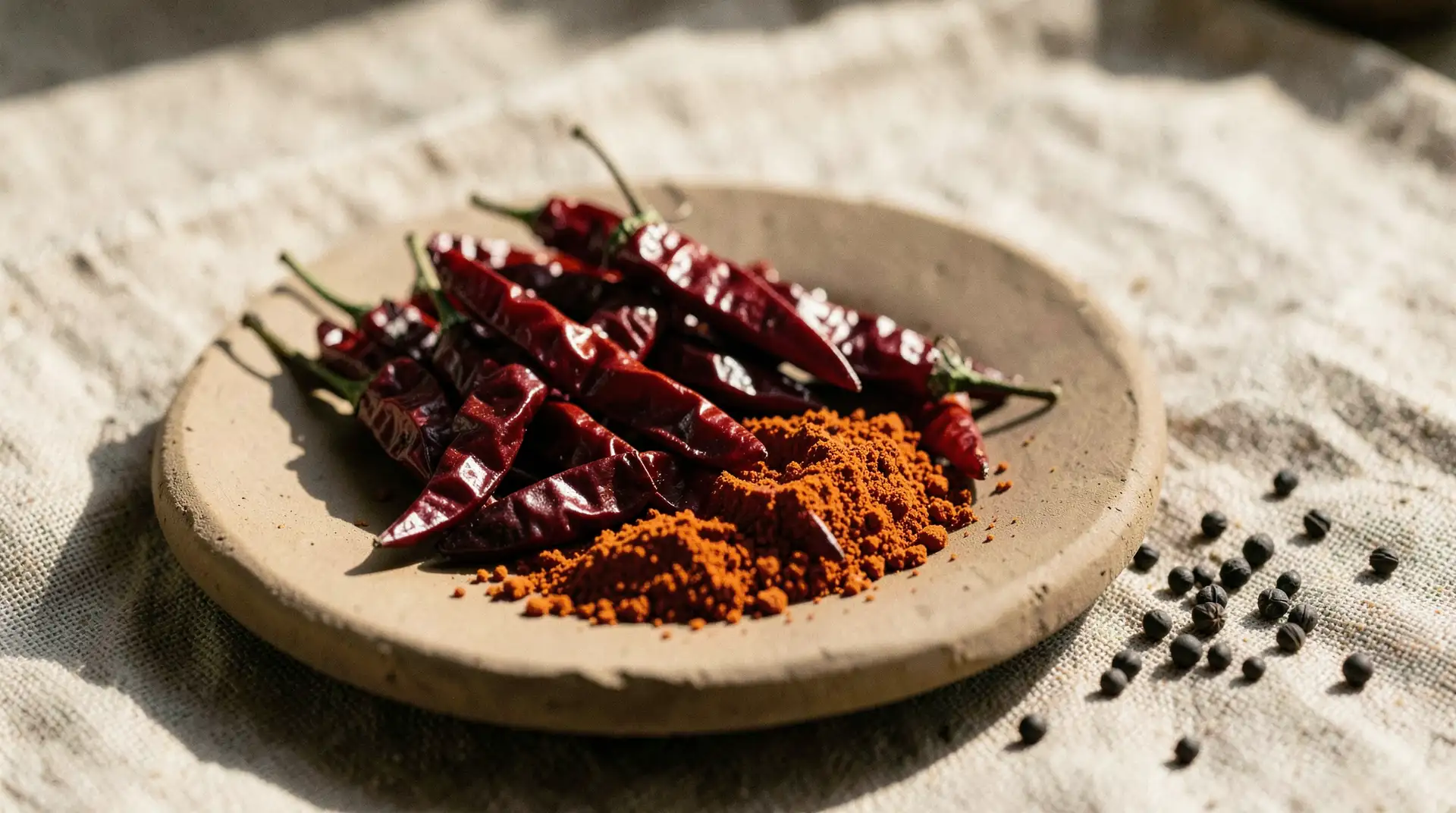
The variety of chilli matters here even when it is not named on the packet. Kashmiri chilli, which many masala dabbas carry instead of or alongside the standard, is bred for colour and mild heat. A curry made with it will be a deep brick-red with a gentle warmth. Standard red chilli delivers more heat and a darker, less vibrant colour. The choice is always a trade-off between the two.
In South Indian cooking, mustard seeds are almost always the first thing into the pan, before curry leaves and dried red chilli. In Punjabi cooking, they appear less often in the tadka and more often as ground sarson in mustard-based sauces. The seed is the same; the application determines what it becomes.
The critical rule with garam masala is that it almost always goes in last, off or near the end of the heat. The volatile aromatic compounds in cardamom and cloves are delicate. Long cooking drives them off entirely, leaving only a flat bitterness. A pinch stirred in just before the dish leaves the stove is what gives a dal makhani or a chicken curry its finishing depth.
The masala dabba works as a system. Turmeric and cumin go in early, into hot fat, to build the base. Coriander and chilli follow to add body and heat. Mustard seeds, where the recipe calls for them, need the hottest oil of all. Garam masala closes the dish. Understanding the sequence is understanding the tin.
Haldi (Turmeric)
Turmeric goes into hot oil before almost anything else, and the reason is physical. Its active compound, curcumin, is fat-soluble. Dissolved in oil, it distributes evenly through the entire dish. Added to water, it clumps and sits on the surface. This is why haldi in the tadka turns everything golden, while haldi stirred into a curry at the end leaves yellow patches and a slightly raw, chalky taste.Turmeric also does something quieter: it suppresses certain grassy or raw-meat smells in vegetables and proteins. A pinch in boiling dal is not decoration. It is doing a job on the smell of the lentils before they are cooked through.
Jeera (Cumin)
Whole cumin seeds go into hot oil and pop within seconds. That pop is not just visual drama, it is the moment the volatile oils inside the seed are released into the fat. Those oils carry the warm, slightly smoky flavour that runs through the whole dish. Seeds that go into cold oil or water never release the same compounds, which is why a cumin-water drink tastes nothing like a jeera aloo.Ground cumin, added later, adds a different quality: earthier, denser, less aromatic. Many dishes use both forms at different stages for exactly this reason.
You may also like
- 3 tips to reduce cholesterol
- Who Was Devsena? The Goddess Behind Kartikeya's Birth
- No financial worries in your old age! Understand the 'super-combo' of EPF and NPS for a perfect 25-year retirement plan..
- Is seeing Chhath Puja in a dream auspicious or inauspicious? Here are 6 significant signs according to dream interpretation.
- Ginger Storage Tips: Does ginger dry out quickly? A magical way to keep it fresh for up to 1 month.
Dhania (Coriander)
Ground coriander is the body-builder of the masala dabba. It adds bulk and a mild, citrusy warmth to a gravy without sharpening it the way chilli does or earthing it the way cumin does. In a sabzi or a curry base, it is often added in quantities two to three times that of any other spice, and its job is to give the sauce something to hold onto, a texture that coats vegetables rather than sliding off them.Whole coriander seeds, dry-roasted and cracked, behave differently: they stay bright and slightly floral, used as a finishing note rather than a base.
Lal Mirch (Red Chilli Powder)
Red chilli powder does two things that are easy to separate once you know to look for them: it adds heat, and it adds colour. The heat comes from capsaicin. The colour comes from carotenoid pigments, which are also fat-soluble. Both are released into oil, which is why a tadka with red chilli turns vivid red-orange rather than staying dusty.The variety of chilli matters here even when it is not named on the packet. Kashmiri chilli, which many masala dabbas carry instead of or alongside the standard, is bred for colour and mild heat. A curry made with it will be a deep brick-red with a gentle warmth. Standard red chilli delivers more heat and a darker, less vibrant colour. The choice is always a trade-off between the two.
Rai or Sarson (Mustard Seeds)
Mustard seeds are the only spice in the masala dabba that must be covered after they go into the oil. They pop violently and will leave the pan if left open. The popping releases their pungent, sharp quality into the fat. Unpopped mustard seeds, by contrast, are bitter and harsh, biting into one in a dish is the sign they went into oil that was not hot enough.In South Indian cooking, mustard seeds are almost always the first thing into the pan, before curry leaves and dried red chilli. In Punjabi cooking, they appear less often in the tadka and more often as ground sarson in mustard-based sauces. The seed is the same; the application determines what it becomes.
Garam Masala
Garam masala is the one entry in the masala dabba that is not a single spice. It is a blend, typically cinnamon, cloves, cardamom, black pepper, and sometimes nutmeg or mace, and every household and every region makes it slightly differently. The word garam means warm, and the spices in the blend were traditionally described in Ayurvedic terms as heating spices, though here the word simply points to the quality they add: a deep, rounded warmth rather than the sharp heat of chilli.The critical rule with garam masala is that it almost always goes in last, off or near the end of the heat. The volatile aromatic compounds in cardamom and cloves are delicate. Long cooking drives them off entirely, leaving only a flat bitterness. A pinch stirred in just before the dish leaves the stove is what gives a dal makhani or a chicken curry its finishing depth.
The masala dabba works as a system. Turmeric and cumin go in early, into hot fat, to build the base. Coriander and chilli follow to add body and heat. Mustard seeds, where the recipe calls for them, need the hottest oil of all. Garam masala closes the dish. Understanding the sequence is understanding the tin.






Loving Newspoint? Download the app now
