
Why an Iron Kadhai Must Be Seasoned with Oil Before First Use

Pull a new iron kadhai out of its packaging and run a finger along the inside. The surface feels rough, almost gritty, and there is often a faint factory smell, a residue of machine oil or protective coating applied to stop it rusting in the warehouse. Cook dal or sabzi in it at this stage and you get metallic-tasting food, uneven heat, and a pan that will start pitting within weeks. Seasoning is the step that converts raw cast iron into a cooking surface that improves with every use.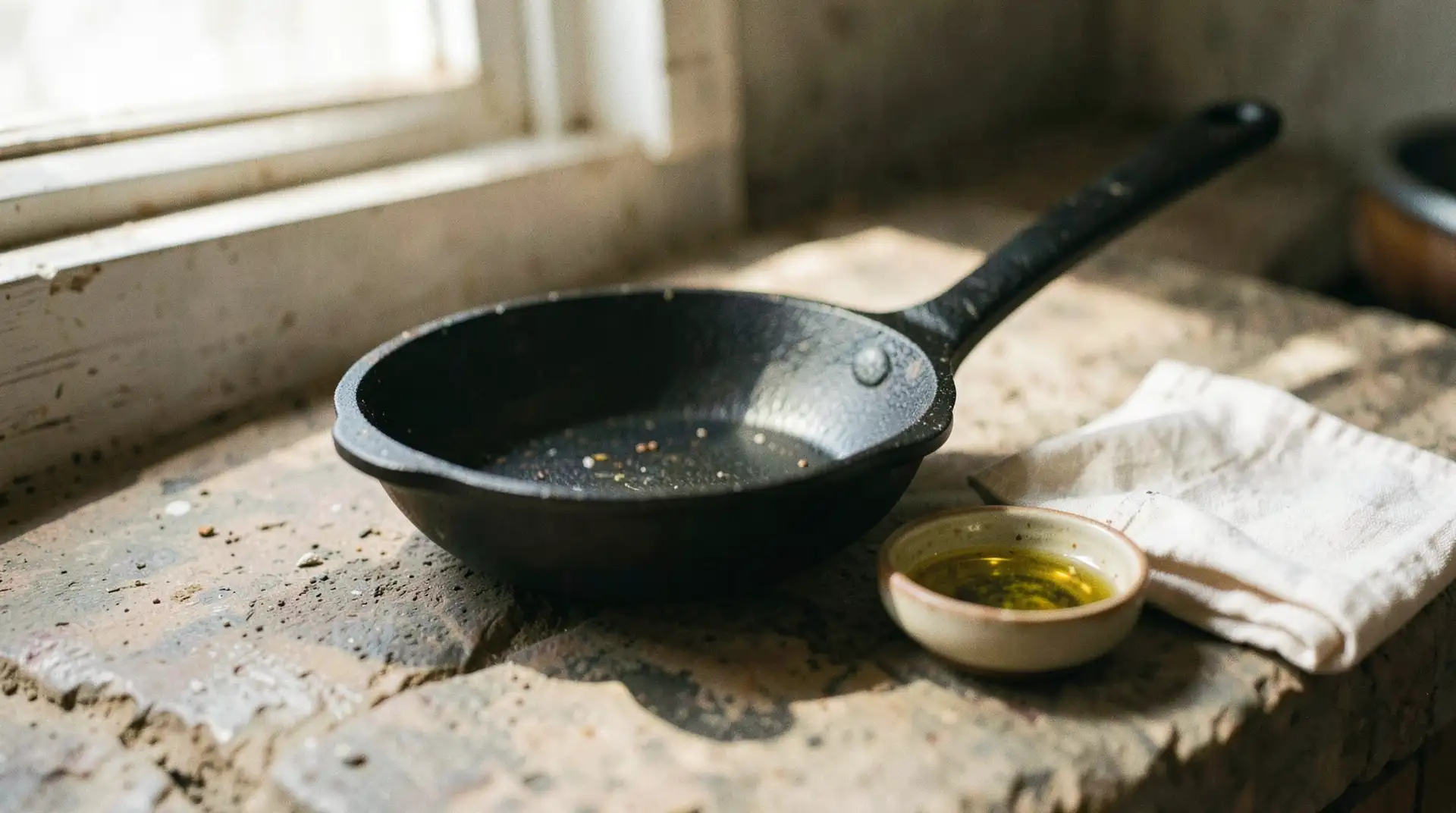
What Seasoning Actually Does to the Metal
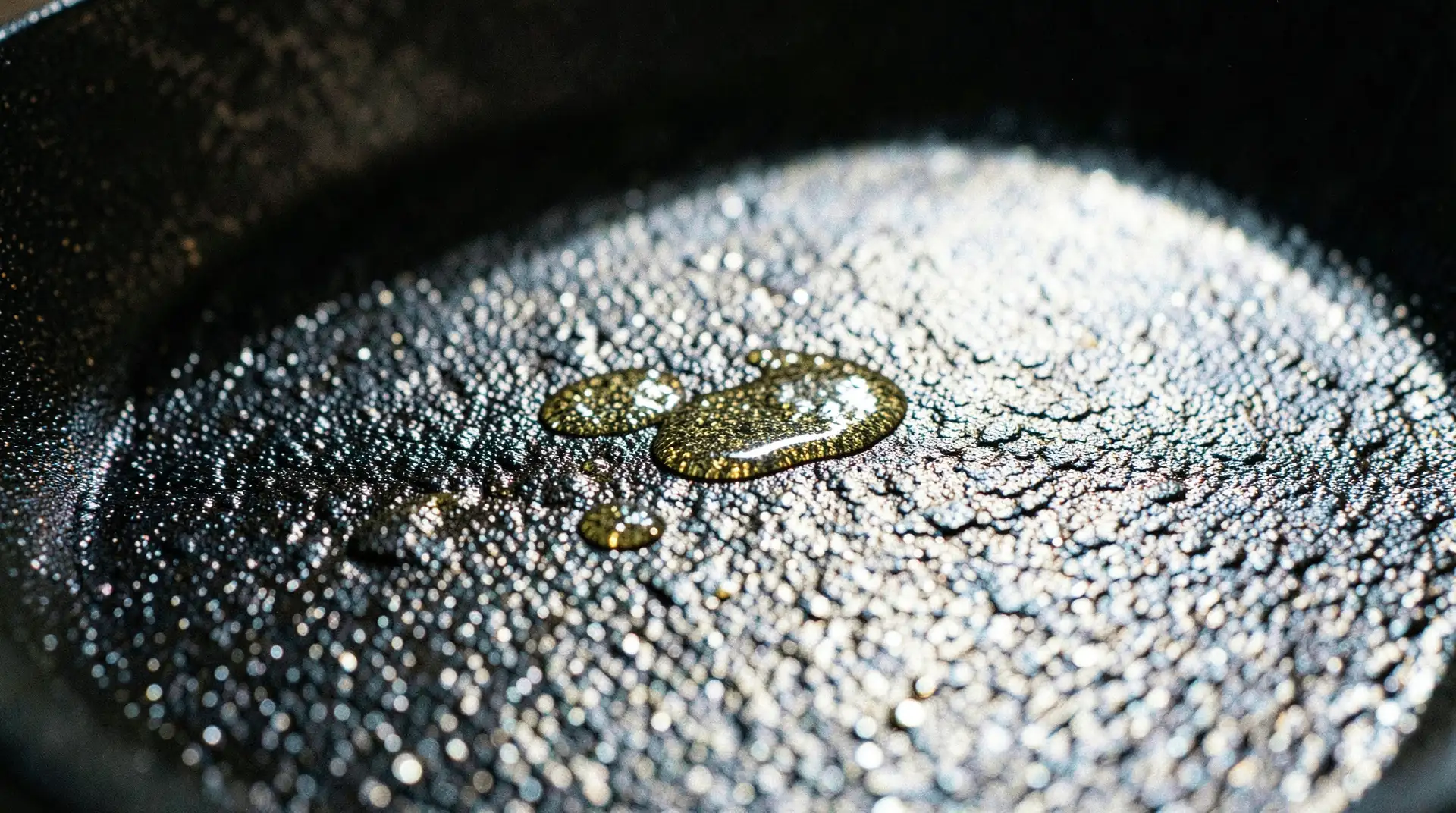
Iron is porous at a microscopic level. The surface is covered in tiny peaks and valleys invisible to the eye. When you coat the pan with a thin layer of oil and heat it past the oil's smoke point, the oil does not simply sit on top, it undergoes a chemical change called polymerisation. The fatty acid chains in the oil cross-link under heat and bond to the iron, forming a hard, smooth, plastic-like layer that fills those microscopic gaps. This layer is not grease. It is a polymer that becomes part of the surface. The more times you season and cook, the thicker and more even this layer becomes, which is why a kadhai used daily for years is far more non-stick than a new one.Why Bare Iron Reacts with Food
Uncoated iron is chemically reactive. Acids in tomatoes, tamarind, and citrus dissolve tiny amounts of iron from the surface and carry it into the dish. This is what creates the metallic taste. It also means the pan is slowly corroding from the inside every time it meets an acidic ingredient. The polymerised oil layer acts as a barrier between the iron and whatever you are cooking, preventing that transfer. Once a kadhai is well-seasoned, you can cook tomato-based gravies without the taste problem, though cooks who use cast iron seriously still avoid long, slow acidic simmers, which can strip seasoning over time.How to Season a New Kadhai
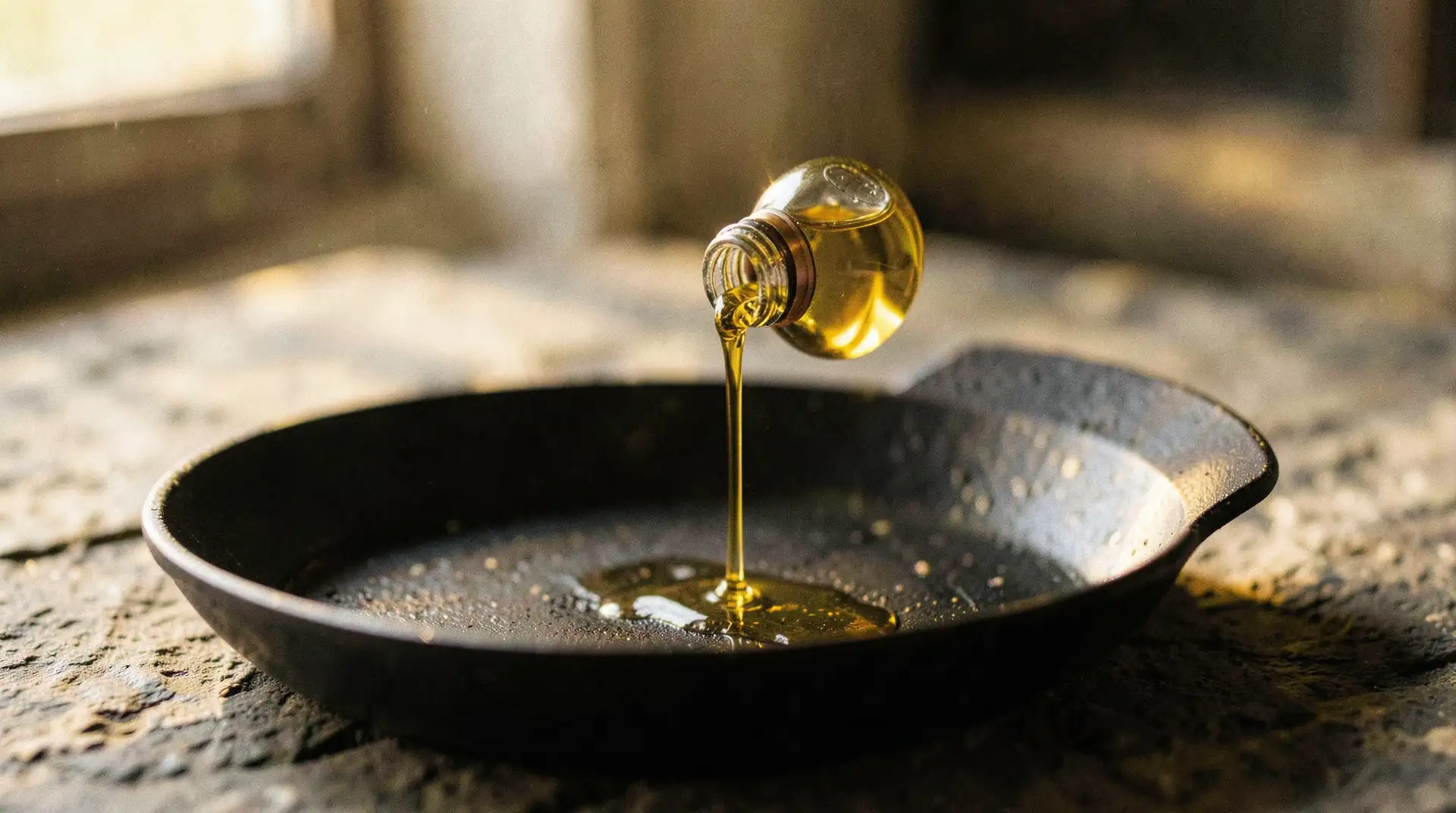
Wash the kadhai once with warm water and a small amount of soap to remove the factory coating, then dry it completely, even a few minutes on a low flame to drive out any moisture hiding in the pores. Apply a very thin, even coat of oil across the entire interior surface, including the sides. Too much oil pools and bakes into a sticky, uneven layer rather than a smooth one. Place it upside down on a high flame or in a hot oven and let the oil smoke and then settle for fifteen to twenty minutes. Let it cool, wipe away any excess with a dry cloth, and repeat the process two or three more times. Each round builds the polymer layer thicker. After three rounds, the inside should have a slightly darkened, matte sheen, the beginning of what cooks call a patina.The Right Oil and Why It Matters
Oils with a high proportion of polyunsaturated fats, mustard oil, flaxseed oil, and traditional groundnut oil, polymerise more readily than refined oils with a high saturated fat content. This is why old-school Indian kitchens almost always seasoned iron cookware with mustard oil. The double bond structure in polyunsaturated fatty acids is what allows the cross-linking reaction to happen efficiently under heat. A refined vegetable oil will still season a pan, but it takes more rounds to build the same depth of layer. Ghee and coconut oil, both high in saturated fats, are poor seasoning choices for the initial build, though they are fine for cooking once the base layer is established.Why the Kadhai Gets Better Over Time
Every time you cook with fat in a well-seasoned kadhai, you are adding a microscopic new layer to the surface. Every time you heat it, you are hardening that layer further. This is why cast iron handed down through families cooks better than a new pan, decades of cooking have built a seasoning so deep and even that the surface is genuinely non-stick without any synthetic coating. The kadhai does not wear out. It matures. The only ways to undo this are leaving it wet so rust forms, scrubbing it with an abrasive that strips the polymer layer, or soaking it in soapy water for extended periods. Dry it immediately after washing, rub a few drops of oil in while it is still warm, and the surface stays intact indefinitely. The first seasoning before the first use is simply the beginning of that long conversation between iron and heat.Next Story