
5 Real Benefits of Reading Aloud to Your Children Every Day

Pick up a picture book and read it aloud to a four-year-old tonight. Watch what happens to her face when a character she loves gets into trouble. That moment is not just sweet, something real is being built inside her, word by word, page by page.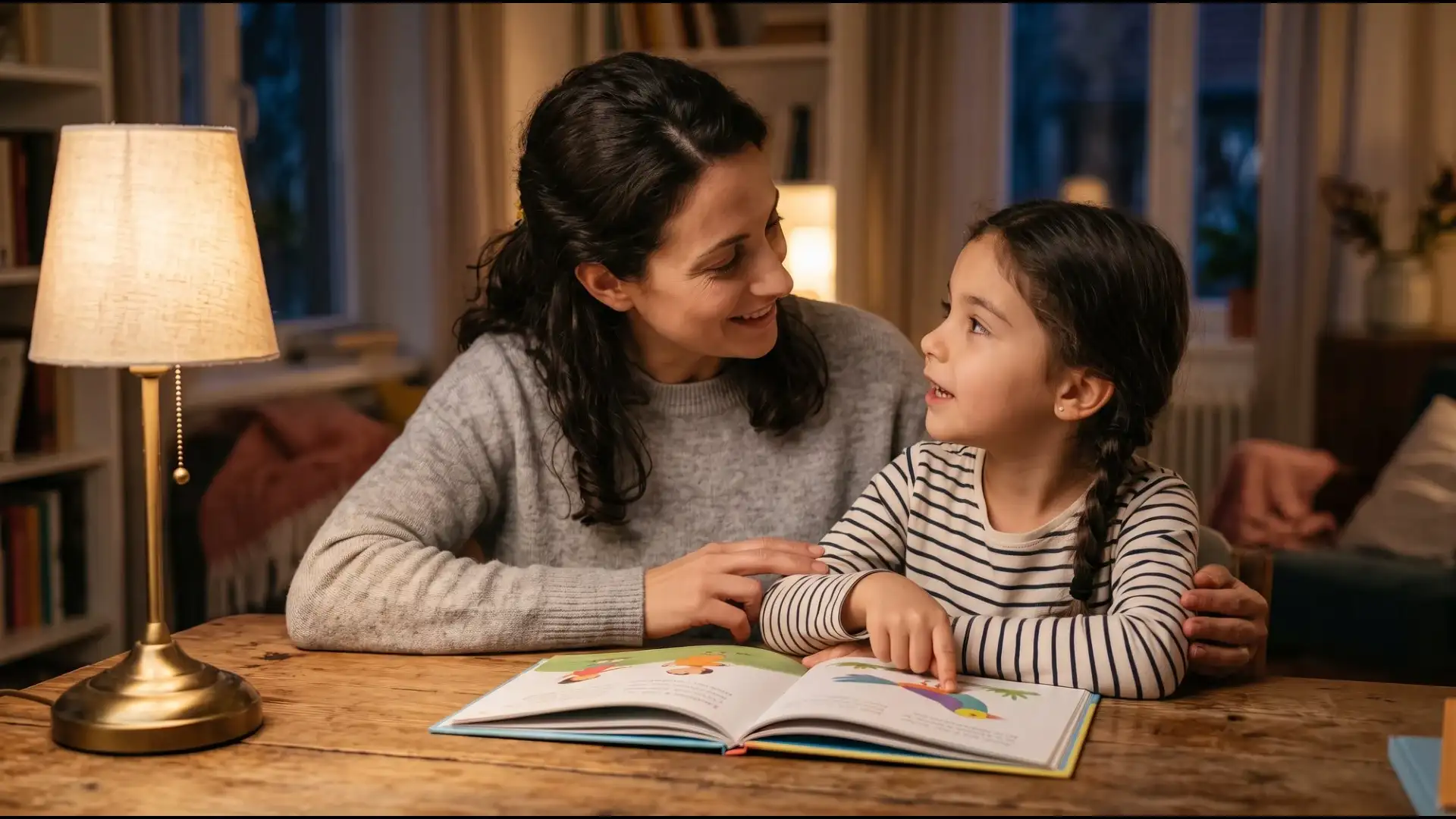
A storybook pulls in words that would almost never come up at the dinner table, words like enormous, peculiar, shimmer, or reluctant. A child who hears these words in context, attached to a character and a feeling, absorbs them in a way that a flashcard never replicates. This is why children who are read to aloud tend to arrive at school with noticeably larger vocabularies and a stronger sense of how sentences are put together.
When a parent runs a finger under the words while reading, the child also begins to understand that those marks on the page correspond to the sounds she is hearing. The bridge between listening and reading is built during read-aloud, not after.
At the same time, she is following a character through a problem, feeling what the character feels, worrying when the character worries. This is how empathy develops in children: not through instruction, but through repeated experience of inhabiting another perspective. A child who has lived through hundreds of fictional problems with fictional people is better equipped to understand a real person's situation than a child who has not.
Parents sometimes worry that their child cannot sit still for a book. That is exactly why the book is useful. The attention span is not a fixed trait, it is built through practice, and read-aloud is one of the gentler ways to practise it.
Children who grow up with this ritual tend to seek out books on their own not because they were told to, but because books feel like comfort. The habit is the gift. The learning is what happens inside it without anyone having to try.
Language Grows Faster Than You Think
Children who are read to regularly encounter far more words than children who learn language only through conversation. Spoken language at home, even in rich, warm households, tends to cluster around a few hundred familiar words used in familiar contexts.A storybook pulls in words that would almost never come up at the dinner table, words like enormous, peculiar, shimmer, or reluctant. A child who hears these words in context, attached to a character and a feeling, absorbs them in a way that a flashcard never replicates. This is why children who are read to aloud tend to arrive at school with noticeably larger vocabularies and a stronger sense of how sentences are put together.
The Brain Learns to Listen and Then to Read
Reading aloud trains a child's ear before her eye. She learns that words have beginnings and ends, that sentences rise and fall, that a pause means something. This awareness of how language sounds, what researchers in child development call phonological awareness, is one of the strongest early predictors of how easily a child will learn to read on her own.When a parent runs a finger under the words while reading, the child also begins to understand that those marks on the page correspond to the sounds she is hearing. The bridge between listening and reading is built during read-aloud, not after.
Imagination and Empathy Develop Together
A story asks a child to hold a world in her head that she cannot see. She has to picture the forest, the ship, the grandmother's kitchen. This is imagination doing its actual work, not as play but as cognitive effort.At the same time, she is following a character through a problem, feeling what the character feels, worrying when the character worries. This is how empathy develops in children: not through instruction, but through repeated experience of inhabiting another perspective. A child who has lived through hundreds of fictional problems with fictional people is better equipped to understand a real person's situation than a child who has not.
Attention Span Builds Gradually
Sitting with a book for fifteen minutes is harder for a small child than it looks. There is no animation, no sound effect, no change of pace driven by an algorithm. The child has to stay with the story using only the words and her own imagination. This is the same cognitive muscle that will later allow her to sit through a class, follow a long explanation, or work through a difficult problem without looking for a distraction.Parents sometimes worry that their child cannot sit still for a book. That is exactly why the book is useful. The attention span is not a fixed trait, it is built through practice, and read-aloud is one of the gentler ways to practise it.
The Habit Itself Becomes the Bond
A child who associates books with the warmth of a parent's voice, a specific lamp, a particular corner of the house, carries that association into adulthood. Reading together is not just a delivery mechanism for language and learning, it is a repeated, reliable ritual that signals safety and closeness.Children who grow up with this ritual tend to seek out books on their own not because they were told to, but because books feel like comfort. The habit is the gift. The learning is what happens inside it without anyone having to try.