
What Vastu Shastra Says About the Northeast Corner of Your Home

Walk through an older Indian home and you will often find the northeast corner deliberately uncluttered, no heavy furniture, no storage boxes, no bathroom tucked into it. The choice rarely comes with an explanation. It is simply how things are done. Vastu shastra, the traditional Indian system of spatial arrangement, has a detailed reason for it.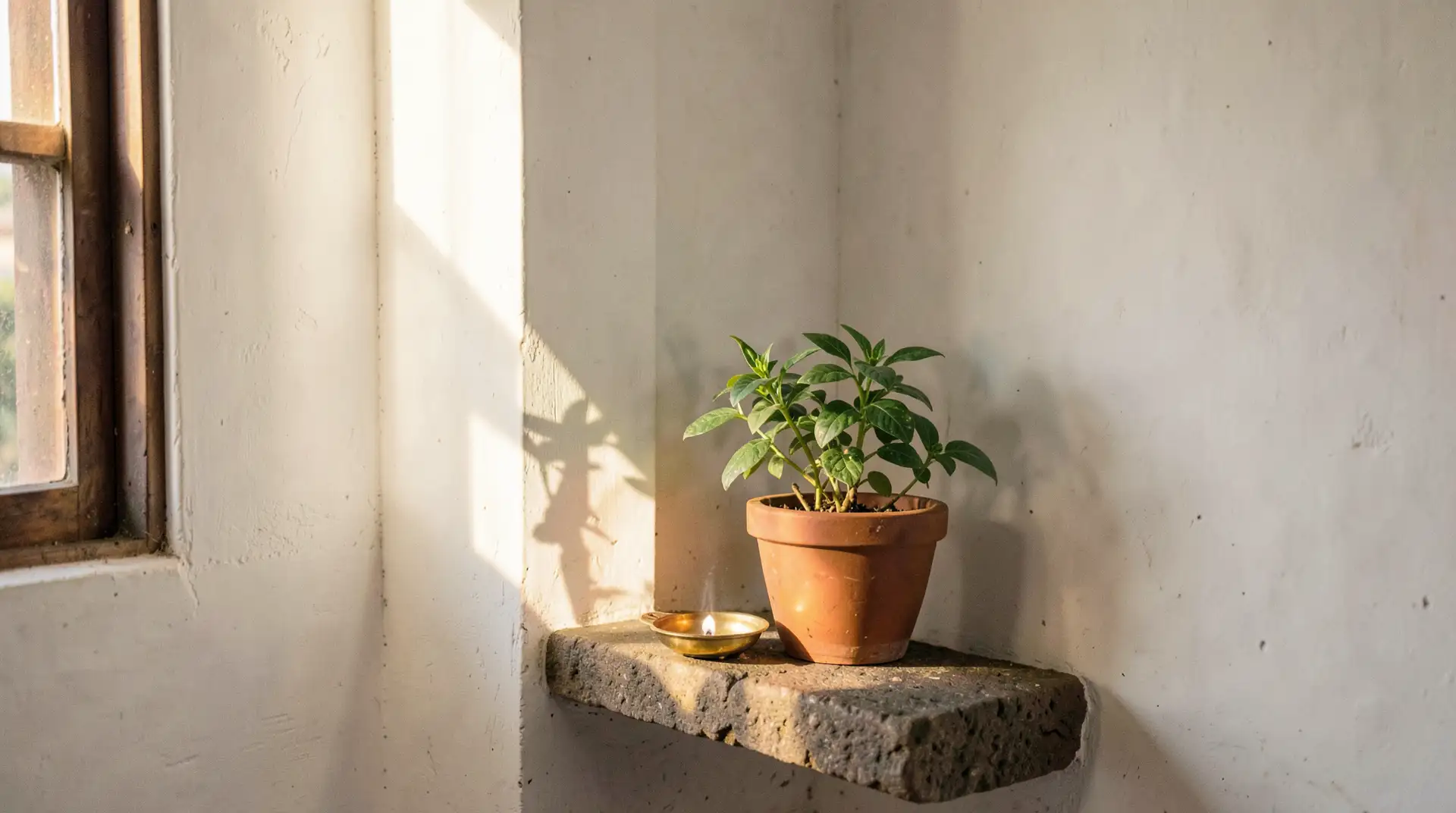
What Vastu Shastra Says This Corner Represents
In vastu shastra, every direction carries an association. The northeast, called Ishanya in Sanskrit, is considered the zone of Ishwara, a name for the divine, and is associated with water among the five classical elements. The tradition holds that this corner is where positive energy enters a space, making it the most spiritually significant of the eight directions the system recognises. Because of that status, vastu shastra holds that keeping it open, light, and unobstructed allows that energy to flow freely through the home. Blocking it with heavy objects, according to the tradition, disrupts that flow.What Open Actually Means in Practice
Vastu shastra describes the northeast as a zone best suited to openings and lightness. Windows, a door, a small prayer space, or simply an unoccupied corner all fit what the tradition recommends. The practice of placing a home temple or a small altar in the northeast comes directly from this, the direction's association with the sacred makes it, in vastu thinking, the natural home for a space of worship. What the tradition advises against in this corner: heavy storage, a toilet or bathroom, a kitchen, a staircase, or large furniture like wardrobes and beds. Each of these is seen as introducing weight or impurity into a zone the tradition treats as receptive and open.The Physical Side of the Reasoning
The northeast in India faces the direction from which morning light arrives in the earlier part of the day. A corner kept open on that side tends to receive natural light and, where the layout allows it, cross-ventilation from the cooler northern and eastern sides of a building. This is a physical observation, not proof of vastu's claims, the tradition's reasoning is its own and stands apart from any physical explanation. But it is worth noting that the two sometimes point in the same direction, even if they arrive there differently.How Families Apply It in Everyday Spaces
In practice, vastu shastra's guidance on the northeast shows up in a few common household choices. Keeping the corner free of clutter is the simplest application. Placing a small tulsi plant there is a practice found across many Hindu households, combining the plant's cultural significance with the direction's symbolic status. A prayer room or a dedicated corner for worship in the northeast is perhaps the most consistent expression of the principle across different regions of India. In homes where the layout makes a completely open northeast difficult, the tradition generally advises at least keeping the corner lower and lighter than the rest of the room, avoiding anything that rises high or presses into the space.Reading the Tradition on Its Own Terms
Vastu shastra is a belief system with a long textual history, referenced in texts associated with ancient Indian architecture. Its recommendations are held within that tradition and are followed as a matter of faith and cultural continuity by many families. They are not scientific claims, and vastu practitioners themselves generally present the system as a body of inherited knowledge about how spaces relate to wellbeing, not as something that requires external validation. The northeast corner's significance is one of the system's most consistent teachings across its regional variations. Whether a household follows it strictly, loosely, or not at all, understanding what it says and why the tradition holds it reveals something real about how vastu shastra thinks about a home, not as four walls and a roof, but as a space with direction, energy, and meaning built into its geometry.Next Story