
What Ikat Means and Why Its Patterns Look Blurred at the Edges

Pull an ikat dupatta from a shelf and hold it up to the light. The pattern is clear enough to read, diamond, chevron, floral, but the edges of every motif feather out into the background colour. It looks almost like a watercolour that dried before the lines set. Weavers in Pochampally call this the orr, the halo. In Patan they call it the soul of the cloth. Neither is being poetic. Both are describing a physical consequence of a specific process.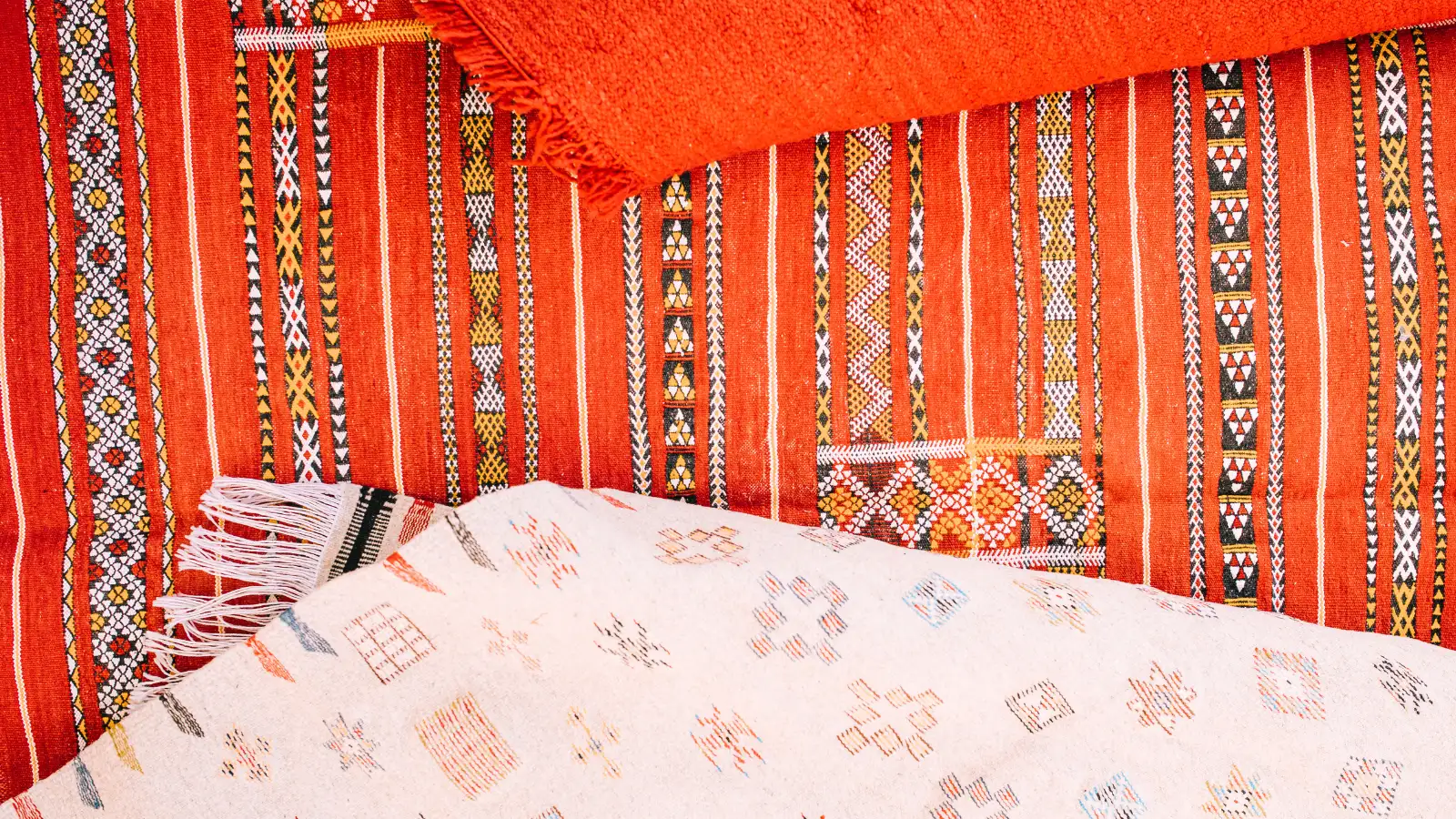
In India, the craft is anchored in three main centres: Pochampally and Chirala in Telangana, Patan in Gujarat, and Sambalpur and Sonepur in Odisha. Each regional tradition has its own name for the cloth, Pochampally ikat, Patola, Bandha, and its own grammar of motifs, but all three rest on the same underlying method.
A weaver stretches bundles of thread across a frame and calculates, by hand, exactly which sections of each thread will carry which colour in the finished cloth. Those sections are bound tightly with plastic strip or banana fibre, the binding resists the dye. The thread is then dipped into a dye bath. The bound sections stay their original colour; the exposed sections take the dye. The binding comes off. The thread is re-stretched, re-bound in new sections for a second colour, and dipped again. A cloth with four colours in its pattern has gone through this cycle four times before the loom is even warped.
Here is where the blur comes from. When the dyed threads are finally mounted on the loom and woven, each thread must land in exactly the right position for the pattern to align. But thread is not rigid. It stretches slightly, shifts a fraction of a millimetre under tension, absorbs humidity and relaxes. No matter how carefully a weaver aligns the warp, the dyed sections never sit in perfect register. The colour bleeds a thread or two beyond its intended boundary. Multiply that by hundreds of threads across the width of the cloth, and the edge of every motif acquires that characteristic soft halo.
In a double ikat, where both the warp threads running lengthwise and the weft threads running crosswise are resist-dyed before weaving, the alignment challenge doubles. Patan's Patola silk is one of the few double ikats still made in India. A single Patola sari can take a family of weavers several months to complete, because both sets of threads must be calculated, bound, dyed, and then woven so that their patterns meet at every intersection. When they do, the result is a geometric precision that seems impossible given the method. When they are fractionally off, the blur appears, and that slight imprecision is considered part of the cloth's character, not a defect.
A simple test: turn the cloth over. In handwoven ikat, the pattern on the reverse is almost as clear as the front, because the dye went all the way through the yarn. In a printed fabric, the reverse is pale or blank.
This is why ikat feels different from printed fabric even before you understand the process. The pattern was not applied. It was planned into the thread, section by section, before the cloth existed. The blur at the edge of every motif is the record of that planning meeting the resistance of physical material, thread that moves, dye that spreads, hands that are precise but not machines.
The halo is not a flaw in the weaving. It is proof that a person made it.
What the Word Ikat Actually Means
The word comes from the Malay-Indonesian mengikat, meaning to tie or to bind. It reached the rest of the world through Dutch traders who carried the cloth from the Indonesian archipelago to Europe in the seventeenth century. The technique itself is far older and appears independently across Central Asia, Japan, India, and pre-Columbian South America, which tells you that the logic of the method is intuitive enough that weavers in unconnected places arrived at it separately.In India, the craft is anchored in three main centres: Pochampally and Chirala in Telangana, Patan in Gujarat, and Sambalpur and Sonepur in Odisha. Each regional tradition has its own name for the cloth, Pochampally ikat, Patola, Bandha, and its own grammar of motifs, but all three rest on the same underlying method.
How the Blur Gets Built Into the Thread
Most woven textiles are designed on paper first and then executed on the loom. Ikat works in the opposite direction. The pattern is applied to the yarn before weaving begins.A weaver stretches bundles of thread across a frame and calculates, by hand, exactly which sections of each thread will carry which colour in the finished cloth. Those sections are bound tightly with plastic strip or banana fibre, the binding resists the dye. The thread is then dipped into a dye bath. The bound sections stay their original colour; the exposed sections take the dye. The binding comes off. The thread is re-stretched, re-bound in new sections for a second colour, and dipped again. A cloth with four colours in its pattern has gone through this cycle four times before the loom is even warped.
You may also like
- At IIT Bombay, fallen leaves once costing nearly Rs 50 lakh a year to transport are being turned into cooking fuel; the pellets help feed 1,200 students and reportedly cut LPG use in one hostel by 60%
- Rajasthan Birth Certificate 2026: Getting a birth certificate in Rajasthan has become easy; now apply through e-Mitra
- Community Connect: Gen Z's growing love affair with digicams
- India's chessboard gets its 100th king
- Samantha Ruth Prabhu's pregnancy workouts spark interest: Which exercises are safe for expectant mothers?
Here is where the blur comes from. When the dyed threads are finally mounted on the loom and woven, each thread must land in exactly the right position for the pattern to align. But thread is not rigid. It stretches slightly, shifts a fraction of a millimetre under tension, absorbs humidity and relaxes. No matter how carefully a weaver aligns the warp, the dyed sections never sit in perfect register. The colour bleeds a thread or two beyond its intended boundary. Multiply that by hundreds of threads across the width of the cloth, and the edge of every motif acquires that characteristic soft halo.
In a double ikat, where both the warp threads running lengthwise and the weft threads running crosswise are resist-dyed before weaving, the alignment challenge doubles. Patan's Patola silk is one of the few double ikats still made in India. A single Patola sari can take a family of weavers several months to complete, because both sets of threads must be calculated, bound, dyed, and then woven so that their patterns meet at every intersection. When they do, the result is a geometric precision that seems impossible given the method. When they are fractionally off, the blur appears, and that slight imprecision is considered part of the cloth's character, not a defect.
Why Machine Ikat Looks Different
Printed ikat exists. A mill prints a blurred-edge pattern directly onto finished cloth and sells it as ikat-print. The visual reference is the same, feathered edges, bold geometry, but the physical reason for the blur is absent. A printed edge is a simulation of a consequence. The original blur was never designed; it arrived as the unavoidable result of trying to hold dyed thread in perfect position across a moving loom. That is why handwoven ikat, held close, has a depth that printed ikat does not. The colour lives inside the thread, not on its surface.A simple test: turn the cloth over. In handwoven ikat, the pattern on the reverse is almost as clear as the front, because the dye went all the way through the yarn. In a printed fabric, the reverse is pale or blank.
The Motifs and What They Carry
Ikat patterns are not decorative choices made at a designer's desk. In most regional traditions, specific motifs belong to specific communities or occasions. Odisha's Bandha cloth uses fish, elephants, and conch shells, all drawn from the iconography of the region's temple traditions. Pochampally's geometric diamonds were historically associated with particular weaving families. Patan's Patola carried motifs that indicated which community a woman belonged to, readable by other women at a glance.This is why ikat feels different from printed fabric even before you understand the process. The pattern was not applied. It was planned into the thread, section by section, before the cloth existed. The blur at the edge of every motif is the record of that planning meeting the resistance of physical material, thread that moves, dye that spreads, hands that are precise but not machines.
The halo is not a flaw in the weaving. It is proof that a person made it.






Loving Newspoint? Download the app now
