
Valentine’s Day History Runs Deeper Than You Realise, Here Are 30 Fascinating Facts About The Holiday

Valentine’s Day, celebrated every year on 14 February, has evolved into a global symbol of love, friendship, and emotional expression. While modern celebrations revolve around flowers, chocolates, and romantic gestures, the occasion carries centuries of layered history. Rooted in religious legends, ancient festivals, literary traditions, and commercial evolution, the day reflects changing cultural values around relationships and affection. Here are 30 fascinating facts that trace how Valentine’s Day transformed into the worldwide celebration we know today.


Alternative observances for singles, pop-culture inspired friendship celebrations, romantic films, and literary customs such as writing letters to Shakespearean characters further demonstrate how the day has grown beyond its original scope. Even phrases like 'XOXO' and the term 'lovebirds' carry symbolic connections to affection and partnership, reinforcing the holiday’s emotional language.
Valentine’s Day today stands as a fusion of mythology, religion, commerce, and global culture. Its journey from ancient ritual to modern love festival reflects humanity’s enduring desire to celebrate connection in all its forms.
Origins, Legends And Ancient Influences
- Valentine’s Day is named after Saint Valentine, though historians believe more than one martyr shared the name.
- Two figures most associated with the day are linked to Rome and Terni.
- One legend says a priest secretly married couples despite an imperial ban.
- Another story recounts a jailed cleric sending a heartfelt note signed in a romantic manner.
- The celebration also draws from an ancient Roman fertility festival held in mid-February.
- That festival honoured agricultural deities and symbolic founders of Rome.
- Rituals were believed to promote fertility and prosperity.
- Religious authorities later replaced the pagan observance with a saint’s feast day.
Medieval Romance And Literary Connections
- By the Middle Ages, the date became associated with courtship.
- Europeans believed birds began mating around mid-February.
- Literary works reinforced the romantic symbolism of the date.
- Written love notes gained popularity during this era.
- One of the earliest recorded Valentines was sent in the 15th century by an imprisoned nobleman to his wife.
Cards, Messages And Written Traditions
- By the 17th century, exchanging Valentine letters had become common.
- Special booklets were sold to help people write romantic messages.
- Mass-produced Valentine cards emerged in the 19th century.
- Decorative cards featuring lace and ribbons commercialised the tradition.
- Today, around 145 million Valentine cards are exchanged annually.
- Teachers receive the highest number, followed by children, mothers, and spouses.
Symbols Of Love And Romantic Imagery
- Cupid, the winged archer, originates from classical mythology.
- He evolved from a youthful love deity into the cherubic figure recognised today.
- Floral gifting grew through the concept of symbolic flower meanings.
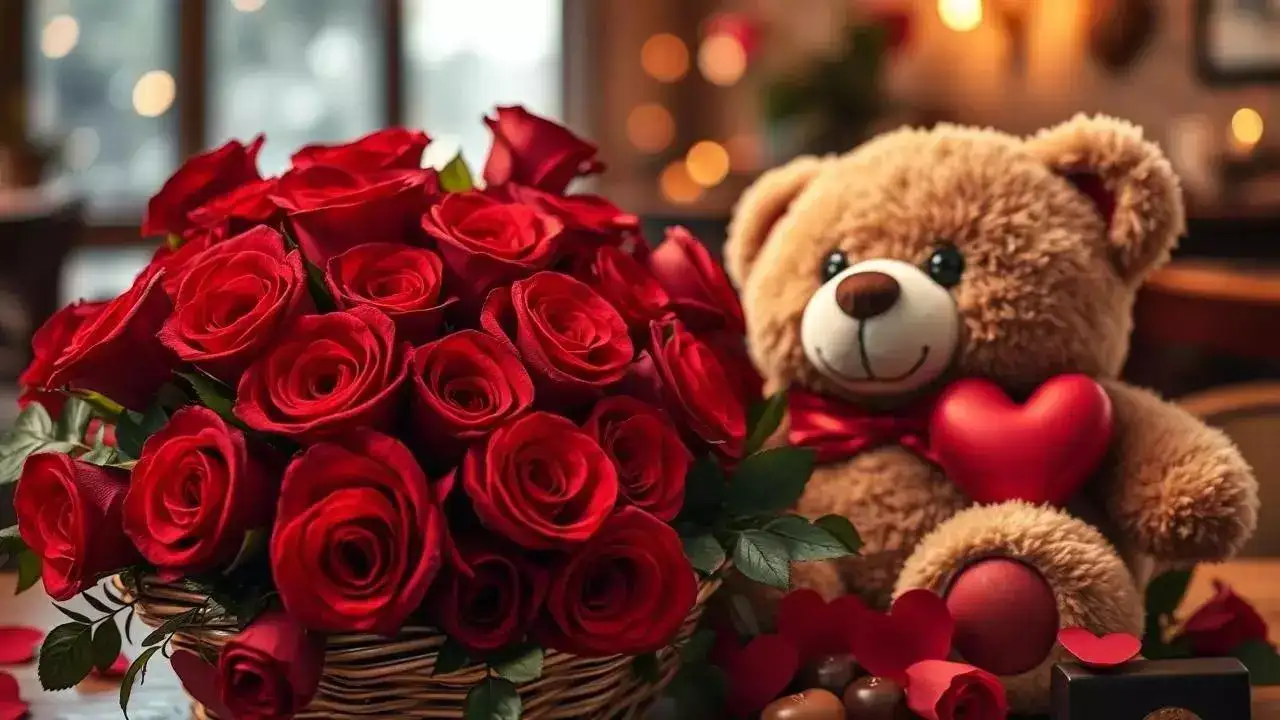
- Red roses became the ultimate emblem of romantic love.
- Hundreds of millions of roses are cultivated globally for the occasion each year.
Chocolate, Candy And Sweet Gestures
- Heart-shaped chocolate boxes were introduced in the 19th century to boost gift appeal.
- Millions are sold annually as romantic presents.
- Conversation sweets began as medicinal lozenges before becoming candy.
- Printed messages were later added, creating the iconic love-themed confectionery.
- Billions of these sweets are produced yearly, sometimes featuring modern phrases.
Modern Celebrations And Cultural Trends
- Valentine’s Day spending now reaches billions, covering jewellery, dining, gifts, and experiences.
Alternative observances for singles, pop-culture inspired friendship celebrations, romantic films, and literary customs such as writing letters to Shakespearean characters further demonstrate how the day has grown beyond its original scope. Even phrases like 'XOXO' and the term 'lovebirds' carry symbolic connections to affection and partnership, reinforcing the holiday’s emotional language.
Valentine’s Day today stands as a fusion of mythology, religion, commerce, and global culture. Its journey from ancient ritual to modern love festival reflects humanity’s enduring desire to celebrate connection in all its forms.
Next Story