
What Are Malaysia’s 24 Festive Drums? Discover the Story Behind This Unique Art Form

The 24 Festive Drums , also known as Gendang 24 Musim , are a distinctive Malaysian performance art that combines powerful percussion, coordinated movements and traditional Chinese cultural elements. Featuring 24 drums, the performance brings together rhythmic patterns, expressive choreography and Chinese calligraphy to create a striking spectacle. Each drum represents one of the 24 solar terms in the traditional Chinese calendar, connecting the performance with seasonal changes and nature.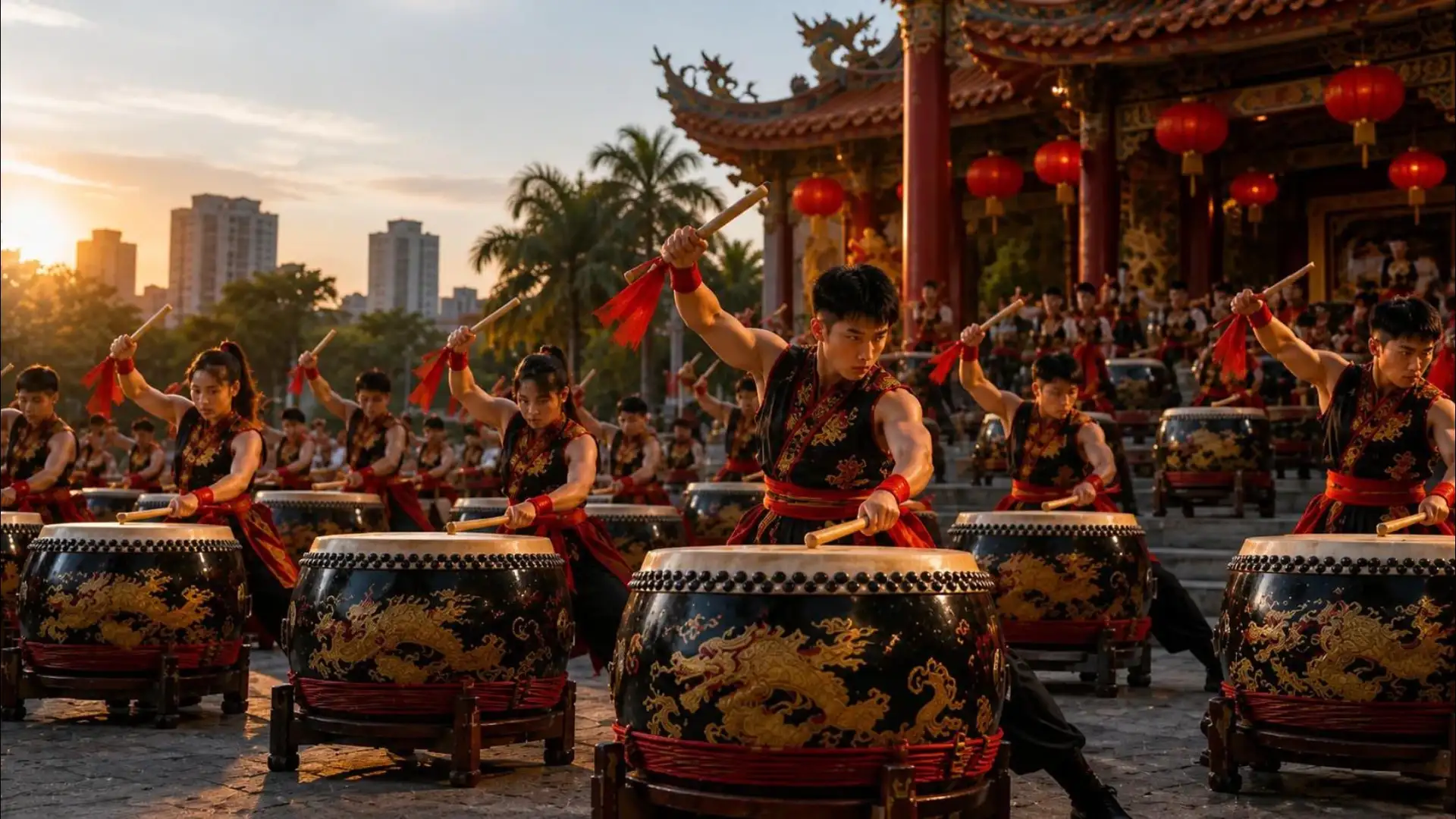
Although the art form draws inspiration from Chinese cultural traditions, it was created in Malaysia. Since its beginnings in Johor Bahru in 1988, it has developed into an important cultural expression, performed at schools, festivals and events across the country.
The first performance used nine drums. The concept subsequently expanded to 24, giving each drum a connection to a specific solar term. The names were written on the drums in Chinese calligraphy, adding a visual and cultural dimension to the performance.
The first troupe was formed at Foon Yew High School in Johor Bahru, helping establish a foundation for the art form’s growth.
The performance reflects this connection through its rhythms, movements and formations. Drummers may use coordinated gestures to evoke elements of nature, farming and changing seasons. The combination of sound and movement gives the art form its distinctive character.
The changing rhythms, energetic movements and strong visual presentation make it suitable for cultural festivals, school competitions and public celebrations. Teamwork and timing are essential because every performer contributes to the overall sound and choreography.
Its reach has continued to expand beyond its original community, with people from different backgrounds participating in performances and competitions. This growing interest reflects how a culturally rooted art form can also become part of a wider national identity.
Malaysia’s 24 Festive Drums are therefore more than a display of percussion skills. They represent creativity, collective effort and the continuing evolution of cultural heritage.
Although the art form draws inspiration from Chinese cultural traditions, it was created in Malaysia. Since its beginnings in Johor Bahru in 1988, it has developed into an important cultural expression, performed at schools, festivals and events across the country.
How Did Malaysia’s 24 Festive Drums Begin?
The story began in Johor Bahru in 1988, when cultural figure Tan Chai Puan and musician Tan Hooi Song helped develop the concept. The idea brought together the 24 solar terms, Chinese calligraphy and the powerful drums associated with lion dance traditions.The first performance used nine drums. The concept subsequently expanded to 24, giving each drum a connection to a specific solar term. The names were written on the drums in Chinese calligraphy, adding a visual and cultural dimension to the performance.
The first troupe was formed at Foon Yew High School in Johor Bahru, helping establish a foundation for the art form’s growth.
You may also like
- Karwa Chauth 2026: Take your wife out after she breaks her fast—romantic spots in 5 cities, including Delhi and Mumbai.
- Shah Rukh Khan's 'King' Reportedly Plans a Special Song Inspired by 'Deewangi Deewangi'
- Nearly 300 young men from rural Karnataka joined a month-long free military recruitment camp at a village mutt, where lodging, meals and training from retired service personnel were provided at no cost
- “These people are going to deceive you…”: Govinda reveals her mother's final request 15 days before her death; “Promise me, Govind…”
- The Shield That Protects Another's Faith
What Do the 24 Drums Represent?
The 24 drums correspond to the 24 solar terms of the traditional Chinese calendar. These terms mark seasonal changes and natural patterns that historically helped guide agricultural activities.The performance reflects this connection through its rhythms, movements and formations. Drummers may use coordinated gestures to evoke elements of nature, farming and changing seasons. The combination of sound and movement gives the art form its distinctive character.
Why Is the Performance So Powerful?
Unlike performances in which drums simply accompany dancers, 24 Festive Drums places the drummers at the centre of the action. Performers strike the drums in synchronisation while moving through carefully arranged formations.The changing rhythms, energetic movements and strong visual presentation make it suitable for cultural festivals, school competitions and public celebrations. Teamwork and timing are essential because every performer contributes to the overall sound and choreography.
A Growing Part of Malaysian Cultural Heritage
The 24 Festive Drums were recognised as Malaysia’s national intangible cultural heritage in 2009. Schools and cultural organisations have played an important role in passing the performance to younger generations.Its reach has continued to expand beyond its original community, with people from different backgrounds participating in performances and competitions. This growing interest reflects how a culturally rooted art form can also become part of a wider national identity.
Malaysia’s 24 Festive Drums are therefore more than a display of percussion skills. They represent creativity, collective effort and the continuing evolution of cultural heritage.






Loving Newspoint? Download the app now
