
You're Not Falling in Love Faster; You Might Be Experiencing 'Floodlighting'

Picture this. You've barely known someone for a week. Maybe you've only met twice. Maybe you've just been texting. And somehow. You already know about their childhood, every ex they've ever dated, their biggest heartbreak, family issues, trust issues, and the fact that they're terrified of being abandoned. Part of you feels special. "They must really trust me." But another part of you is thinking, "Isn't this a lot?" Turns out, that feeling has a name. It's called floodlighting, and no, it doesn't mean someone is fake. It simply means the emotional connection might be moving much faster than the relationship itself.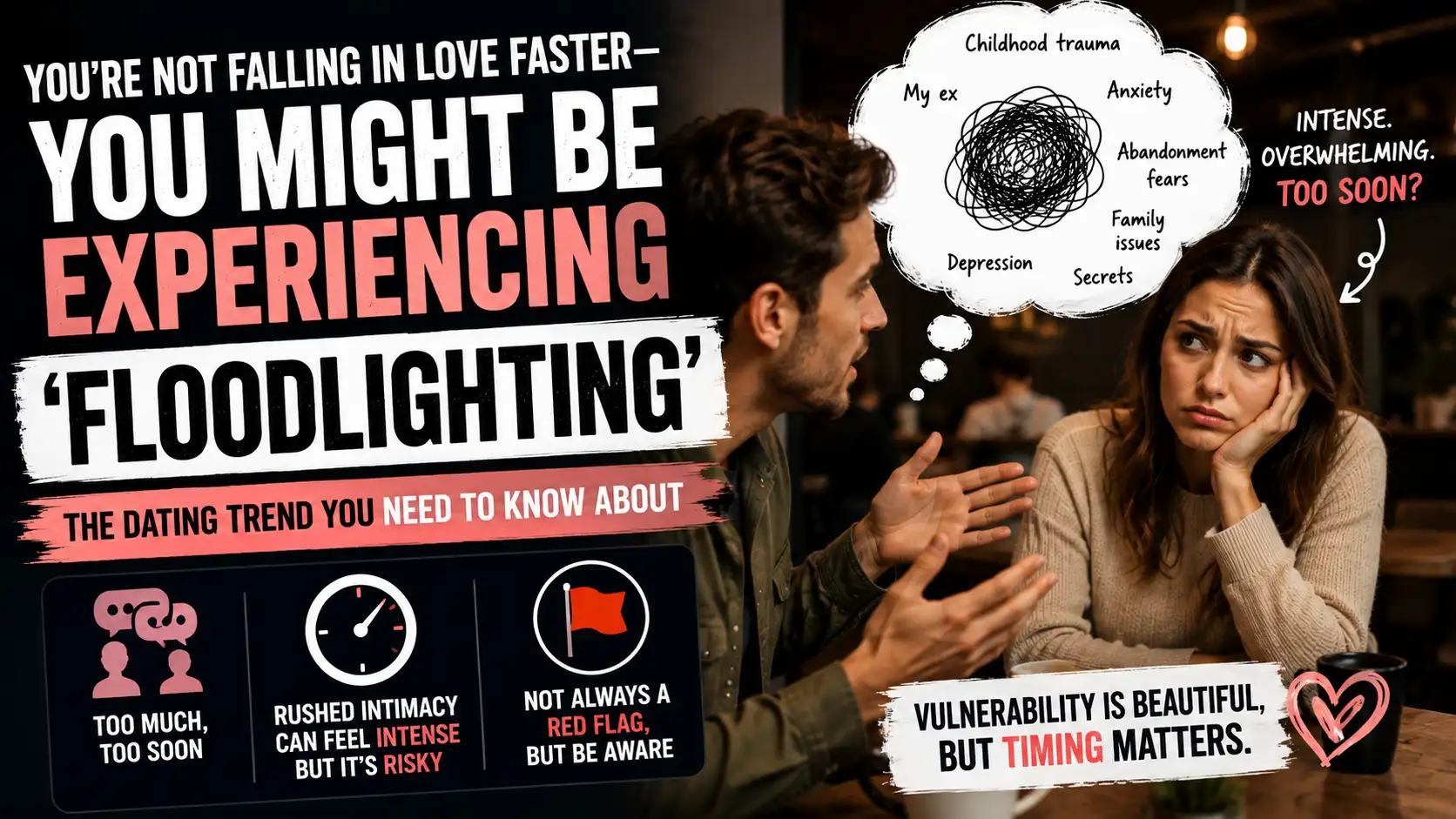
The name is dramatic, but floodlighting has nothing to do with lights. It’s when someone shares incredibly personal things with you almost right away after meeting you. Not bits of facts. The really heavy stuff. Trauma, family problems, painful memories, and their biggest fears are all of it.
There’s no shame in opening up. In fact, vulnerability is what gives relationships meaning. The issue arises when all this occurs before the development of trust.
Most people don't do it on purpose. Sometimes they're just excited because they've finally met someone who listens. Sometimes they've been carrying so much emotional baggage that the moment someone feels safe, everything spills out.
And sometimes they're scared. Scared that if they don't tell you everything right away, you'll leave before getting to know the "real" them. It's usually less about manipulation and more about fear.
Imagine meeting a stranger and asking them to hold a suitcase you've been carrying for years. That's kind of what floodlighting feels like. The person listening suddenly has a lot to process. They may feel responsible for fixing problems they barely understand.
Or they start feeling emotionally invested much sooner than they normally would. That's why these conversations can create a connection that feels incredibly deep. even though the relationship is still brand new.
Think about your closest friend. You probably didn't tell them every secret on Day One. You laughed together first. Shared random conversations. Spent time getting to know each other. Only then did the deeper conversations happen. This is the way emotional trust usually grows. Slow. Of course. Nobody was in a hurry.
Of course, early opening doesn’t mean someone’s floodlighting. Life isn’t a rule book. Sometimes people do click fast, and that’s perfectly fine.
The difference is simple. Healthy vulnerability opens the door to conversation. "Floodlighting is frequently like an emotional avalanche." One makes you feel more intimate. The other one leaves you overwhelmed.
Social media has given us a new dating word almost every month, but 'floodlighting' is one that's actually worth knowing. Not because it tells you to hide your emotions. But because it reminds us that real intimacy isn't built in one conversation.
It's built on dozens of ordinary ones. The strongest relationships usually aren't the fastest. They're the ones where both people slowly learn that it's safe to share a little more each time.
So, What Is Floodlighting ?
The name is dramatic, but floodlighting has nothing to do with lights. It’s when someone shares incredibly personal things with you almost right away after meeting you. Not bits of facts. The really heavy stuff. Trauma, family problems, painful memories, and their biggest fears are all of it.
There’s no shame in opening up. In fact, vulnerability is what gives relationships meaning. The issue arises when all this occurs before the development of trust.
Why Does It Happen?
Most people don't do it on purpose. Sometimes they're just excited because they've finally met someone who listens. Sometimes they've been carrying so much emotional baggage that the moment someone feels safe, everything spills out.
And sometimes they're scared. Scared that if they don't tell you everything right away, you'll leave before getting to know the "real" them. It's usually less about manipulation and more about fear.
You may also like
- In 2021, a California teacher arrived in Portugal with four suitcases and her dog; five years later, she owns two apartments and is applying for citizenship
- Zendaya and Tom Holland: A Hollywood Love Story
- Should you give your baby a pacifier? What science says about the benefits, hidden risks of using them and what parents need to know
- Using credit and debit cards abroad to become costlier; banks hike overseas fees..
- Protecting Children in Today's World: Recognising Red Flags and Understanding Rights
The Problem Isn't the story; it's the timing
Imagine meeting a stranger and asking them to hold a suitcase you've been carrying for years. That's kind of what floodlighting feels like. The person listening suddenly has a lot to process. They may feel responsible for fixing problems they barely understand.
Or they start feeling emotionally invested much sooner than they normally would. That's why these conversations can create a connection that feels incredibly deep. even though the relationship is still brand new.
Healthy Vulnerability Feels Different
Think about your closest friend. You probably didn't tell them every secret on Day One. You laughed together first. Shared random conversations. Spent time getting to know each other. Only then did the deeper conversations happen. This is the way emotional trust usually grows. Slow. Of course. Nobody was in a hurry.
Not Every Deep Conversation Is Floodlighting
Of course, early opening doesn’t mean someone’s floodlighting. Life isn’t a rule book. Sometimes people do click fast, and that’s perfectly fine.
The difference is simple. Healthy vulnerability opens the door to conversation. "Floodlighting is frequently like an emotional avalanche." One makes you feel more intimate. The other one leaves you overwhelmed.
Getting Close Takes Time
Social media has given us a new dating word almost every month, but 'floodlighting' is one that's actually worth knowing. Not because it tells you to hide your emotions. But because it reminds us that real intimacy isn't built in one conversation.
It's built on dozens of ordinary ones. The strongest relationships usually aren't the fastest. They're the ones where both people slowly learn that it's safe to share a little more each time.






Loving Newspoint? Download the app now
