
What Is Mota Anaj? Health Benefits, Types and Reasons Behind Its Growing Popularity

Mota Anaj , commonly known as coarse grains and millets, is gaining popularity as people look for healthier alternatives to refined wheat flour and polished white rice. These traditional Indian grains are packed with dietary fibre, essential minerals, plant-based nutrients and antioxidants that support overall well-being. From improving digestion to helping manage blood sugar levels, Mota Anaj offers several potential health benefits. Its growing popularity also reflects a renewed interest in traditional Indian diets, sustainable farming and nutrient-rich foods that can easily become part of everyday meals.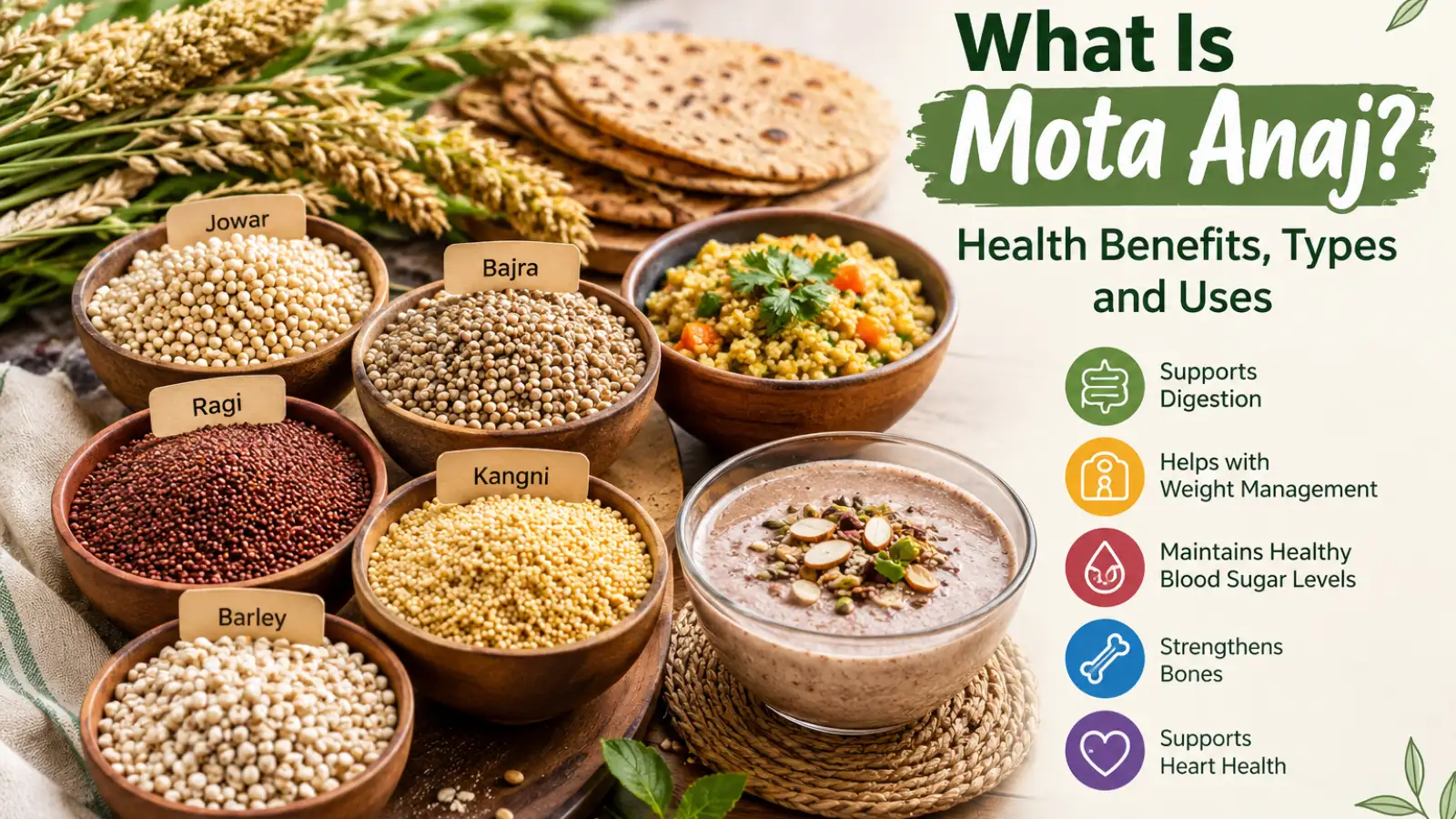
For generations, these grains have been a staple in Indian households, especially in rural areas where farmers cultivated crops suited to dry climates and low-water conditions. Today, they are finding their way back into modern kitchens because of their nutritional value and versatility.
Some popular varieties of Mota Anaj include:
Certain types of fibre also act as prebiotics, providing nourishment for beneficial gut bacteria. A healthy gut microbiome plays an important role in digestion and overall health.
Replacing some refined grains with whole grains and millets can therefore be a practical way to increase daily fibre intake. However, people who are not accustomed to eating fibre-rich foods should increase their intake gradually to minimise bloating and discomfort.
Whole grains also tend to require more chewing than highly refined foods, which may help make meals more satisfying. The effect on body weight, however, depends on overall calorie intake, portion sizes, physical activity and the rest of the diet.
For a balanced meal, try pairing millet rotis or cooked millets with vegetables, pulses, curd or another suitable source of protein. Simply replacing one grain with another will not automatically lead to weight loss.
Research suggests that some millet-based diets may improve blood sugar control compared with diets based heavily on refined grains. However, the effect varies depending on the type of millet, how it is processed, the cooking method and what other foods are eaten with it.
Those living with diabetes should pay attention to portion sizes and their individual glucose response. Mota Anaj is not a substitute for prescribed medication or medical advice.
Including ragi porridge, dosa, roti or other ragi-based dishes can help increase calcium intake. This may be especially useful for people who need additional dietary sources of the mineral.
However, calcium requirements vary by age and individual circumstances. A balanced diet should also provide adequate protein, vitamin D and other nutrients necessary for bone health.
Iron deficiency can contribute to anaemia, fatigue and weakness. Including iron-containing foods such as bajra, lentils, beans and leafy green vegetables can support overall iron intake.
The body does not absorb all forms of dietary iron equally efficiently. Pairing plant-based iron sources with vitamin C-rich foods, such as lemon, guava or tomatoes, can improve the absorption of non-haem iron.
Although Mota Anaj can contribute to a nutritious diet, people with confirmed anaemia may require medical evaluation and additional treatment.
Barley, for example, contains beta-glucan, a type of soluble fibre associated with lower LDL cholesterol when consumed in sufficient amounts as part of a suitable diet. Whole grains may also contribute to better heart health when they replace refined grains in a balanced eating pattern.
For the best results, combine whole grains with vegetables, pulses, nuts and healthy fats while limiting excess salt, added sugar and heavily processed foods.
Growing Interest in Healthy Eating
More consumers are paying attention to fibre intake, food quality and the nutritional value of everyday meals. As a result, traditional grains are increasingly being considered alternatives to refined staples.
Their versatility also makes them suitable for people who want to introduce more variety into their diets without completely changing their eating habits.
However, people with coeliac disease should choose products certified as gluten-free because grains may become contaminated during harvesting, processing or packaging. Barley, another grain sometimes grouped with traditional coarse grains, contains gluten and is not suitable for a gluten-free diet.
Their ability to grow in challenging conditions makes them important to discussions about climate-resilient agriculture and food security.
This recognition has encouraged greater interest in millet-based foods, farming practices and their potential role in more diverse food systems.
Here are a few easy ways to get started:
Mota Anaj is more than a traditional food making a comeback. Millets and other whole grains can provide fibre, minerals and beneficial plant compounds while adding variety to everyday meals. Depending on the grain and how it is prepared, they may support digestion, weight management, blood sugar control and heart health.
Their adaptability and suitability for many dry-growing regions also make them valuable from an agricultural perspective. Rather than treating Mota Anaj as a passing food trend, consider including different varieties in a balanced diet. Small changes, such as choosing millet rotis or adding millet khichdi to your weekly menu, can be a practical starting point for healthier eating.
What Is Mota Anaj ?
Mota Anaj refers to a group of traditional grains, particularly millets and other minimally processed whole grains. Unlike refined grains, which lose some of their fibre and nutrients during processing, whole grains generally retain more of their naturally occurring nutritional components.For generations, these grains have been a staple in Indian households, especially in rural areas where farmers cultivated crops suited to dry climates and low-water conditions. Today, they are finding their way back into modern kitchens because of their nutritional value and versatility.
Some popular varieties of Mota Anaj include:
- Jowar (Sorghum): A source of dietary fibre, plant protein and antioxidant compounds.
- Bajra (Pearl Millet): Provides iron, zinc, magnesium and B vitamins.
- Ragi (Finger Millet): Particularly valued for its calcium content, which supports bone health.
- Kangni (Foxtail Millet): Contains complex carbohydrates and dietary fibre.
- Jau (Barley): Rich in soluble fibre, including beta-glucan, which can help support healthy cholesterol levels.
1. Supports Digestion and Gut Health
One of the key benefits of Mota Anaj is its dietary fibre content. Fibre helps maintain regular bowel movements, adds bulk to stools and can reduce the likelihood of constipation when consumed with adequate fluids.Certain types of fibre also act as prebiotics, providing nourishment for beneficial gut bacteria. A healthy gut microbiome plays an important role in digestion and overall health.
Replacing some refined grains with whole grains and millets can therefore be a practical way to increase daily fibre intake. However, people who are not accustomed to eating fibre-rich foods should increase their intake gradually to minimise bloating and discomfort.
2. May Help With Weight Management
Mota Anaj can be a useful addition to a weight-management diet. Its fibre content may help people feel full for longer, potentially reducing the urge to snack between meals.Whole grains also tend to require more chewing than highly refined foods, which may help make meals more satisfying. The effect on body weight, however, depends on overall calorie intake, portion sizes, physical activity and the rest of the diet.
For a balanced meal, try pairing millet rotis or cooked millets with vegetables, pulses, curd or another suitable source of protein. Simply replacing one grain with another will not automatically lead to weight loss.
3. Helps Maintain Healthy Blood Sugar Levels
People concerned about blood sugar often look for alternatives to highly refined carbohydrates. Certain millets contain fibre and complex carbohydrates that may help moderate the rate at which glucose enters the bloodstream.Research suggests that some millet-based diets may improve blood sugar control compared with diets based heavily on refined grains. However, the effect varies depending on the type of millet, how it is processed, the cooking method and what other foods are eaten with it.
Those living with diabetes should pay attention to portion sizes and their individual glucose response. Mota Anaj is not a substitute for prescribed medication or medical advice.
4. Provides Nutrients for Stronger Bones
Ragi is particularly well known for its calcium content. Calcium is essential for maintaining bones and teeth, supporting muscle function and helping the body perform several important processes.Including ragi porridge, dosa, roti or other ragi-based dishes can help increase calcium intake. This may be especially useful for people who need additional dietary sources of the mineral.
However, calcium requirements vary by age and individual circumstances. A balanced diet should also provide adequate protein, vitamin D and other nutrients necessary for bone health.
5. May Help Address Iron Deficiency
Bajra and several other traditional grains contain iron, a mineral required to produce haemoglobin, the protein in red blood cells that carries oxygen throughout the body.Iron deficiency can contribute to anaemia, fatigue and weakness. Including iron-containing foods such as bajra, lentils, beans and leafy green vegetables can support overall iron intake.
The body does not absorb all forms of dietary iron equally efficiently. Pairing plant-based iron sources with vitamin C-rich foods, such as lemon, guava or tomatoes, can improve the absorption of non-haem iron.
Although Mota Anaj can contribute to a nutritious diet, people with confirmed anaemia may require medical evaluation and additional treatment.
6. Supports Heart Health
Some varieties of Mota Anaj contain soluble fibre and other beneficial plant compounds that may support cardiovascular health.Barley, for example, contains beta-glucan, a type of soluble fibre associated with lower LDL cholesterol when consumed in sufficient amounts as part of a suitable diet. Whole grains may also contribute to better heart health when they replace refined grains in a balanced eating pattern.
For the best results, combine whole grains with vegetables, pulses, nuts and healthy fats while limiting excess salt, added sugar and heavily processed foods.
Why Is Mota Anaj Becoming Popular Again?
The renewed interest in Mota Anaj is being driven by a combination of health awareness, traditional food practices and environmental concerns.Growing Interest in Healthy Eating
More consumers are paying attention to fibre intake, food quality and the nutritional value of everyday meals. As a result, traditional grains are increasingly being considered alternatives to refined staples.
Their versatility also makes them suitable for people who want to introduce more variety into their diets without completely changing their eating habits.
A Naturally Gluten-Free Option
Many millets, including jowar, bajra and ragi, are naturally gluten-free. This makes them potential alternatives to wheat for people who need to avoid gluten.However, people with coeliac disease should choose products certified as gluten-free because grains may become contaminated during harvesting, processing or packaging. Barley, another grain sometimes grouped with traditional coarse grains, contains gluten and is not suitable for a gluten-free diet.
Lower Water Requirements
Millets are often well suited to dry and semi-arid conditions. Many varieties can grow with less water than water-intensive crops such as paddy rice, although actual requirements depend on the crop, region and farming practices.Their ability to grow in challenging conditions makes them important to discussions about climate-resilient agriculture and food security.
Government and Global Recognition
India has renewed its focus on millets through awareness campaigns and initiatives promoting their cultivation and consumption. The United Nations declared 2023 the International Year of Millets, helping bring these traditional crops into the global spotlight.This recognition has encouraged greater interest in millet-based foods, farming practices and their potential role in more diverse food systems.
You may also like
- In 2018, Andhra Pradesh's Singampalli Parwathi borrowed Rs 20,000 to trade raw cashews; today she processes 11 grades of cashew kernels and reports annual business turnover near Rs 50 lakh
- Peter Marino named CFDA's 2026 'Fashion Icon' for his bold influence on luxury fashion
- New Study Finds Whole Grains and Dairy May Influence Colon Cancer Risk Differently Than Processed Meat
How to Include Mota Anaj in Your Daily Diet
Adding Mota Anaj to everyday meals does not require complicated recipes. These grains can be used in familiar dishes or incorporated into newer food options.Here are a few easy ways to get started:
- Breakfast: Prepare ragi porridge, millet upma or foxtail millet poha.
- Lunch: Replace some regular wheat rotis with jowar or bajra rotis.
- Dinner: Try millet khichdi with lentils and vegetables.
- Snacks: Choose homemade millet-based snacks with moderate amounts of oil and salt.
- Baking: Experiment with millet flour in pancakes, flatbreads and selected baked goods.
- Grain bowls: Combine cooked millets with vegetables, pulses, nuts and a protein-rich dressing.
Are There Any Side Effects of Eating Mota Anaj?
Mota Anaj is generally safe for most people when eaten as part of a varied, balanced diet. However, a few precautions are worth keeping in mind.- Digestive discomfort: Increasing fibre intake too quickly may cause gas, bloating or abdominal discomfort.
- Portion sizes: Millets and other grains still contain carbohydrates and calories, so serving sizes matter.
- Gluten sensitivity: Most millets are naturally gluten-free, but barley contains gluten. Cross-contamination is also pos
- Nutritional variety: Relying on a single grain can limit dietary variety. Rotate different grains and include vegetables, pulses, fruits and protein sources.
Mota Anaj is more than a traditional food making a comeback. Millets and other whole grains can provide fibre, minerals and beneficial plant compounds while adding variety to everyday meals. Depending on the grain and how it is prepared, they may support digestion, weight management, blood sugar control and heart health.
Their adaptability and suitability for many dry-growing regions also make them valuable from an agricultural perspective. Rather than treating Mota Anaj as a passing food trend, consider including different varieties in a balanced diet. Small changes, such as choosing millet rotis or adding millet khichdi to your weekly menu, can be a practical starting point for healthier eating.






Loving Newspoint? Download the app now
