
What Should Not Be Eaten During Monsoon? Foods to Avoid for Better Health

The arrival of the monsoon brings welcome relief from the summer heat, lush green landscapes and the irresistible aroma of rain-soaked earth. It is also the season of hot snacks, roadside treats and comfort foods. However, the rainy season creates ideal conditions for bacteria, fungi and other harmful microorganisms to thrive, increasing the risk of food contamination and waterborne illnesses. At the same time, digestion tends to slow down due to changes in humidity and temperature, making certain foods harder for the body to process. Knowing what should not be eaten during the monsoon can help reduce the risk of infections, digestive problems and seasonal illnesses while ensuring you enjoy the season safely.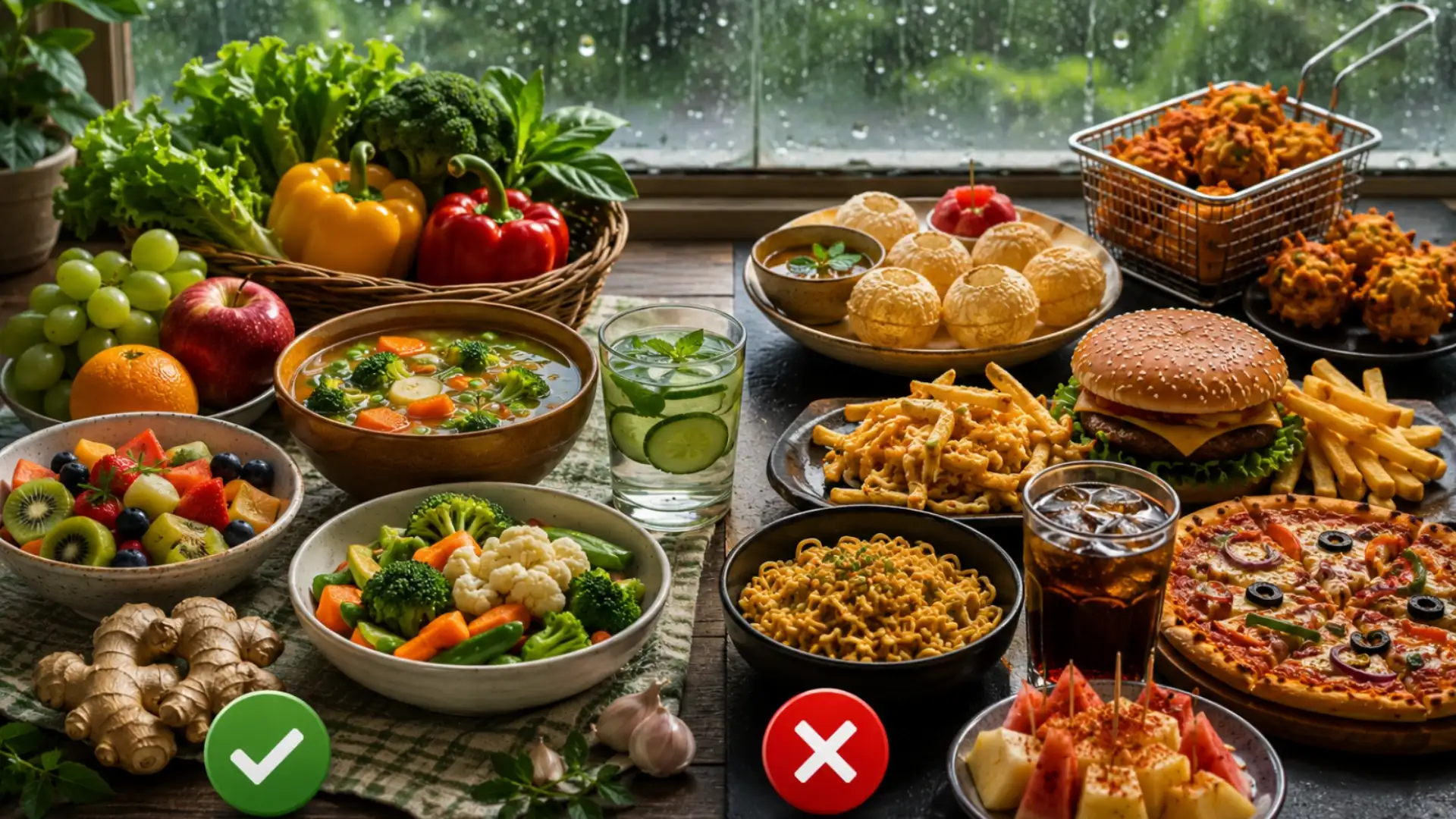
Health experts often recommend eating freshly prepared meals, maintaining proper hygiene and avoiding foods that spoil easily. Making careful dietary choices can help prevent common monsoon ailments such as food poisoning, diarrhoea, typhoid and stomach infections.
Vegetables such as spinach, lettuce, cabbage and fenugreek can harbour mud, insects and microorganisms because they grow close to the ground. Heavy rainfall also increases the likelihood of contamination.
This does not mean they should never be eaten, but they should be thoroughly washed and cooked properly rather than consumed raw in salads.
Items such as pani puri, chaat, cut fruits and uncovered snacks may be prepared using water of uncertain quality or exposed to dust, flies and moisture for extended periods.
These conditions make bacterial growth more likely, increasing the risk of gastrointestinal infections.
If you are craving your favourite snacks, preparing them at home using clean ingredients is a much safer option.
Several fish species breed during this period, and the quality and freshness of seafood may vary due to rough weather affecting fishing and transportation. Poor storage conditions can also increase the risk of spoilage.
If you choose to eat seafood, ensure it comes from a trusted source and is cooked thoroughly.
While enjoying them occasionally is unlikely to cause problems, excessive consumption can slow digestion further and contribute to acidity, bloating and indigestion.
Instead, pair fried snacks with fresh homemade chutneys or enjoy healthier alternatives like roasted corn, steamed snacks or homemade soups.
Avoid consuming stale leftovers that have remained at room temperature for long periods. Reheating does not always eliminate all toxins produced by bacteria.
Freshly cooked meals are generally the safest choice during the monsoon.
Another lesser-known fact is that herbs and spices such as ginger, turmeric, black pepper and cumin are widely used in traditional diets because they may aid digestion and add flavour without increasing the risk of spoilage.
Seasonal fruits rich in vitamin C, including guava and citrus fruits, can also help support overall immunity when consumed fresh and hygienically.
The rainy season should be a time to enjoy comforting meals and refreshing weather without compromising your health. By understanding which foods are best avoided and why, you can protect your digestive system, strengthen your immunity and make the most of the monsoon season safely.
Why Food Choices Matter During the Monsoon
The combination of high humidity, fluctuating temperatures and stagnant water makes the monsoon one of the most challenging seasons for food safety. Harmful microbes multiply more quickly, fresh produce spoils faster and contaminated water can easily enter the food chain.Health experts often recommend eating freshly prepared meals, maintaining proper hygiene and avoiding foods that spoil easily. Making careful dietary choices can help prevent common monsoon ailments such as food poisoning, diarrhoea, typhoid and stomach infections.
Leafy Vegetables May Need Extra Caution
Although leafy greens are highly nutritious, they require extra care during the rainy season.Vegetables such as spinach, lettuce, cabbage and fenugreek can harbour mud, insects and microorganisms because they grow close to the ground. Heavy rainfall also increases the likelihood of contamination.
This does not mean they should never be eaten, but they should be thoroughly washed and cooked properly rather than consumed raw in salads.
Avoid Street Food During Heavy Rains
Street food is one of the biggest attractions of the monsoon, but it also carries a higher risk of contamination.Items such as pani puri, chaat, cut fruits and uncovered snacks may be prepared using water of uncertain quality or exposed to dust, flies and moisture for extended periods.
These conditions make bacterial growth more likely, increasing the risk of gastrointestinal infections.
If you are craving your favourite snacks, preparing them at home using clean ingredients is a much safer option.
Limit Seafood During the Rainy Season
Many nutritionists advise limiting seafood consumption during the peak monsoon months.Several fish species breed during this period, and the quality and freshness of seafood may vary due to rough weather affecting fishing and transportation. Poor storage conditions can also increase the risk of spoilage.
If you choose to eat seafood, ensure it comes from a trusted source and is cooked thoroughly.
Cut Down on Fried and Oily Foods
Rainy weather often increases cravings for pakoras, samosas and other deep-fried treats.You may also like
- Major changes likely for UPI payments; more clicks required! RBI may implement a new rule..
- "When my daughter won silver, I saw myself on the podium": How an electrician father's unfinished dream shaped Commonwealth medalist Gyaneshwari Yadav and what every parent can learn from it
- How soon does your CIBIL score drop after missing an EMI? Understand bank rules
- Supreme Court Concerned Over Uninsured Vehicles; Why is 'No Insurance, No Fuel' Now Essential?
- UPI Won't Remain Completely Free; Someone Has to Bear the Cost: RBI Governor's Major Statement
While enjoying them occasionally is unlikely to cause problems, excessive consumption can slow digestion further and contribute to acidity, bloating and indigestion.
Instead, pair fried snacks with fresh homemade chutneys or enjoy healthier alternatives like roasted corn, steamed snacks or homemade soups.
Say No to Unpasteurised Dairy and Stale Food
Milk and dairy products can spoil more quickly in warm, humid conditions if not refrigerated properly.Avoid consuming stale leftovers that have remained at room temperature for long periods. Reheating does not always eliminate all toxins produced by bacteria.
Freshly cooked meals are generally the safest choice during the monsoon.
Lesser-Known Facts About Monsoon Eating
Many people believe drinking less water during the rainy season is beneficial because the weather feels cooler. In reality, proper hydration remains essential as the body still loses fluids through normal daily activities.Another lesser-known fact is that herbs and spices such as ginger, turmeric, black pepper and cumin are widely used in traditional diets because they may aid digestion and add flavour without increasing the risk of spoilage.
Seasonal fruits rich in vitamin C, including guava and citrus fruits, can also help support overall immunity when consumed fresh and hygienically.
Why a Healthy Monsoon Diet Matters
A balanced monsoon diet is not about avoiding favourite foods altogether but about making smarter choices. Eating freshly prepared meals, drinking clean water and practising good food hygiene can significantly reduce the chances of seasonal illnesses.The rainy season should be a time to enjoy comforting meals and refreshing weather without compromising your health. By understanding which foods are best avoided and why, you can protect your digestive system, strengthen your immunity and make the most of the monsoon season safely.






Loving Newspoint? Download the app now
