
What Was Gandhari's Curse On Krishna And Why Did She Give It?


Lord Krishna is worshipped as the divine guide of the Mahabharata, the protector of dharma, and an incarnation of Vishnu. Yet, one of the most surprising stories in Hindu mythology is that Krishna himself was cursed by a grieving mother. The woman was Gandhari, the queen of Hastinapura and the mother of the Kauravas. After witnessing the deaths of all her sons in the Kurukshetra War, she confronted Krishna and blamed him for not preventing the tragedy. Her curse became one of the most significant turning points in Krishna's earthly journey. But why did Gandhari curse Krishna, and what exactly was the curse? The answer lies in one of the most emotional chapters of the Mahabharata.

The Devastation After The Kurukshetra War
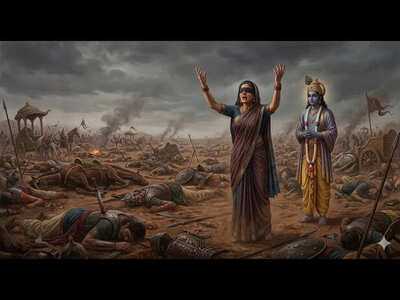 Standing amid the ruins of Kurukshetra, Gandhari faced the heartbreaking reality that all one hundred of her sons had perished in the war.
The Kurukshetra War lasted eighteen days and left unimaginable destruction in its wake. Millions of warriors died, kingdoms were shattered, and countless families were plunged into grief. For Gandhari, the loss was unbearable. She had already endured a difficult life, choosing to blindfold herself for life in solidarity with her blind husband, Dhritarashtra. Now, she stood before the bodies of all one hundred of her sons. The battlefield was filled with sorrow, and Gandhari's heart was consumed by anguish. No victory could erase the pain of a mother who had lost every child she had nurtured.
Why Did Gandhari Blame Krishna?Gandhari knew Krishna was no ordinary being. She believed he possessed immense wisdom, influence, and divine power. In her eyes, Krishna had several opportunities to stop the war. He had acted as a peace messenger before the conflict and had tried to convince Duryodhana to avoid battle. However, when peace efforts failed, Krishna allowed events to unfold. To Gandhari, this was not enough. She felt that someone as powerful as Krishna could have prevented the catastrophe entirely. Her grief transformed into anger, and she questioned why he remained a witness to the destruction of both sides. Though Krishna had supported dharma and righteousness, Gandhari's sorrow made her see him as a silent participant in her family's downfall.
The Powerful Curse Of A Grieving Mother
 Overwhelmed by sorrow and anger, Gandhari held Krishna responsible for allowing the war to unfold and pronounced a curse upon his dynasty.
Standing amidst the ruins of war, Gandhari spoke words that would echo through history. She cursed Krishna that just as the Kuru dynasty had been destroyed before her eyes, his own Yadava clan would one day destroy itself. She declared that the women of the Yadava family would suffer the same grief that she was experiencing. According to the Mahabharata, Gandhari foretold that thirty-six years after the war, Krishna's dynasty would perish in internal conflict and violence. This was not a curse born out of hatred alone. It emerged from the immense pain of a mother who had lost everything. Her words carried the force of deep sorrow and spiritual power.
Krishna's Surprising Response To The CurseOne of the most fascinating parts of the story is Krishna's reaction. He did not become angry. He did not argue or attempt to reverse the curse. Instead, he accepted Gandhari's words calmly. Krishna understood that the Yadava clan had become increasingly arrogant and powerful. Over time, many members of the clan had begun misusing their strength and influence. He knew that the destruction of the Yadavas was already woven into destiny. Gandhari's curse merely became the instrument through which that destiny would unfold. His acceptance reflected a profound spiritual truth. Even divine incarnations do not interfere endlessly with the law of karma and the cycle of time.
How The Curse Came True
 Decades after the Mahabharata war, internal conflict consumed the Yadava clan, fulfilling Gandharis prophecy and bringing an end to Krishnas earthly era.
Years passed after the war, and Krishna continued to rule in Dwaraka. Eventually, a strange series of events unfolded. A group of Yadava princes mocked respected sages, leading to another curse. Soon, internal disputes and intoxicated quarrels erupted among the Yadavas. What began as arguments turned into deadly violence. Members of the clan fought one another using weapons fashioned from enchanted reeds. The conflict escalated until the mighty Yadava dynasty virtually destroyed itself. Krishna witnessed the fulfillment of Gandhari's prophecy. Shortly afterward, he withdrew from his earthly life, marking the end of the Dvapara Yuga and the beginning of the Kali Yuga. The curse had come true exactly as foretold.
The Deeper Meaning Behind Gandhari's CurseThe story is not merely about punishment. It highlights the immense power of a mother's grief and the inevitability of destiny. Gandhari's curse reminds us that even the strongest dynasties are not immune to the consequences of pride and moral decline. It also demonstrates that suffering can sometimes cloud judgment, leading even noble individuals to speak from a place of pain. Krishna's acceptance of the curse teaches another lesson. True wisdom lies in understanding that some events are part of a larger cosmic plan. Rather than resisting fate, Krishna embraced it with complete awareness. The episode remains one of the most emotional and thought-provoking moments in the Mahabharata, revealing both the vulnerability of human sorrow and the complexity of divine purpose.
Unlock insightful tips and inspiration on personal growth, productivity, and well-being. Stay motivated and updated with the latest at My Life XP.
The Devastation After The Kurukshetra War
The Kurukshetra War lasted eighteen days and left unimaginable destruction in its wake. Millions of warriors died, kingdoms were shattered, and countless families were plunged into grief. For Gandhari, the loss was unbearable. She had already endured a difficult life, choosing to blindfold herself for life in solidarity with her blind husband, Dhritarashtra. Now, she stood before the bodies of all one hundred of her sons. The battlefield was filled with sorrow, and Gandhari's heart was consumed by anguish. No victory could erase the pain of a mother who had lost every child she had nurtured.
Why Did Gandhari Blame Krishna?Gandhari knew Krishna was no ordinary being. She believed he possessed immense wisdom, influence, and divine power. In her eyes, Krishna had several opportunities to stop the war. He had acted as a peace messenger before the conflict and had tried to convince Duryodhana to avoid battle. However, when peace efforts failed, Krishna allowed events to unfold. To Gandhari, this was not enough. She felt that someone as powerful as Krishna could have prevented the catastrophe entirely. Her grief transformed into anger, and she questioned why he remained a witness to the destruction of both sides. Though Krishna had supported dharma and righteousness, Gandhari's sorrow made her see him as a silent participant in her family's downfall.
The Powerful Curse Of A Grieving Mother
Standing amidst the ruins of war, Gandhari spoke words that would echo through history. She cursed Krishna that just as the Kuru dynasty had been destroyed before her eyes, his own Yadava clan would one day destroy itself. She declared that the women of the Yadava family would suffer the same grief that she was experiencing. According to the Mahabharata, Gandhari foretold that thirty-six years after the war, Krishna's dynasty would perish in internal conflict and violence. This was not a curse born out of hatred alone. It emerged from the immense pain of a mother who had lost everything. Her words carried the force of deep sorrow and spiritual power.
Krishna's Surprising Response To The CurseOne of the most fascinating parts of the story is Krishna's reaction. He did not become angry. He did not argue or attempt to reverse the curse. Instead, he accepted Gandhari's words calmly. Krishna understood that the Yadava clan had become increasingly arrogant and powerful. Over time, many members of the clan had begun misusing their strength and influence. He knew that the destruction of the Yadavas was already woven into destiny. Gandhari's curse merely became the instrument through which that destiny would unfold. His acceptance reflected a profound spiritual truth. Even divine incarnations do not interfere endlessly with the law of karma and the cycle of time.
How The Curse Came True
Years passed after the war, and Krishna continued to rule in Dwaraka. Eventually, a strange series of events unfolded. A group of Yadava princes mocked respected sages, leading to another curse. Soon, internal disputes and intoxicated quarrels erupted among the Yadavas. What began as arguments turned into deadly violence. Members of the clan fought one another using weapons fashioned from enchanted reeds. The conflict escalated until the mighty Yadava dynasty virtually destroyed itself. Krishna witnessed the fulfillment of Gandhari's prophecy. Shortly afterward, he withdrew from his earthly life, marking the end of the Dvapara Yuga and the beginning of the Kali Yuga. The curse had come true exactly as foretold.
The Deeper Meaning Behind Gandhari's CurseThe story is not merely about punishment. It highlights the immense power of a mother's grief and the inevitability of destiny. Gandhari's curse reminds us that even the strongest dynasties are not immune to the consequences of pride and moral decline. It also demonstrates that suffering can sometimes cloud judgment, leading even noble individuals to speak from a place of pain. Krishna's acceptance of the curse teaches another lesson. True wisdom lies in understanding that some events are part of a larger cosmic plan. Rather than resisting fate, Krishna embraced it with complete awareness. The episode remains one of the most emotional and thought-provoking moments in the Mahabharata, revealing both the vulnerability of human sorrow and the complexity of divine purpose.
Unlock insightful tips and inspiration on personal growth, productivity, and well-being. Stay motivated and updated with the latest at My Life XP.
Next Story