
Brown Rice vs Quinoa: Which Is More Nutritious for Your Health?

As more people embrace healthier eating habits, whole grains and nutrient-rich seeds have become kitchen staples. Brown rice and quinoa are two of the most popular choices, often used in salads, grain bowls, and everyday meals. While both are healthy alternatives to refined grains, they differ in their nutritional value, protein content, and overall health benefits. Here's a closer look at how they compare.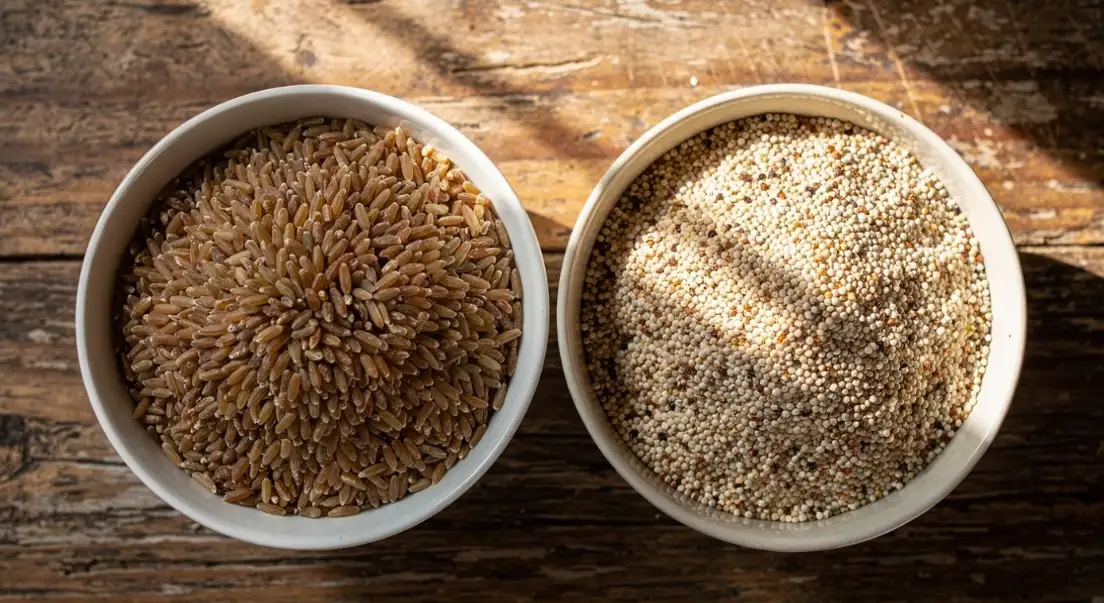
What Is Brown Rice?
Brown rice is a whole grain that retains its bran and germ layers, making it more nutritious than white rice. It has a mild, nutty flavor and a chewy texture. Since it undergoes minimal processing, brown rice provides more fiber, vitamins, and minerals than refined rice.
What Is Quinoa?
Quinoa is technically a seed, though it is commonly prepared and eaten like a grain. Native to South America, quinoa has gained worldwide popularity because of its impressive nutritional profile. It cooks quickly, has a slightly nutty taste, and is naturally gluten-free.
Protein Content
One of quinoa's biggest nutritional advantages is its protein quality. It is a complete protein, meaning it contains all nine essential amino acids that the body cannot produce on its own. This makes quinoa especially valuable for vegetarians and vegans.
Brown rice also contains protein but in smaller amounts and lacks some essential amino acids, making it an incomplete protein source.
Fiber Comparison
Both foods are good sources of dietary fiber, but quinoa generally offers slightly more fiber per serving. Fiber supports healthy digestion, promotes fullness, and helps maintain stable blood sugar levels.
Brown rice still contributes valuable fiber and can be an excellent choice for those looking to increase their whole-grain intake.
Vitamins and Minerals
Quinoa stands out for its rich mineral content. It provides higher amounts of magnesium, iron, potassium, zinc, and phosphorus. These nutrients support muscle function, energy production, immune health, and bone strength.
Brown rice is also nutritious, supplying manganese, selenium, magnesium, and several B vitamins that help convert food into energy.
Carbohydrates and Energy
Brown rice contains slightly more carbohydrates, making it an excellent source of sustained energy. It is often preferred by athletes or individuals with higher energy needs.
Quinoa contains slightly fewer carbohydrates while offering more protein, creating a balanced combination that supports satiety and muscle maintenance.
Blood Sugar Impact
Both brown rice and quinoa have a lower glycemic index than white rice, meaning they generally cause a slower rise in blood sugar levels.
Quinoa's higher protein and fiber content may help provide even better blood sugar control, especially when included as part of a balanced meal.
Gluten-Free Benefits
Quinoa is naturally gluten-free and suitable for people with gluten intolerance or celiac disease.
What Is Brown Rice?
Brown rice is a whole grain that retains its bran and germ layers, making it more nutritious than white rice. It has a mild, nutty flavor and a chewy texture. Since it undergoes minimal processing, brown rice provides more fiber, vitamins, and minerals than refined rice. What Is Quinoa?
Quinoa is technically a seed, though it is commonly prepared and eaten like a grain. Native to South America, quinoa has gained worldwide popularity because of its impressive nutritional profile. It cooks quickly, has a slightly nutty taste, and is naturally gluten-free.Protein Content
One of quinoa's biggest nutritional advantages is its protein quality. It is a complete protein, meaning it contains all nine essential amino acids that the body cannot produce on its own. This makes quinoa especially valuable for vegetarians and vegans. Brown rice also contains protein but in smaller amounts and lacks some essential amino acids, making it an incomplete protein source.
Fiber Comparison
Both foods are good sources of dietary fiber, but quinoa generally offers slightly more fiber per serving. Fiber supports healthy digestion, promotes fullness, and helps maintain stable blood sugar levels. Brown rice still contributes valuable fiber and can be an excellent choice for those looking to increase their whole-grain intake.
Vitamins and Minerals
Quinoa stands out for its rich mineral content. It provides higher amounts of magnesium, iron, potassium, zinc, and phosphorus. These nutrients support muscle function, energy production, immune health, and bone strength. Brown rice is also nutritious, supplying manganese, selenium, magnesium, and several B vitamins that help convert food into energy.
Carbohydrates and Energy
Brown rice contains slightly more carbohydrates, making it an excellent source of sustained energy. It is often preferred by athletes or individuals with higher energy needs. Quinoa contains slightly fewer carbohydrates while offering more protein, creating a balanced combination that supports satiety and muscle maintenance.
Blood Sugar Impact
Both brown rice and quinoa have a lower glycemic index than white rice, meaning they generally cause a slower rise in blood sugar levels. Quinoa's higher protein and fiber content may help provide even better blood sugar control, especially when included as part of a balanced meal.
Gluten-Free Benefits
Quinoa is naturally gluten-free and suitable for people with gluten intolerance or celiac disease.Next Story