
Who Built Qutub Minar? History, Facts And Location Explained

The Qutub Minar stands as one of the most remarkable historical monuments in India, attracting millions of visitors each year. Located in Delhi, this towering structure is a fine example of early Indo-Islamic architecture and remains a symbol of the Delhi Sultanate’s legacy. Its intricate carvings, towering height, and rich history make it a key highlight in Indian heritage tourism.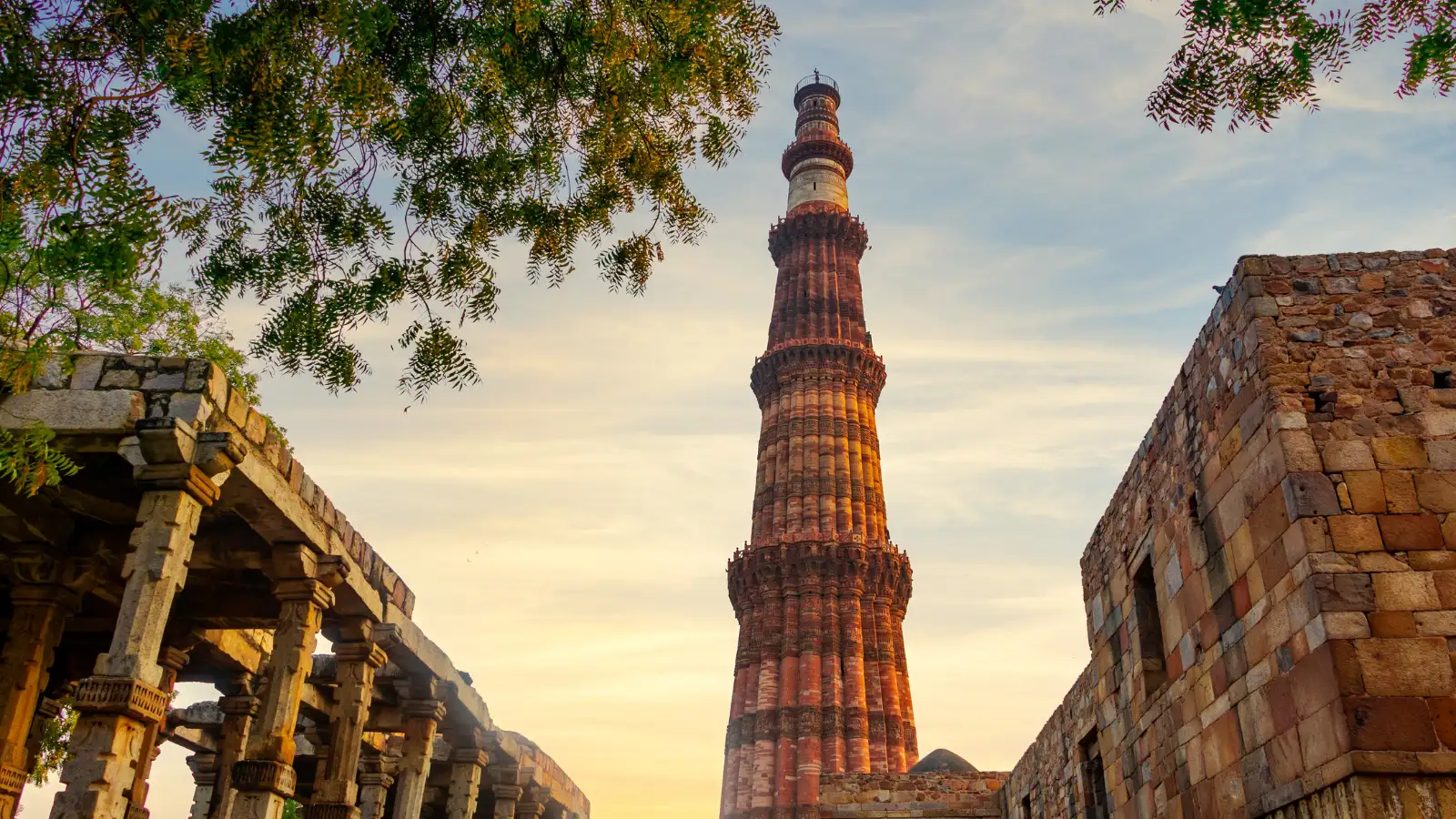
Who Built Qutub Minar ?
The construction of Qutub Minar began in 1199 AD under Qutb-ud-din Aibak, the founder of the Delhi Sultanate. However, he was able to complete only the first storey. His successor, Iltutmish, continued the work and added three more storeys, shaping much of the structure seen today. Later, Firoz Shah Tughlaq repaired and completed the upper sections after damage caused by natural events.
Where Is Qutub Minar Located?
Qutub Minar is located in South Delhi within the famous Qutub Minar Complex. This UNESCO World Heritage Site houses several ancient monuments, including mosques, tombs, and historical ruins, making it one of the most visited tourist attractions in India.
Read More: Burj Khalifa: Why It Was Built and What’s Inside
Height and Structure of Qutub Minar
Standing at approximately 73 metres (240 feet), Qutub Minar is one of the tallest brick minarets in the world. The tower consists of five distinct storeys, each featuring projecting balconies and detailed carvings. Built mainly with red sandstone and marble, the monument showcases exquisite craftsmanship and architectural brilliance.
Interesting Facts About Qutub Minar
Qutub Minar continues to stand tall as a timeless symbol of India’s rich history and architectural excellence, making it a significant part of the country’s cultural identity.
Who Built Qutub Minar ?
The construction of Qutub Minar began in 1199 AD under Qutb-ud-din Aibak, the founder of the Delhi Sultanate. However, he was able to complete only the first storey. His successor, Iltutmish, continued the work and added three more storeys, shaping much of the structure seen today. Later, Firoz Shah Tughlaq repaired and completed the upper sections after damage caused by natural events. Where Is Qutub Minar Located?
Qutub Minar is located in South Delhi within the famous Qutub Minar Complex. This UNESCO World Heritage Site houses several ancient monuments, including mosques, tombs, and historical ruins, making it one of the most visited tourist attractions in India.Read More: Burj Khalifa: Why It Was Built and What’s Inside
Height and Structure of Qutub Minar
Standing at approximately 73 metres (240 feet), Qutub Minar is one of the tallest brick minarets in the world. The tower consists of five distinct storeys, each featuring projecting balconies and detailed carvings. Built mainly with red sandstone and marble, the monument showcases exquisite craftsmanship and architectural brilliance.Interesting Facts About Qutub Minar
- Tallest Brick Minaret: It is among the highest brick towers globally.
- Unique Materials: Constructed using red sandstone and marble.
- UNESCO World Heritage Site: Recognised for its cultural and historical importance.
- Survived Natural Calamities: Repaired multiple times after earthquakes and lightning strikes.
- Top Tourist Attraction: A must-visit landmark for travellers exploring Delhi.
Qutub Minar continues to stand tall as a timeless symbol of India’s rich history and architectural excellence, making it a significant part of the country’s cultural identity.
Next Story