
Why AI Has Become the Friend We Turn to at 2 AM

It's 2:17 in the morning. You've had a terrible day. Your mind won't stop racing. You think about texting your best friend, but it's too late. You don't want to bother your parents. You don't want someone telling you to 'just move on' or 'stop overthinking'. So you open ChatGPT, or another AI chatbot. Within seconds, you're typing everything that's been sitting in your head for weeks. Your fears, your relationship problems, your insecurities. The conversation goes on for an hour, and when you're done, you feel... lighter.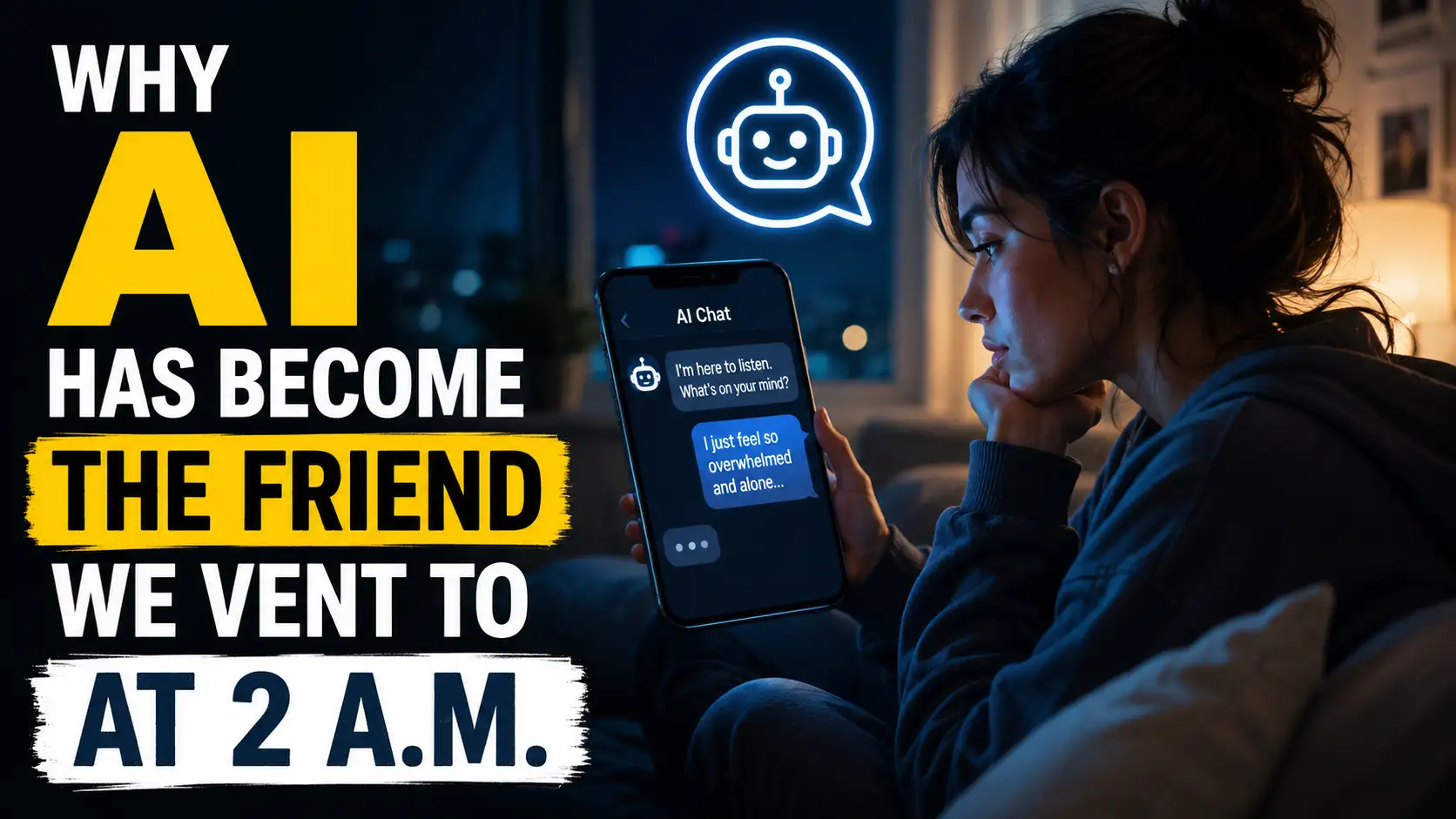
It may sound strange, but this has quietly become a reality for millions of people around the world. AI is no longer just helping people write emails or solve homework problems. It's becoming the place where they cry, vent, seek advice, and sometimes even feel understood. That shift says a lot, not just about technology, but about us.
Think about it. Most of us don't find it easy to be vulnerable. We worry about being judged. We wonder if we're overreacting. We hesitate to share our feelings because we don't want to sound dramatic or become a burden.
AI changes that equation. It doesn't interrupt halfway through your story. It doesn't laugh at your problems. It doesn't get distracted by notifications. You can tell it the same story ten times, and it will respond patiently every single time. For someone who feels lonely or unheard, that kind of attention can be incredibly comforting.
The answer isn't that AI is better than humans. It's that AI is easier to talk to. Friends have their own lives. Parents may not always understand. Therapists are incredibly valuable, but they aren't available at midnight, and not everyone can afford regular sessions.
AI, on the other hand, is always there. You don't have to book an appointment. You don't have to explain your life story from the beginning every time. You don't have to worry about someone gossiping about what you've shared. For many people, it feels like talking to someone who simply listens.
That doesn't mean AI truly understands emotions the way another human does. But sometimes, simply feeling heard is enough to help someone process what's going on in their mind.
Let's be honest. AI has helped a lot of people. Someone dealing with anxiety can ask for grounding exercises before an interview. A student struggling with burnout can get help creating a healthier routine. Someone going through heartbreak can write down everything they're feeling instead of bottling it up.
AI can be a useful first step for people living in areas where therapy is expensive or hard to access. It can encourage people to put their feelings into words, reflect on their thoughts, and sometimes even find the courage to seek professional help. In that way, AI isn't a substitute for therapy. It's helping democratise emotional support.
The trouble begins when we turn only to AI for help. Real relationships are complex. Friends don't always agree with us. Families challenge our perspectives. Therapists ask difficult questions that help us grow.
One of AI's greatest strengths is that it often responds in an encouraging and validating way. That can be comforting, but constant reassurance isn't always what we need. Sometimes, growth comes from hearing the things we'd rather avoid.
There's also the risk of emotional dependence
If we start opening up to an AI chatbot instead of talking to a real person after every lonely night, tough decision, or emotional breakdown, our relationships can slowly begin to weaken without us even realising it.
Another important concern is privacy. People often share their deepest fears, relationship problems, financial worries, and personal struggles without stopping to consider where that information goes or how different platforms handle it. Before treating any chatbot like a personal diary, it's worth understanding its privacy policies and using good judgement about what you choose to share.
Not exactly. A therapist is trained to understand trauma, mental health conditions, and human behaviour in ways that AI cannot. AI can't feel empathy; it predicts words based on patterns.
It can create a space where people feel comfortable expressing themselves. And maybe that's why so many people keep coming back. The real story isn't that machines are becoming more human. It's that humans are becoming more isolated.
We live in a world where everyone is connected, yet many people still struggle to find someone who will sit down and truly listen to them without rushing to give advice or pass judgement.
Is that a good thing or a warning sign? It depends on how we use it. Because, in the end, there’s no chatbot that can replace the comfort of a real hug, the warmth of a friend’s voice, or the reassurance of someone who truly knows you.
AI can help us organise our thoughts. But it’s people who help us heal.
It may sound strange, but this has quietly become a reality for millions of people around the world. AI is no longer just helping people write emails or solve homework problems. It's becoming the place where they cry, vent, seek advice, and sometimes even feel understood. That shift says a lot, not just about technology, but about us.
When Did AI Become Someone We Talk To?
Think about it. Most of us don't find it easy to be vulnerable. We worry about being judged. We wonder if we're overreacting. We hesitate to share our feelings because we don't want to sound dramatic or become a burden.
AI changes that equation. It doesn't interrupt halfway through your story. It doesn't laugh at your problems. It doesn't get distracted by notifications. You can tell it the same story ten times, and it will respond patiently every single time. For someone who feels lonely or unheard, that kind of attention can be incredibly comforting.
Why Are People Trusting AI So Much?
The answer isn't that AI is better than humans. It's that AI is easier to talk to. Friends have their own lives. Parents may not always understand. Therapists are incredibly valuable, but they aren't available at midnight, and not everyone can afford regular sessions.
AI, on the other hand, is always there. You don't have to book an appointment. You don't have to explain your life story from the beginning every time. You don't have to worry about someone gossiping about what you've shared. For many people, it feels like talking to someone who simply listens.
That doesn't mean AI truly understands emotions the way another human does. But sometimes, simply feeling heard is enough to help someone process what's going on in their mind.
The Good That AI Can Do
Let's be honest. AI has helped a lot of people. Someone dealing with anxiety can ask for grounding exercises before an interview. A student struggling with burnout can get help creating a healthier routine. Someone going through heartbreak can write down everything they're feeling instead of bottling it up.
AI can be a useful first step for people living in areas where therapy is expensive or hard to access. It can encourage people to put their feelings into words, reflect on their thoughts, and sometimes even find the courage to seek professional help. In that way, AI isn't a substitute for therapy. It's helping democratise emotional support.
The side we cannot ignore
The trouble begins when we turn only to AI for help. Real relationships are complex. Friends don't always agree with us. Families challenge our perspectives. Therapists ask difficult questions that help us grow.
One of AI's greatest strengths is that it often responds in an encouraging and validating way. That can be comforting, but constant reassurance isn't always what we need. Sometimes, growth comes from hearing the things we'd rather avoid.
There's also the risk of emotional dependence
If we start opening up to an AI chatbot instead of talking to a real person after every lonely night, tough decision, or emotional breakdown, our relationships can slowly begin to weaken without us even realising it.
You may also like
- 'When I started modelling, people would ask if I was Brazilian'
- Scenic monsoon bus trips in India: Beautiful routes that should be on every traveller's bucket list
- Happy Friendship Day 2026: Top 50 Wishes, Messages, Quotes, Images, Facebook & Whatsapp status
- High cholesterol: Cholesterol deposited in the heart's arteries will melt away like wax; just include these 3 foods in your diet
- Today is the ITR deadline, but will the last date be extended? The Income Tax Department has given a clear answer..
Another important concern is privacy. People often share their deepest fears, relationship problems, financial worries, and personal struggles without stopping to consider where that information goes or how different platforms handle it. Before treating any chatbot like a personal diary, it's worth understanding its privacy policies and using good judgement about what you choose to share.
So, Is AI Really Becoming Our Therapist?
Not exactly. A therapist is trained to understand trauma, mental health conditions, and human behaviour in ways that AI cannot. AI can't feel empathy; it predicts words based on patterns.
It can create a space where people feel comfortable expressing themselves. And maybe that's why so many people keep coming back. The real story isn't that machines are becoming more human. It's that humans are becoming more isolated.
We live in a world where everyone is connected, yet many people still struggle to find someone who will sit down and truly listen to them without rushing to give advice or pass judgement.
That empty space has been taken by AI
Is that a good thing or a warning sign? It depends on how we use it. Because, in the end, there’s no chatbot that can replace the comfort of a real hug, the warmth of a friend’s voice, or the reassurance of someone who truly knows you.
AI can help us organise our thoughts. But it’s people who help us heal.






Loving Newspoint? Download the app now
