
Why Does Airplane plane Mode Exist If Phones Can't Crash a Plane? The Answer Might Surprise You

There's one ritual every air traveller follows. You find your seat, buckle your seatbelt, keep your tray table upright, and just before takeoff, you instinctively tap that tiny aeroplane icon on your phone.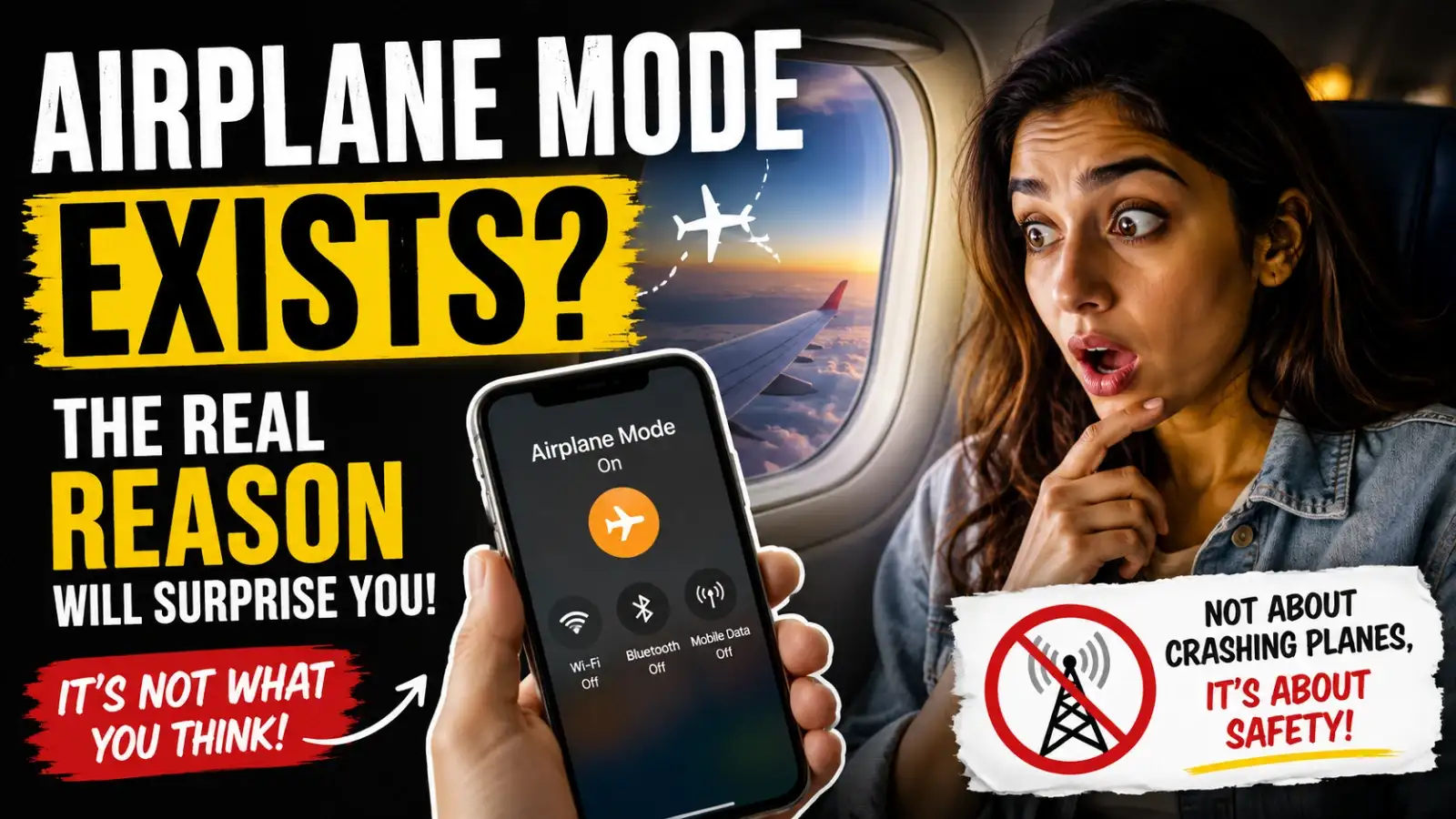
Aeroplane mode, most of us don't question it anymore. We simply do it because we've been told to. But here's something worth thinking about. If a smartphone is powerful enough to interfere with an aircraft, then why are pilots surrounded by laptops, tablets, navigation systems, and dozens of electronic devices inside the cockpit?
And if one forgotten phone could actually bring down a plane, wouldn't flying be considered one of the riskiest things we do? Clearly, there's more to the story.
In reality, modern commercial aircraft are designed with multiple layers of protection. Their navigation and flight systems are heavily shielded against outside interference. So no, your Instagram notification isn't going to send an aircraft into a nosedive. If that were true, airlines wouldn't survive a single day. But that doesn't mean aeroplane mode is pointless.
At 35,000 feet, it's a completely different story. The aircraft is travelling at nearly 900 kilometres per hour, passing over multiple cellular towers in just a few minutes. Your phone keeps trying to connect, disconnect, and reconnect as it races across the sky.
When it can't find a stable signal, it increases its transmission power in an attempt to reach one. Now imagine not one phone doing this, but 250 phones at exactly the same time. That's a lot of unnecessary radio traffic.
If a small risk can be eliminated easily, eliminate it. Multiple transmitting devices can create background radio noise, especially for communication equipment. Pilots constantly communicate with air traffic controllers during takeoff, landing, and while cruising. Even a brief moment of static or unnecessary interference is something the aviation industry prefers to avoid. It's not about panic; it's about precision.
Instead of searching for ground-based cell towers, aircraft Wi-Fi connects through satellites or specialised air-to-ground communication systems that are specifically designed for aviation. That's why airlines usually ask passengers to switch on aeroplane mode first and then manually enable Wi-Fi. Your cellular radio stays off, while a completely different communication system takes over.
Students switch it on while studying. Travellers use it to save battery life. Some people even sleep with aeroplane mode enabled to avoid late-night notifications. What started as an aviation safety feature has quietly become one of the simplest digital wellness tools available.
Whether it's checking an aircraft before every single flight, limiting baggage weight, adhering to seatbelt procedures or asking passengers to turn on aeroplane mode, each little rule contributes to an extremely safe system. Individually, these precautions may seem insignificant. Together, they make modern aviation remarkably reliable.
Aeroplane Mode isn't about fear. It's about keeping things simple, predictable, and distraction-free for one of the world's most carefully engineered industries. And perhaps that's why it's one of the smallest buttons on your phone with one of the biggest stories
Aeroplane mode, most of us don't question it anymore. We simply do it because we've been told to. But here's something worth thinking about. If a smartphone is powerful enough to interfere with an aircraft, then why are pilots surrounded by laptops, tablets, navigation systems, and dozens of electronic devices inside the cockpit?
And if one forgotten phone could actually bring down a plane, wouldn't flying be considered one of the riskiest things we do? Clearly, there's more to the story.
The Myth Almost Everyone Believes
For years, many people genuinely believed that leaving mobile data on during a flight could somehow crash the aircraft. Movies didn't help either. They often depict dramatic scenes in which electronic interference causes instruments to malfunction or alarms to sound.In reality, modern commercial aircraft are designed with multiple layers of protection. Their navigation and flight systems are heavily shielded against outside interference. So no, your Instagram notification isn't going to send an aircraft into a nosedive. If that were true, airlines wouldn't survive a single day. But that doesn't mean aeroplane mode is pointless.
So What Is Your Phone Actually Doing?
Even when you're not using it, your phone is surprisingly busy. It's always trying to find the strongest nearby cell tower so you can get calls, texts and internet access without interruption. On the ground, that's easy. Towers are relatively close, and your phone quickly connects to the strongest signal.At 35,000 feet, it's a completely different story. The aircraft is travelling at nearly 900 kilometres per hour, passing over multiple cellular towers in just a few minutes. Your phone keeps trying to connect, disconnect, and reconnect as it races across the sky.
When it can't find a stable signal, it increases its transmission power in an attempt to reach one. Now imagine not one phone doing this, but 250 phones at exactly the same time. That's a lot of unnecessary radio traffic.
The Real Reason Airlines Still Care
Contrary to popular belief, airlines aren't worried that one passenger forgot to switch on airplane mode. The concern is about hundreds of devices transmitting radio signals simultaneously. Although modern aircraft are built to handle interference far better than older ones, aviation follows an important principle:You may also like
- Keys to a Healthy Lifestyle
- Broom Cleaning Tips: Is your old broom too worn out? Do this before throwing it away.
- Toilet Yellow Stains: Toilet stains persist even after repeated scrubbing. Learn the real reason.
- Rare Stomach Cancer: Two women in Mumbai have been diagnosed with extremely rare stomach cancer!
- Salman Khan 16 Kg Weight Loss: Salman shines after losing 16 kg weight, people above 60 must know this health secret!
If a small risk can be eliminated easily, eliminate it. Multiple transmitting devices can create background radio noise, especially for communication equipment. Pilots constantly communicate with air traffic controllers during takeoff, landing, and while cruising. Even a brief moment of static or unnecessary interference is something the aviation industry prefers to avoid. It's not about panic; it's about precision.
Then Why Do Some Flights Offer Wi-Fi?
This is where things get interesting. If phones really needed to stay disconnected, why can you watch Netflix or send WhatsApp messages on certain flights? Because onboard Wi-Fi doesn't work the same way as your mobile network.Instead of searching for ground-based cell towers, aircraft Wi-Fi connects through satellites or specialised air-to-ground communication systems that are specifically designed for aviation. That's why airlines usually ask passengers to switch on aeroplane mode first and then manually enable Wi-Fi. Your cellular radio stays off, while a completely different communication system takes over.
Airplane Mode Is Useful Even on the Ground
Ironically, one of the most useful features on your phone has become popular for reasons that have nothing to do with flying. People now use aeroplane mode when they want to focus on work without distractions.Students switch it on while studying. Travellers use it to save battery life. Some people even sleep with aeroplane mode enabled to avoid late-night notifications. What started as an aviation safety feature has quietly become one of the simplest digital wellness tools available.
Why Aviation Doesn't Take Chances
One of the reasons air travel is considered the safest form of transportation is because the industry never waits for something to become a serious problem. Instead, it removes even the smallest avoidable risks before they matter.Whether it's checking an aircraft before every single flight, limiting baggage weight, adhering to seatbelt procedures or asking passengers to turn on aeroplane mode, each little rule contributes to an extremely safe system. Individually, these precautions may seem insignificant. Together, they make modern aviation remarkably reliable.
The Next Time You Fly...
The next time a flight attendant reminds everyone to switch on aeroplane mode, you'll know the real reason. It isn't because your phone has magical powers to crash an aircraft. It's because hundreds of phones trying to communicate with the ground at the same time create unnecessary radio transmissions that simply aren't needed during a flight.Aeroplane Mode isn't about fear. It's about keeping things simple, predictable, and distraction-free for one of the world's most carefully engineered industries. And perhaps that's why it's one of the smallest buttons on your phone with one of the biggest stories






Loving Newspoint? Download the app now
