
Why are disaster teams intentionally releasing "cockroach drones" into ruined buildings?


A week after two massive earthquakes shattered Venezuela, rescue teams are pushing through exhaustion to find anyone still alive beneath the rubble. The 7.2- and 7.5-magnitude quakes killed more than 2,200 people, marking one of the worst natural disasters in Latin American history.
While the window for survival is closing, hope isn't gone. Just a few days ago, a toddler was pulled alive from the debris in La Guaira after six days trapped in the dark. John Morrison, a rescuer with US Fairfax County Urban Search and Rescue, emphasized that the teams aren't giving up. "We are going to work as long as it is possible to save anybody that's still trapped," he said.
Searching the Concrete Voids
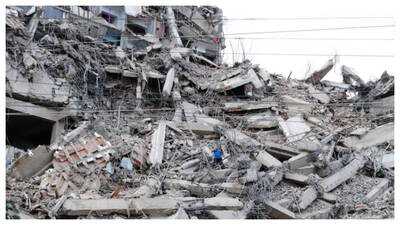
The disaster zone is a brutal, dense urban landscape. Hundreds of buildings have collapsed, many of them high-rise apartment blocks built from reinforced concrete.
When these massive structures fall, they often create large, hollow "void spaces" inside the wreckage. If someone is trapped in one of these pockets, they have a fighting chance. Rescuers are relying on a mix of old-school methods and high-tech tools to find them: talking to locals to pinpoint where noises were last heard, using hyper-sensitive listening gear, deployed search cameras, and sending in K9 units to catch the scent of survivors.
The Rise of " Cockroach Drones "
With tens of thousands of people still missing, international teams have brought in specialized tools to reach places humans and dogs simply cannot. Among the most effective are micro drones , nicknamed "cockroach drones" by UN humanitarian chief Tom Fletcher.
These tiny quadcopters are only about 20 centimeters long. Engineers are even developing technology to filter out the sound of the drone’s own propellers, allowing pilots to listen for faint cries for help. These mini drones are really small. Can move around easily so good pilots can fly them through tiny spaces like broken stairs and old underground buildings.
While the window for survival is closing, hope isn't gone. Just a few days ago, a toddler was pulled alive from the debris in La Guaira after six days trapped in the dark. John Morrison, a rescuer with US Fairfax County Urban Search and Rescue, emphasized that the teams aren't giving up. "We are going to work as long as it is possible to save anybody that's still trapped," he said.
Searching the Concrete Voids
The disaster zone is a brutal, dense urban landscape. Hundreds of buildings have collapsed, many of them high-rise apartment blocks built from reinforced concrete.
When these massive structures fall, they often create large, hollow "void spaces" inside the wreckage. If someone is trapped in one of these pockets, they have a fighting chance. Rescuers are relying on a mix of old-school methods and high-tech tools to find them: talking to locals to pinpoint where noises were last heard, using hyper-sensitive listening gear, deployed search cameras, and sending in K9 units to catch the scent of survivors.
The Rise of " Cockroach Drones "
With tens of thousands of people still missing, international teams have brought in specialized tools to reach places humans and dogs simply cannot. Among the most effective are micro drones , nicknamed "cockroach drones" by UN humanitarian chief Tom Fletcher.
These tiny quadcopters are only about 20 centimeters long. Engineers are even developing technology to filter out the sound of the drone’s own propellers, allowing pilots to listen for faint cries for help. These mini drones are really small. Can move around easily so good pilots can fly them through tiny spaces like broken stairs and old underground buildings.
Next Story