
Why Are Some Beaches Pink? The Fascinating Science Behind Their Unusual Colour

Beaches are usually associated with golden, white or pale brown sand, but in a few parts of the world, the shoreline takes on a striking pink or blush colour. These unusual beaches can look almost unreal, particularly when their sand contrasts with clear blue or turquoise water. Yet the colour is not usually the result of an unusual type of rock or anything artificial. It is often connected to the remains of tiny marine organisms and the geological processes that gradually turn them into beach sediment.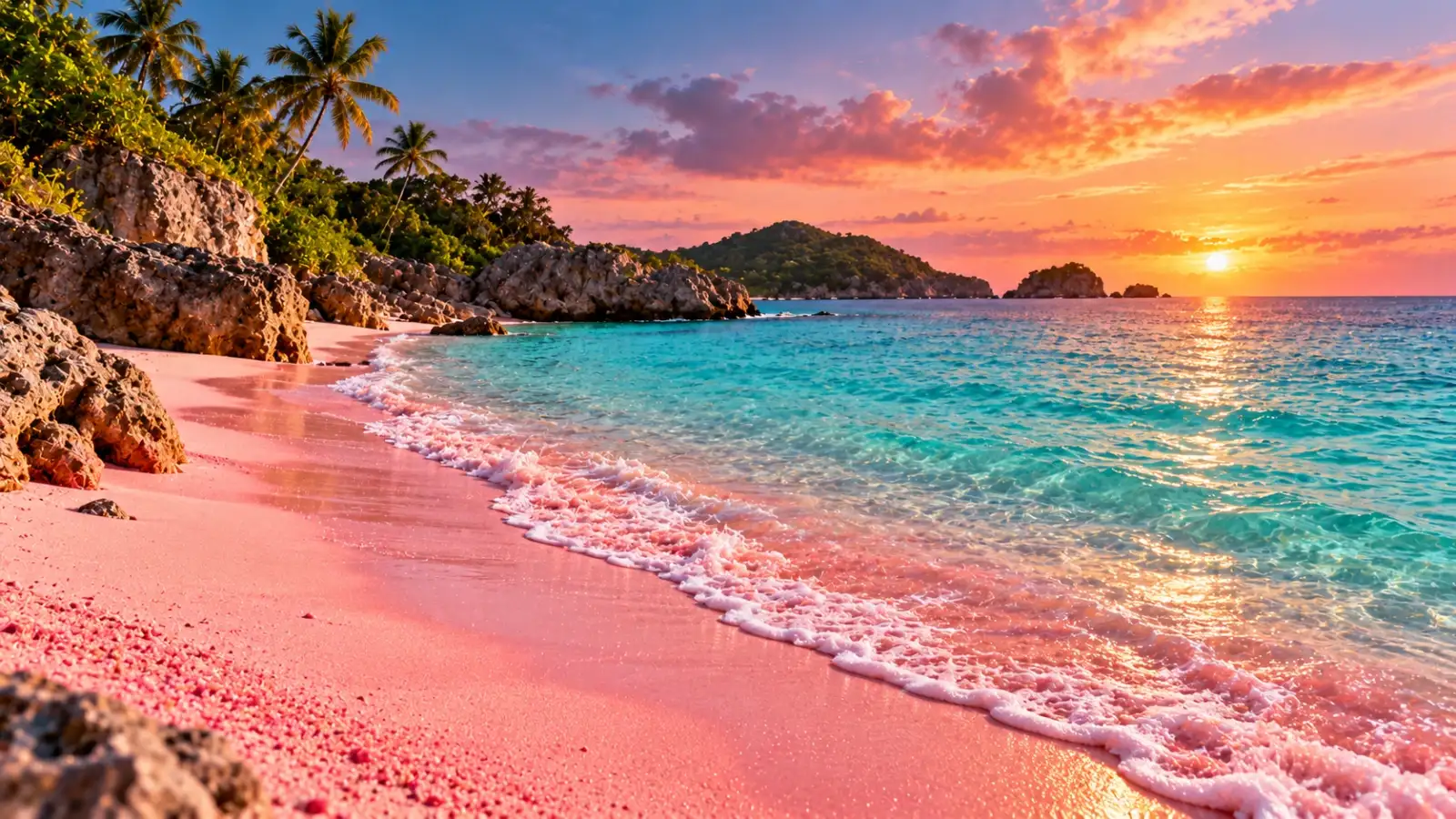
Pink sand beaches are found in several parts of the world, including Bermuda, the Bahamas, Indonesia and some islands in the Indian Ocean. The exact shade can vary considerably. Some beaches appear almost white with a faint pink tint, while others develop a much deeper rosy colour when the sand is wet or viewed from a distance. The reason depends on what is contributing to the sand and how much of that material has accumulated along the shore.
Some species of foraminifera have reddish or pinkish shells. When large quantities of these shells mix with pale carbonate sand, coral fragments and other marine material, they can give the beach a distinctive pink appearance. The colour is therefore not necessarily coming from the sand grains themselves. Instead, it can come from the accumulation of countless tiny biological remains over long periods.
This process also shows how closely some beaches are connected to the ecosystems around them. Reefs, shallow marine environments and other habitats can continuously produce biological material that eventually becomes part of the shoreline.
The Bahamas and Bermuda, for example, have extensive carbonate-rich coastal environments. Geological studies of the region have documented coral, shell material, foraminifera and other carbonate sediments as important components of beaches and shallow marine deposits.
When reddish biological fragments become mixed with this pale sediment, the resulting beach can develop a soft pink appearance. The balance between different types of sediment determines how strong the colour looks.
A beach with a relatively high concentration of reddish shells may appear noticeably pink, while another beach containing the same type of material may only show a subtle blush. Wet sand can also appear darker and more intensely coloured than dry sand, making the pink tones easier to notice near the waterline.
Sunlight plays a role in how people perceive the colour as well. Strong tropical light reflecting from pale sand and blue water can make even a relatively delicate pink tone look much more dramatic in photographs.
In some locations, the surrounding geology can contribute pink or reddish particles. On other beaches, the dominant colour may come from a mixture of several sediment sources. This is why it is important not to assume that every beach described as pink has exactly the same origin.
The composition of beach sediment can also change over time. Storms, strong waves, currents and erosion can move large quantities of material along a coastline, temporarily changing how much of a particular sediment is visible.
The island's coastal environment also demonstrates why pink beaches should not be viewed simply as unusual piles of coloured sand. Their appearance is connected to the wider marine environment, including reefs and the organisms living around them.
The beach is a useful example of how biological and geological material can combine to create a landscape that looks almost artificially coloured. Instead, the unusual appearance is the result of natural sediment production, transport and accumulation.
The appearance may also change according to weather, sunlight, moisture and viewing distance. A beach that looks strongly pink in an aerial photograph may appear much paler when you stand directly on it. Conversely, wet sand close to the water can sometimes reveal stronger tones than the dry upper beach.
Photography can intensify the effect further because bright sunlight, turquoise water and pale sand create a strong colour contrast.
Foraminifera are particularly interesting because they are microscopic, yet their accumulated shells can become a visible part of an entire beach. Their remains have also contributed to marine sediments and geological deposits on a much larger scale.
So the next time you see photographs of a pink beach, the colour is not simply a visual curiosity. It can be evidence of a long relationship between marine life, reefs, geology and the movement of sediment along a coastline.
That means the colour of a beach can reveal something about the environment surrounding it. Instead of being simply a beautiful backdrop for photographs, a pink beach can be viewed as a record of marine life, erosion, sediment transport and geological change working together over time.
Pink sand beaches are found in several parts of the world, including Bermuda, the Bahamas, Indonesia and some islands in the Indian Ocean. The exact shade can vary considerably. Some beaches appear almost white with a faint pink tint, while others develop a much deeper rosy colour when the sand is wet or viewed from a distance. The reason depends on what is contributing to the sand and how much of that material has accumulated along the shore.
Tiny Marine Organisms Can Play a Major Role
One of the most important contributors to pink sand is a group of microscopic marine organisms known as foraminifera . These single-celled organisms build protective shells, often made largely of calcium carbonate. After they die, their shells can become part of the sediment on the seabed and eventually reach nearby beaches through waves and currents.Some species of foraminifera have reddish or pinkish shells. When large quantities of these shells mix with pale carbonate sand, coral fragments and other marine material, they can give the beach a distinctive pink appearance. The colour is therefore not necessarily coming from the sand grains themselves. Instead, it can come from the accumulation of countless tiny biological remains over long periods.
This process also shows how closely some beaches are connected to the ecosystems around them. Reefs, shallow marine environments and other habitats can continuously produce biological material that eventually becomes part of the shoreline.
Coral Reefs Help Create the Right Conditions
Pink beaches are often found in places with extensive coral reef systems or shallow tropical seas. Coral skeletons and shells contribute large quantities of calcium carbonate to marine sediments, creating the pale base material that makes pink and red particles easier to see.The Bahamas and Bermuda, for example, have extensive carbonate-rich coastal environments. Geological studies of the region have documented coral, shell material, foraminifera and other carbonate sediments as important components of beaches and shallow marine deposits.
When reddish biological fragments become mixed with this pale sediment, the resulting beach can develop a soft pink appearance. The balance between different types of sediment determines how strong the colour looks.
Why Does the Colour Vary From One Beach to Another?
Not every beach with foraminifera becomes bright pink. The final appearance depends on the amount and colour of biological material, the composition of the surrounding sediment, wave activity and the way particles are transported along the coast.A beach with a relatively high concentration of reddish shells may appear noticeably pink, while another beach containing the same type of material may only show a subtle blush. Wet sand can also appear darker and more intensely coloured than dry sand, making the pink tones easier to notice near the waterline.
Sunlight plays a role in how people perceive the colour as well. Strong tropical light reflecting from pale sand and blue water can make even a relatively delicate pink tone look much more dramatic in photographs.
Pink Sand Is Not Always Created in Exactly the Same Way
Although foraminifera are a well-known explanation for many pink beaches, there is no single universal recipe for pink sand. Different coastlines have different geological histories, and their beaches can contain varying combinations of coral fragments, shells, minerals, volcanic material and biological remains.In some locations, the surrounding geology can contribute pink or reddish particles. On other beaches, the dominant colour may come from a mixture of several sediment sources. This is why it is important not to assume that every beach described as pink has exactly the same origin.
The composition of beach sediment can also change over time. Storms, strong waves, currents and erosion can move large quantities of material along a coastline, temporarily changing how much of a particular sediment is visible.
Bermuda Is Famous for Its Blush-Coloured Beaches
Bermuda is one of the best-known destinations associated with pink sand. Its beaches combine pale carbonate-rich sediment with reddish biological material, producing the soft pink appearance for which several stretches of coastline are famous. Horseshoe Bay, in particular, is widely recognised for its blush-coloured sand and surrounding limestone landscape.The island's coastal environment also demonstrates why pink beaches should not be viewed simply as unusual piles of coloured sand. Their appearance is connected to the wider marine environment, including reefs and the organisms living around them.
Indonesia Has Its Own Famous Pink Shorelines
Indonesia's Komodo region is another well-known example. Pantai Merah, commonly called Pink Beach, is recognised for its pink sand set against the tropical waters and rugged landscape of Komodo National Park. The colour becomes particularly noticeable where reddish material mixes with lighter sand.The beach is a useful example of how biological and geological material can combine to create a landscape that looks almost artificially coloured. Instead, the unusual appearance is the result of natural sediment production, transport and accumulation.
Are Pink Beaches Really Pink?
The answer depends on what you mean by pink. Many so-called pink beaches are not uniformly bubblegum pink from one end to the other. Their colour can range from pale rose and salmon to a faint reddish tint.You may also like
- 'You put underdeveloped brains together': Psychiatrist on why parents should rethink sending children away to college
- King George III built this London observatory to watch the stars; 250 years later, it is a $24 million private home
- Is It Safe to Lift Heavy Objects During Pregnancy?
- AI mural inspired by Banksy sparks backlash in Bristol: Artists spot wrong landmarks and a bizarre version of the famous Mild Mild West as debate over AI art grows
- 4 Hacks to keep your kitchen free from flies and bugs
The appearance may also change according to weather, sunlight, moisture and viewing distance. A beach that looks strongly pink in an aerial photograph may appear much paler when you stand directly on it. Conversely, wet sand close to the water can sometimes reveal stronger tones than the dry upper beach.
Photography can intensify the effect further because bright sunlight, turquoise water and pale sand create a strong colour contrast.
The Colour Is Part of a Much Bigger Natural Process
A pink beach is ultimately a reminder that coastlines are constantly being built, broken down and rebuilt. Tiny organisms produce shells, reefs contribute carbonate material, waves move particles, and currents redistribute sediment along the shore. Over long periods, these small processes can create landscapes that look extraordinary.Foraminifera are particularly interesting because they are microscopic, yet their accumulated shells can become a visible part of an entire beach. Their remains have also contributed to marine sediments and geological deposits on a much larger scale.
So the next time you see photographs of a pink beach, the colour is not simply a visual curiosity. It can be evidence of a long relationship between marine life, reefs, geology and the movement of sediment along a coastline.
A Beach That Tells a Geological Story
Pink sand may look like one of nature's strangest colour combinations, but its explanation is surprisingly logical. The rosy appearance can develop when tiny marine shells and other biological fragments become mixed with pale carbonate sand and accumulate along a suitable coastline.That means the colour of a beach can reveal something about the environment surrounding it. Instead of being simply a beautiful backdrop for photographs, a pink beach can be viewed as a record of marine life, erosion, sediment transport and geological change working together over time.






Loving Newspoint? Download the app now
