
The Secret Behind Birds Letting Ants Crawl On Them

In the natural world, animals often display behaviours that seem puzzling at first glance. One such behaviour is anting in birds, where birds deliberately allow ants to crawl across their feathers and skin. While it may look uncomfortable, this unique practice plays an important role in bird hygiene and survival.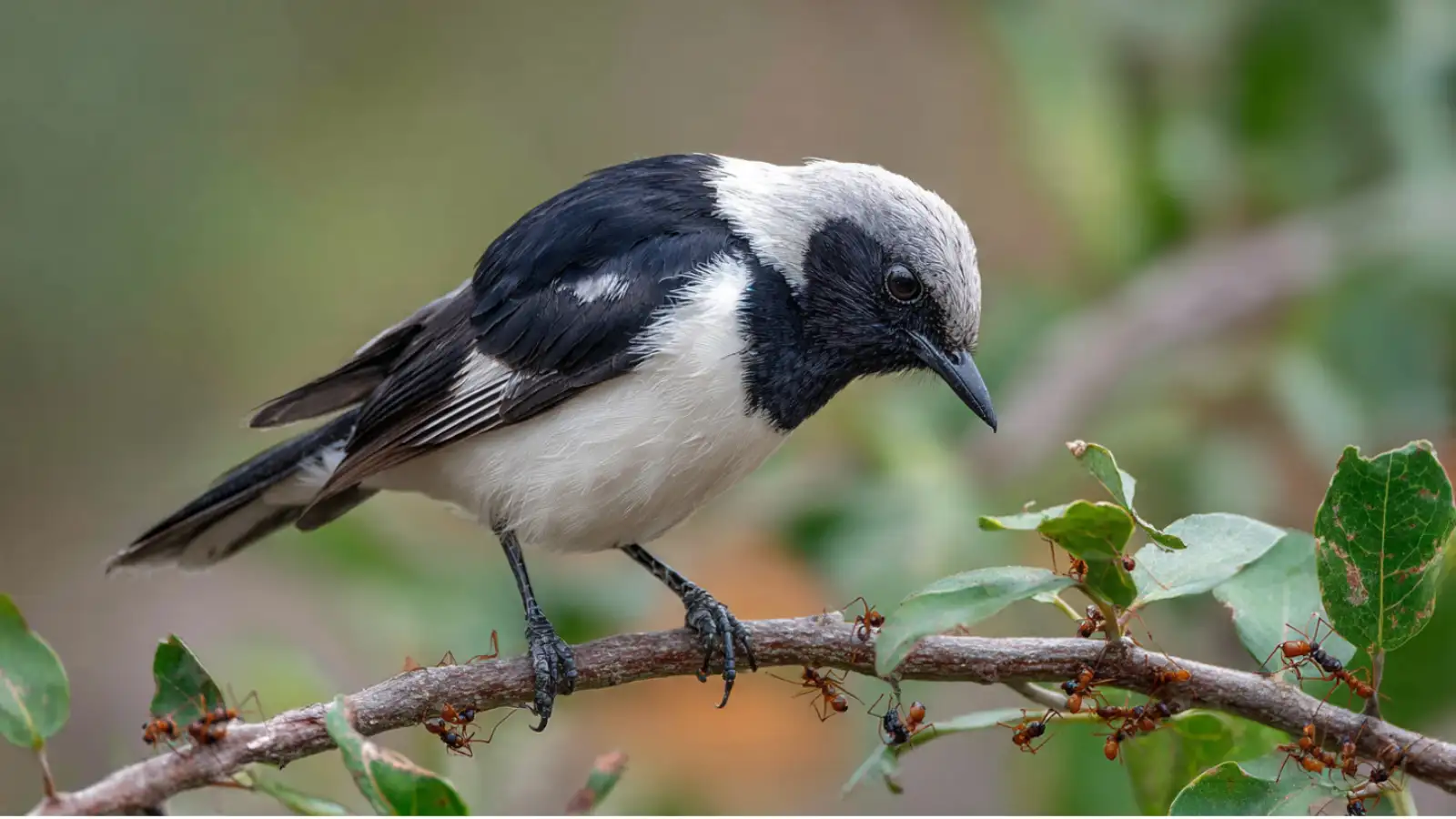
Anting behaviour in birds has intrigued scientists for decades. There are two main types of anting. In active anting, birds pick up ants in their beaks and rub them onto their feathers. In passive anting, birds simply lie down or spread their wings over an anthill, inviting ants to crawl all over them. Both methods serve a similar purpose and highlight the adaptability of bird behaviour.
The primary reason why birds let ants crawl on them is believed to be parasite control. Birds often struggle with mites, lice, and other tiny organisms that live in their feathers. These parasites can damage feathers and affect a bird’s ability to fly or regulate body temperature. Ants release formic acid as a defence mechanism, and this chemical is thought to act as a natural insecticide. By engaging in anting, birds may be using ants as a tool to kill or repel these unwanted pests. This makes anting behaviour in birds a clever and natural solution to a common problem.
Another explanation focuses on feather maintenance. Healthy feathers are essential for flight, insulation, and display. Anting may help birds keep their feathers clean and well-conditioned. The movement of ants across the feathers could dislodge dirt and debris, while the chemicals they produce may help maintain feather structure. This adds another layer to why birds let ants crawl on them, showing that the behaviour is not only about defence but also about grooming.
Read More: How Birds Communicate With Other Species; Secrets Of Bird Communication Revealed
Interestingly, some scientists suggest that anting may also be linked to food preparation. Certain ants produce strong chemicals that can be harmful if ingested. By rubbing ants on their feathers first, birds might be neutralising these chemicals before eating them. Although this theory is still debated, it highlights the complexity of bird behaviour and the multiple benefits that a single action can provide.
The occurrence of anting is not limited to one or two species. It has been observed in a wide variety of birds, including crows, jays, and starlings. This widespread presence suggests that anting is a well-established survival tactic rather than a random habit. The consistency of this behaviour across species strengthens the argument that it offers real advantages in terms of health and hygiene.
Understanding why birds let ants crawl on them gives us a glimpse into the intricate relationship between different species in nature. It shows how animals can use their environment in innovative ways to solve problems. Anting behaviour in birds is a reminder that even small creatures like ants can play a significant role in the survival of larger animals.
Read More: Why Birds Chirp At Night: Midnight Birdsong Explained
Anting is a remarkable example of nature’s ingenuity. Whether it is for parasite control, feather maintenance, or even food preparation, this behaviour demonstrates how birds have evolved to make the most of their surroundings. By studying such habits, we gain a deeper appreciation for the complexity and intelligence of wildlife.
Anting behaviour in birds has intrigued scientists for decades. There are two main types of anting. In active anting, birds pick up ants in their beaks and rub them onto their feathers. In passive anting, birds simply lie down or spread their wings over an anthill, inviting ants to crawl all over them. Both methods serve a similar purpose and highlight the adaptability of bird behaviour.
The primary reason why birds let ants crawl on them is believed to be parasite control. Birds often struggle with mites, lice, and other tiny organisms that live in their feathers. These parasites can damage feathers and affect a bird’s ability to fly or regulate body temperature. Ants release formic acid as a defence mechanism, and this chemical is thought to act as a natural insecticide. By engaging in anting, birds may be using ants as a tool to kill or repel these unwanted pests. This makes anting behaviour in birds a clever and natural solution to a common problem.
Another explanation focuses on feather maintenance. Healthy feathers are essential for flight, insulation, and display. Anting may help birds keep their feathers clean and well-conditioned. The movement of ants across the feathers could dislodge dirt and debris, while the chemicals they produce may help maintain feather structure. This adds another layer to why birds let ants crawl on them, showing that the behaviour is not only about defence but also about grooming.
Read More: How Birds Communicate With Other Species; Secrets Of Bird Communication Revealed
Interestingly, some scientists suggest that anting may also be linked to food preparation. Certain ants produce strong chemicals that can be harmful if ingested. By rubbing ants on their feathers first, birds might be neutralising these chemicals before eating them. Although this theory is still debated, it highlights the complexity of bird behaviour and the multiple benefits that a single action can provide.
The occurrence of anting is not limited to one or two species. It has been observed in a wide variety of birds, including crows, jays, and starlings. This widespread presence suggests that anting is a well-established survival tactic rather than a random habit. The consistency of this behaviour across species strengthens the argument that it offers real advantages in terms of health and hygiene.
Understanding why birds let ants crawl on them gives us a glimpse into the intricate relationship between different species in nature. It shows how animals can use their environment in innovative ways to solve problems. Anting behaviour in birds is a reminder that even small creatures like ants can play a significant role in the survival of larger animals.
Read More: Why Birds Chirp At Night: Midnight Birdsong Explained
Anting is a remarkable example of nature’s ingenuity. Whether it is for parasite control, feather maintenance, or even food preparation, this behaviour demonstrates how birds have evolved to make the most of their surroundings. By studying such habits, we gain a deeper appreciation for the complexity and intelligence of wildlife.
Next Story