
Why Does an Unfinished Task Keep Living Rent-Free in Your Head?

You know that feeling when someone says, “We need to talk,” and then disappears? Good luck thinking about anything else. You could be eating dinner, watching something, working, or scrolling through Instagram, and somewhere in the back of your mind, that sentence is still sitting there.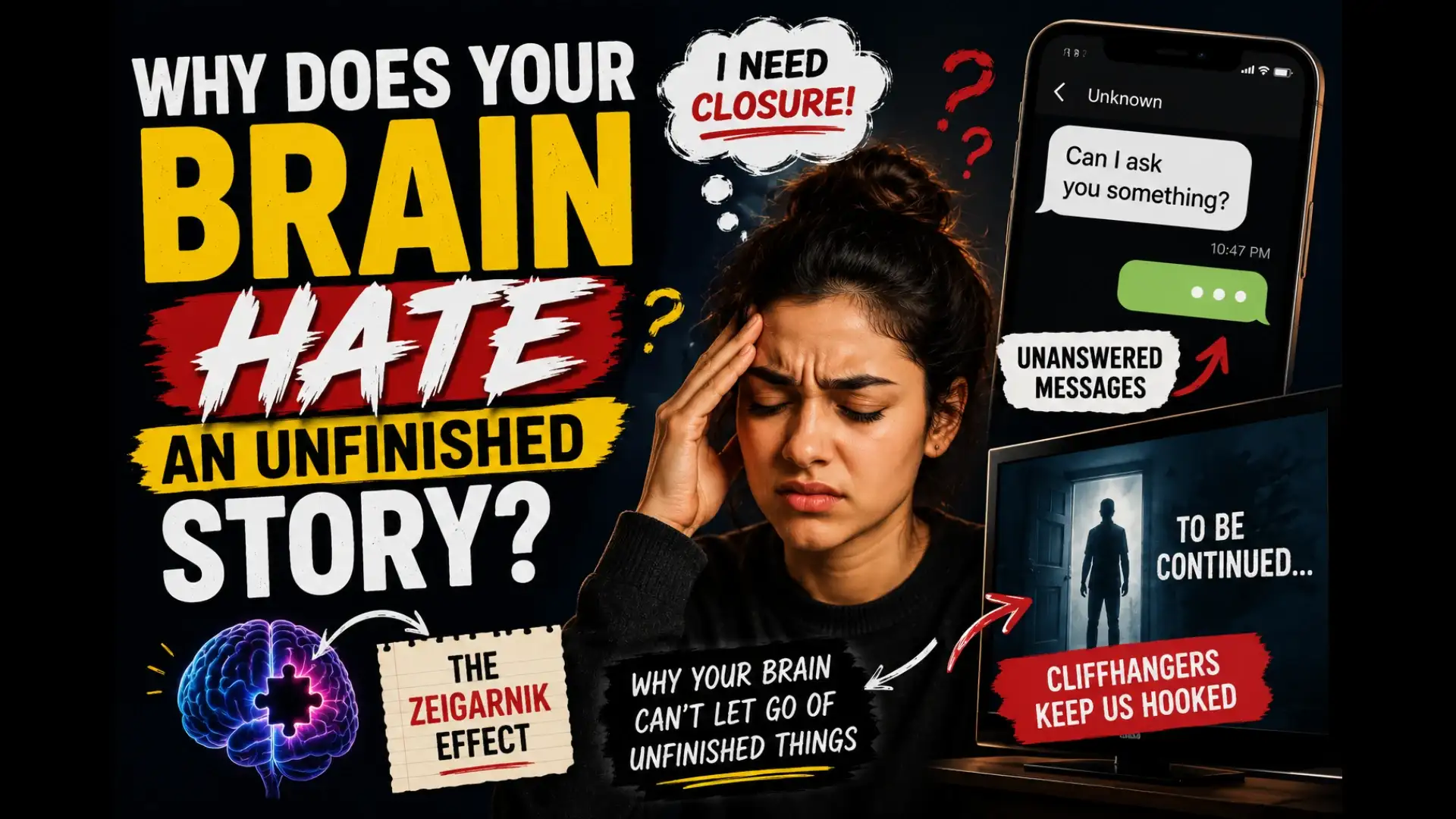
What did they want to talk about? Did I do something? Is everything okay? The conversation hasn't even happened yet, but your brain has already started writing seventeen different versions of it. That's the strange thing about unfinished experiences. Sometimes they take up more space in our minds than things we've actually completed. And psychologists have a pretty good idea why.
The story is still open; the question hasn't been answered, the message hasn't been replied to, and the argument hasn't been resolved. So part of your attention keeps circling back to it. It's almost like your brain has left a browser tab open. You may be doing something completely different, but that tab is still running somewhere in the background.
Think about the difference between saying, "I finished everything I needed to do today.” And: “I still have one thing left.” That one unfinished task can follow you into dinner, bed and even the next morning. Your brain doesn't necessarily want to leave the loop open.
That's not an accident. A cliffhanger creates a gap between what you know and what you want to know. Your curiosity does the rest. This is why streaming platforms make it incredibly easy to watch “just one more episode". The story hasn't given you permission to stop. So you don't.
Technically, nothing has happened. But your brain doesn't know what the ending is. So it starts looking for one. Maybe they're busy, or they're annoyed. Maybe they forgot, or something happened. The possibilities multiply because the actual answer isn't there.
We don't necessarily have enough information to know what happened, but uncertainty feels uncomfortable enough that we start creating explanations. And unfortunately, the explanation our brain chooses isn't always the correct one.
That tiny moment of resolution feels satisfying. The loop has finally closed. But because you know another message could appear at any moment, your brain learns to keep checking. It's not always about the message itself. Sometimes we're checking because we want the uncertainty to end.
Life doesn't always provide it. Sometimes you have to decide that the story is over, even when you never got the ending you wanted. And maybe that's the real trick. Not every open loop needs to be closed. Sometimes, you just have to stop checking whether it is.
What did they want to talk about? Did I do something? Is everything okay? The conversation hasn't even happened yet, but your brain has already started writing seventeen different versions of it. That's the strange thing about unfinished experiences. Sometimes they take up more space in our minds than things we've actually completed. And psychologists have a pretty good idea why.
Your Brain Likes Knowing How Things End
There's a certain comfort in closure. When you finish an assignment, send an email or complete a task, your brain gets a clear signal that it's done. You can move on. But when something is left hanging, there isn't the same sense of completion.The story is still open; the question hasn't been answered, the message hasn't been replied to, and the argument hasn't been resolved. So part of your attention keeps circling back to it. It's almost like your brain has left a browser tab open. You may be doing something completely different, but that tab is still running somewhere in the background.
This Is Where the Zeigarnik Effect Comes In
Psychologist Bluma Zeigarnik became interested in the way people remembered unfinished tasks. The basic idea associated with the Zeigarnik effect is that incomplete tasks can remain more mentally active than completed ones. And honestly, it makes intuitive sense.Think about the difference between saying, "I finished everything I needed to do today.” And: “I still have one thing left.” That one unfinished task can follow you into dinner, bed and even the next morning. Your brain doesn't necessarily want to leave the loop open.
Why Cliffhangers Work So Well
Television writers have understood this for years; the episode ends, and the main character opens the mysterious door. Cut to black. “To be continued. "And suddenly you need to know what happened.That's not an accident. A cliffhanger creates a gap between what you know and what you want to know. Your curiosity does the rest. This is why streaming platforms make it incredibly easy to watch “just one more episode". The story hasn't given you permission to stop. So you don't.
Unanswered Messages Do the Same Thing
The same thing happens on our phones. Someone sends: “Can I ask you something?” Then nothing. Now you're checking your phone every five minutes. Or you send a message and see that they've read it but haven't replied.You may also like
- West Bengal announces new Durga Puja Rules 2026; bans liquor on Maha Ashtami day and no DJ music during idol immersion
- Rani Mukerji on why she has kept her daughter away from social media: “People often ask me what do you teach your child…”
- Carved gemstones, not a revival but a continuation
- Decoding Vaginal Itching and Burning: Expert Gynecologist Explains Causes, Symptoms, and Effective Relief
- Gas cylinder booking: 25 days for villages; when will it start for cities?
Technically, nothing has happened. But your brain doesn't know what the ending is. So it starts looking for one. Maybe they're busy, or they're annoyed. Maybe they forgot, or something happened. The possibilities multiply because the actual answer isn't there.
Sometimes We Create Our Own Endings
The problem with unfinished stories is that our brains don't always wait patiently for the truth. We fill in the gaps. That's where overthinking can enter the picture. An unanswered question becomes a theory. A short reply becomes a mood. A cancelled plan becomes a sign that someone doesn't care.We don't necessarily have enough information to know what happened, but uncertainty feels uncomfortable enough that we start creating explanations. And unfortunately, the explanation our brain chooses isn't always the correct one.
Why We Keep Checking Our Phones
This may also explain why refreshing a screen can become such a strange little habit. You check for a message. There’s nothing. You check again. Still nothing. Then suddenly, there it is.That tiny moment of resolution feels satisfying. The loop has finally closed. But because you know another message could appear at any moment, your brain learns to keep checking. It's not always about the message itself. Sometimes we're checking because we want the uncertainty to end.
Maybe Closure Is More Important Than We Realise
Not every unfinished thing needs an answer. Some conversations won't get the perfect ending. Some people won't explain why they disappeared. Some stories will end on cliffhangers. Some questions will simply remain unanswered. And learning to live with that uncertainty may be part of growing up. Because the brain loves closure.Life doesn't always provide it. Sometimes you have to decide that the story is over, even when you never got the ending you wanted. And maybe that's the real trick. Not every open loop needs to be closed. Sometimes, you just have to stop checking whether it is.






Loving Newspoint? Download the app now
