
Why Do Mountains Look Blue From a Distance? The Science Behind Nature's Beautiful Illusion

Mountains often appear deep blue or bluish-purple when viewed from far away, creating some of the most breathtaking landscapes on Earth. While it may seem like the rocks themselves are blue, the effect is actually a fascinating combination of light, atmosphere, and human vision. Here's why distant mountains take on their signature blue hue.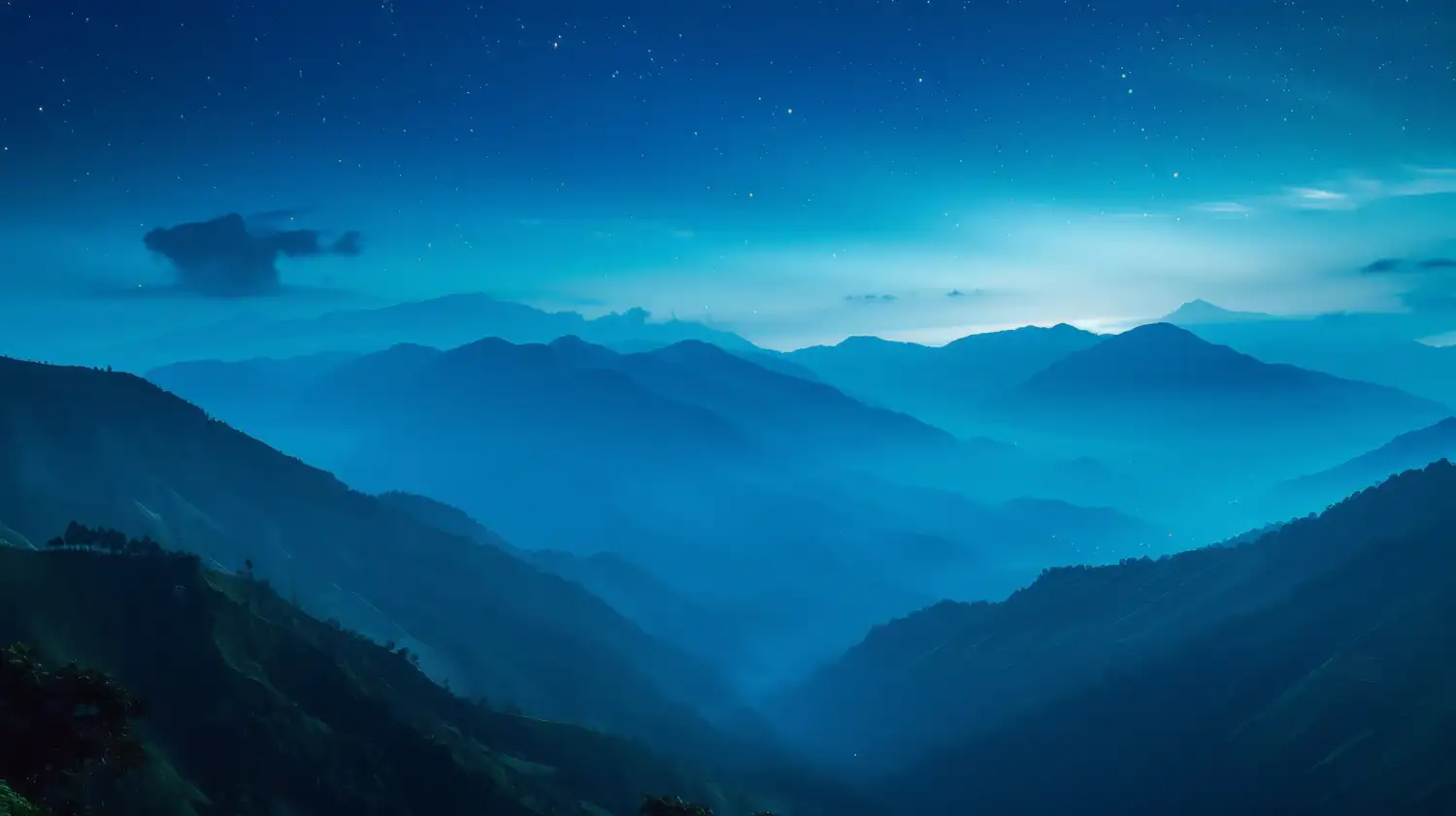
Atmospheric Haze Plays the Biggest Role
The farther away a mountain is, the more air lies between it and your eyes. Tiny particles of dust, water droplets, and other molecules suspended in the atmosphere scatter light, creating a hazy appearance that softens the mountain's true colors and gives it a bluish tint.
Blue Light Scatters More Easily
Sunlight contains all the colors of the visible spectrum. Shorter wavelengths, such as blue light, are scattered more efficiently by molecules in the atmosphere than longer wavelengths like red. As more scattered blue light reaches your eyes, distant mountains appear increasingly blue.
Distance Reduces Color Contrast
Objects that are far away lose contrast and fine detail because the atmosphere acts like a thin veil. The greens, browns, and grays of forests and rocks become muted, allowing the scattered blue light to dominate what we perceive.
Moisture in the Air Enhances the Effect
Humid weather often makes mountains appear even bluer. Water vapor and tiny droplets increase the amount of light scattering, strengthening the atmospheric haze and making distant peaks look softer and more vividly blue.
Atmospheric Haze Plays the Biggest Role
The farther away a mountain is, the more air lies between it and your eyes. Tiny particles of dust, water droplets, and other molecules suspended in the atmosphere scatter light, creating a hazy appearance that softens the mountain's true colors and gives it a bluish tint. Blue Light Scatters More Easily
Sunlight contains all the colors of the visible spectrum. Shorter wavelengths, such as blue light, are scattered more efficiently by molecules in the atmosphere than longer wavelengths like red. As more scattered blue light reaches your eyes, distant mountains appear increasingly blue.Distance Reduces Color Contrast
Objects that are far away lose contrast and fine detail because the atmosphere acts like a thin veil. The greens, browns, and grays of forests and rocks become muted, allowing the scattered blue light to dominate what we perceive. Moisture in the Air Enhances the Effect
Humid weather often makes mountains appear even bluer. Water vapor and tiny droplets increase the amount of light scattering, strengthening the atmospheric haze and making distant peaks look softer and more vividly blue.Next Story