
Why Do Apples Float While Many Fruits Sink? The Science Explained

Drop an apple into a bowl of water and it will bob happily on the surface. Try the same experiment with a peach, mango or orange without its peel, and chances are it will sink. This simple kitchen observation has fascinated curious minds for generations, especially during autumn festivals such as apple bobbing. The reason has little to do with the fruit's size or sweetness and everything to do with its unique internal structure. Apples are cleverly designed by nature in a way that makes them lighter than they appear. Understanding why apples float reveals fascinating insights into plant biology, fruit development and even how growers transport and store one of the world's most popular fruits.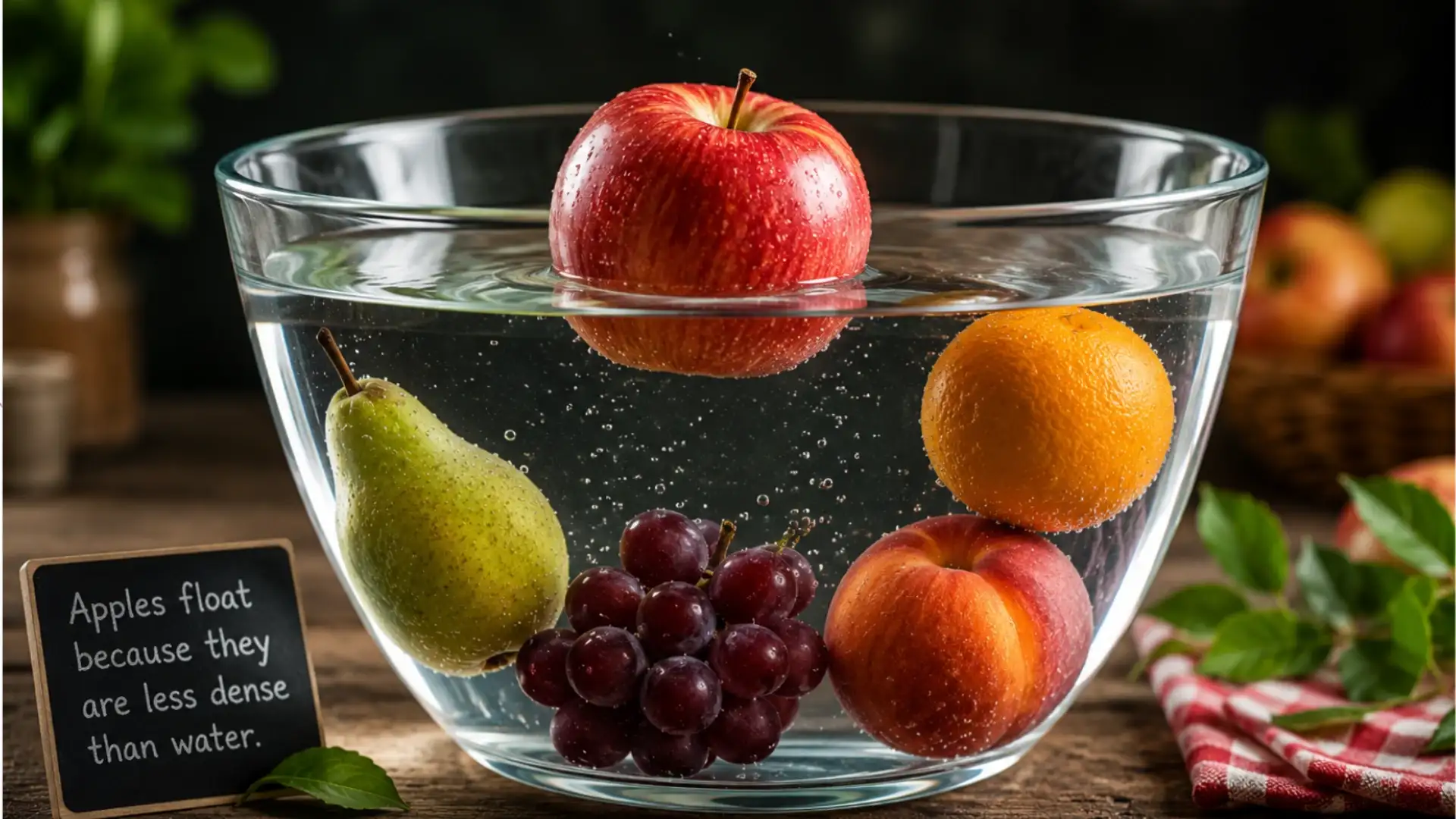
An apple contains around 20 to 25 per cent air by volume. Tiny air pockets are trapped throughout the fruit's flesh during its development, making the entire fruit lighter than water despite being mostly made up of water itself.
These microscopic air spaces act like natural flotation devices, allowing apples to stay buoyant.
As a result, when placed in water, gravity overcomes buoyancy and these fruits sink. Even fruits that appear similar in size or weight can behave differently because their internal structure varies considerably.
An orange provides an interesting exception. A whole orange often floats because its thick, spongy peel contains many tiny air spaces. Peel the orange, however, and it usually sinks because the dense flesh is exposed.
This principle explains why ships made of steel can float, why ice stays on top of lakes and why life jackets keep people above water.
Apples provide a perfect everyday demonstration of this scientific concept, making them popular examples in classrooms and science experiments around the world.
Different apple varieties also contain slightly different amounts of air. Although nearly all fresh apples float, some varieties sit higher in the water than others because of subtle differences in their internal structure.
Scientists also study these air spaces because they influence an apple's texture, crispness and shelf life.
Teachers often use apples to introduce children to the principles of buoyancy and density because the experiment is simple, safe and memorable. It is a reminder that science can often be discovered through ordinary objects found in the kitchen.
The next time you see an apple floating effortlessly in water, you will know it is not a coincidence. Hidden inside every apple are thousands of tiny air pockets that make this everyday fruit a remarkable example of nature's clever engineering.
Why Apples Float on Water
The main reason apples float is their low density. An object floats when it is less dense than the liquid surrounding it. Since water has a density of about one gram per cubic centimetre, anything with a lower average density will remain on the surface.An apple contains around 20 to 25 per cent air by volume. Tiny air pockets are trapped throughout the fruit's flesh during its development, making the entire fruit lighter than water despite being mostly made up of water itself.
These microscopic air spaces act like natural flotation devices, allowing apples to stay buoyant.
Why Many Other Fruits Sink
Many fruits contain significantly fewer air pockets than apples. Fruits such as peaches, pears, plums and mangoes have denser flesh, meaning their overall density is greater than water.As a result, when placed in water, gravity overcomes buoyancy and these fruits sink. Even fruits that appear similar in size or weight can behave differently because their internal structure varies considerably.
An orange provides an interesting exception. A whole orange often floats because its thick, spongy peel contains many tiny air spaces. Peel the orange, however, and it usually sinks because the dense flesh is exposed.
The Science Behind Density
Density is simply the relationship between an object's mass and its volume. Two fruits may weigh exactly the same, yet the one with more air inside occupies slightly more space without adding much weight.This principle explains why ships made of steel can float, why ice stays on top of lakes and why life jackets keep people above water.
You may also like
- Understanding the Significance of Kamika Ekadashi in Hinduism
- Why 'Forgotten Kingdoms of India: Shadow of the Serpent Fort' by Arti Chavan is a must-read page-turner that brings one of India's most forgotten eras to life
- A special celestial alignment on the first Ekadashi of Sawan: Learn about the significance of the fast, as well as the dos and don'ts..
- Why Does Your Hair Feel Different During Pregnancy?
- Plastic bottle numbers explained: Which ones are safe for everyday use?
Apples provide a perfect everyday demonstration of this scientific concept, making them popular examples in classrooms and science experiments around the world.
Surprising Facts About Floating Apples
The floating ability of apples gave rise to the centuries-old tradition of apple bobbing, a game believed to have originated in Britain and later became associated with Halloween celebrations. Players attempt to catch floating apples using only their mouths, relying entirely on the fruit's natural buoyancy.Different apple varieties also contain slightly different amounts of air. Although nearly all fresh apples float, some varieties sit higher in the water than others because of subtle differences in their internal structure.
Scientists also study these air spaces because they influence an apple's texture, crispness and shelf life.
Why This Matters in Everyday Life
Understanding why apples float is more than a fun science fact. Fruit growers, food scientists and storage experts all consider density and internal structure when developing new apple varieties, improving transport methods and preserving freshness.Teachers often use apples to introduce children to the principles of buoyancy and density because the experiment is simple, safe and memorable. It is a reminder that science can often be discovered through ordinary objects found in the kitchen.
The next time you see an apple floating effortlessly in water, you will know it is not a coincidence. Hidden inside every apple are thousands of tiny air pockets that make this everyday fruit a remarkable example of nature's clever engineering.






Loving Newspoint? Download the app now
