
Why Do Leaves Change Colour Before Falling?

A tree can spend months covered in green leaves and then suddenly seem to transform into shades of yellow, orange, red and brown.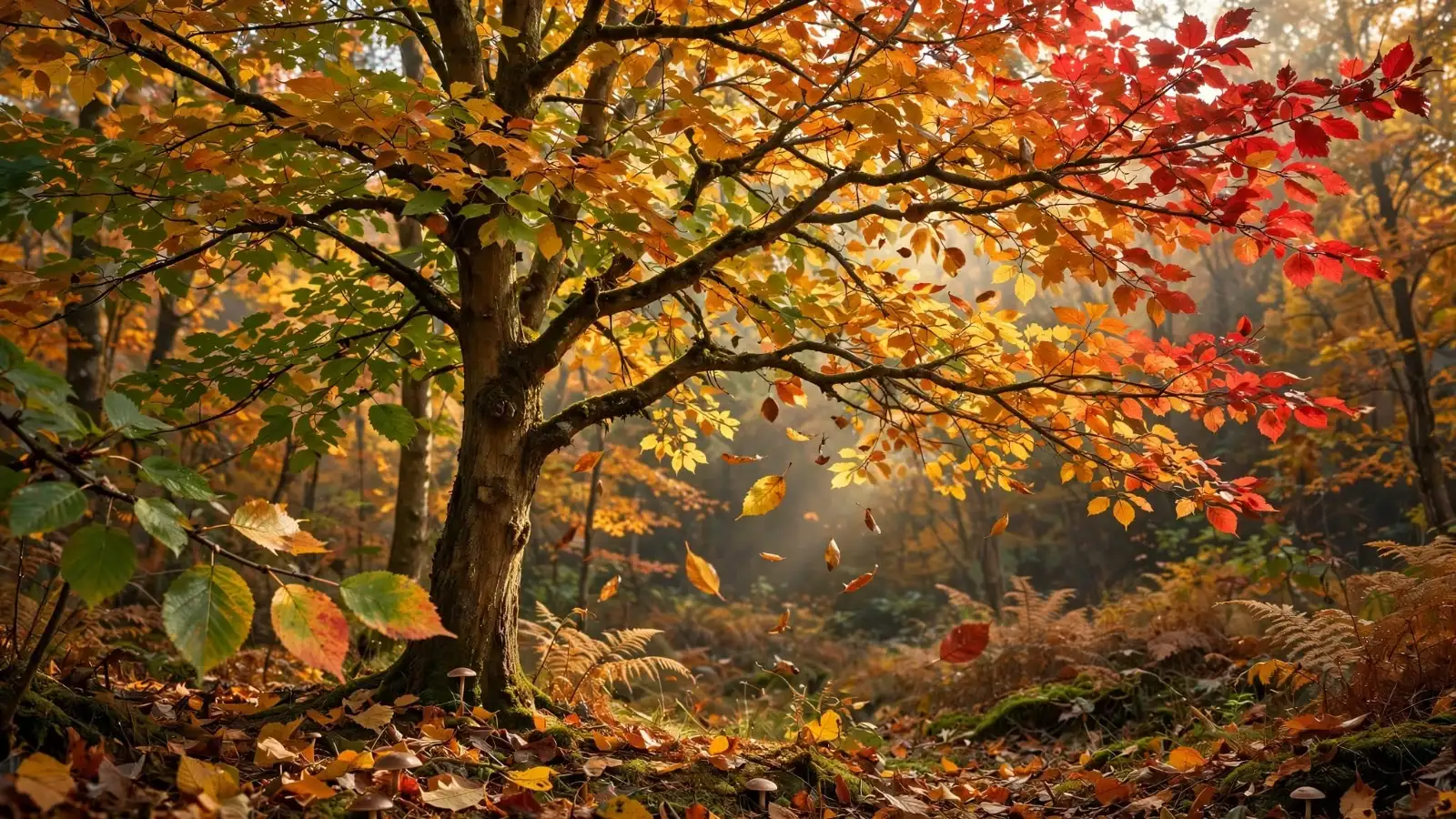
But the colour change is not simply a decorative display.
So, why do leaves change colour before falling?
The answer begins with the pigment that makes most leaves appear green: chlorophyll.
Because chlorophyll absorbs certain wavelengths of light particularly effectively, it gives leaves their familiar green appearance.
During the growing season, plants continually produce and maintain chlorophyll, keeping many leaves green.
But as environmental conditions change, that balance begins to shift.
Existing chlorophyll gradually breaks down.
When the dominant green pigment fades, other pigments that were already present in the leaf become easier to see.
Carotenoid pigments can produce yellow and orange colours, for example.
This is why a leaf can appear to change colour without the tree suddenly creating an entirely new colour from nothing.
Unlike carotenoids, anthocyanins are often produced in leaves under particular conditions.
Their presence can depend on factors including light and temperature.
This is why the colour of leaves can vary between trees, species and even different years.
Leaves are valuable because they help a tree capture energy, but maintaining them also requires water and nutrients.
Before a leaf falls, the tree can reclaim some useful resources from it.
A specialised layer of cells gradually develops near the point where the leaf connects to the branch. This helps separate the leaf from the tree.
Eventually, the leaf detaches.
Evergreen plants generally retain their leaves for much longer and have adaptations that allow them to remain functional through different environmental conditions.
Their leaves may eventually be replaced, but not all at once in the same seasonal display.
They reflect changes taking place inside the plant as it adjusts to its environment and prepares for a period when maintaining leaves may become less useful.
So, when a green leaf turns yellow, orange or red before falling, it is essentially showing you the final stages of its working life.
But the colour change is not simply a decorative display.
So, why do leaves change colour before falling?
The answer begins with the pigment that makes most leaves appear green: chlorophyll.
Why Are Leaves Green?
Chlorophyll is essential for photosynthesis, the process plants use to convert light energy into chemical energy.Because chlorophyll absorbs certain wavelengths of light particularly effectively, it gives leaves their familiar green appearance.
During the growing season, plants continually produce and maintain chlorophyll, keeping many leaves green.
But as environmental conditions change, that balance begins to shift.
Less Chlorophyll Reveals Hidden Colours
As days become shorter and temperatures change, many deciduous trees reduce their production of chlorophyll.Existing chlorophyll gradually breaks down.
When the dominant green pigment fades, other pigments that were already present in the leaf become easier to see.
Carotenoid pigments can produce yellow and orange colours, for example.
This is why a leaf can appear to change colour without the tree suddenly creating an entirely new colour from nothing.
Where Do Red Leaves Come From?
Red and purple shades can involve pigments called anthocyanins.Unlike carotenoids, anthocyanins are often produced in leaves under particular conditions.
Their presence can depend on factors including light and temperature.
This is why the colour of leaves can vary between trees, species and even different years.
The Tree Is Preparing To Let Go
Colour change is also connected to the process of leaf drop.Leaves are valuable because they help a tree capture energy, but maintaining them also requires water and nutrients.
You may also like
- International Day of the Girl Child: Theme for 2026 draws attention; find out when and why this special day is observed..
- Parenting: Is it right to scold a child for every mistake? Learn about these 4 effects of constant scolding..
- Travel Guide: Be a part of these 5 festivals in India this October—find out when and where they are held..
- She helped her father harvest areca nuts and got a job in the Income Tax Department to support her athletic needs: Meet Sneha SS who won bronze at the Asian Games
- Smart hacks to clean coffee machines at home with kitchen essentials
Before a leaf falls, the tree can reclaim some useful resources from it.
A specialised layer of cells gradually develops near the point where the leaf connects to the branch. This helps separate the leaf from the tree.
Eventually, the leaf detaches.
Why Don't Evergreen Trees Do The Same Thing?
Not all trees follow this dramatic seasonal pattern.Evergreen plants generally retain their leaves for much longer and have adaptations that allow them to remain functional through different environmental conditions.
Their leaves may eventually be replaced, but not all at once in the same seasonal display.
A Seasonal Recycling Process
The changing colours of leaves are therefore more than a visual spectacle.They reflect changes taking place inside the plant as it adjusts to its environment and prepares for a period when maintaining leaves may become less useful.
So, when a green leaf turns yellow, orange or red before falling, it is essentially showing you the final stages of its working life.






Loving Newspoint? Download the app now
