
Why We Spend More Money When We Pay Digitally

Remember when spending money meant physically taking cash out of your wallet? You could actually see your money disappearing. If you had ₹2,000 and spent ₹500, you were left with ₹1,500. Simple. Visible. A little painful, maybe. Now, you can spend hundreds or even thousands of rupees without feeling like you have spent anything at all. A quick scan. A PIN. A notification. Done.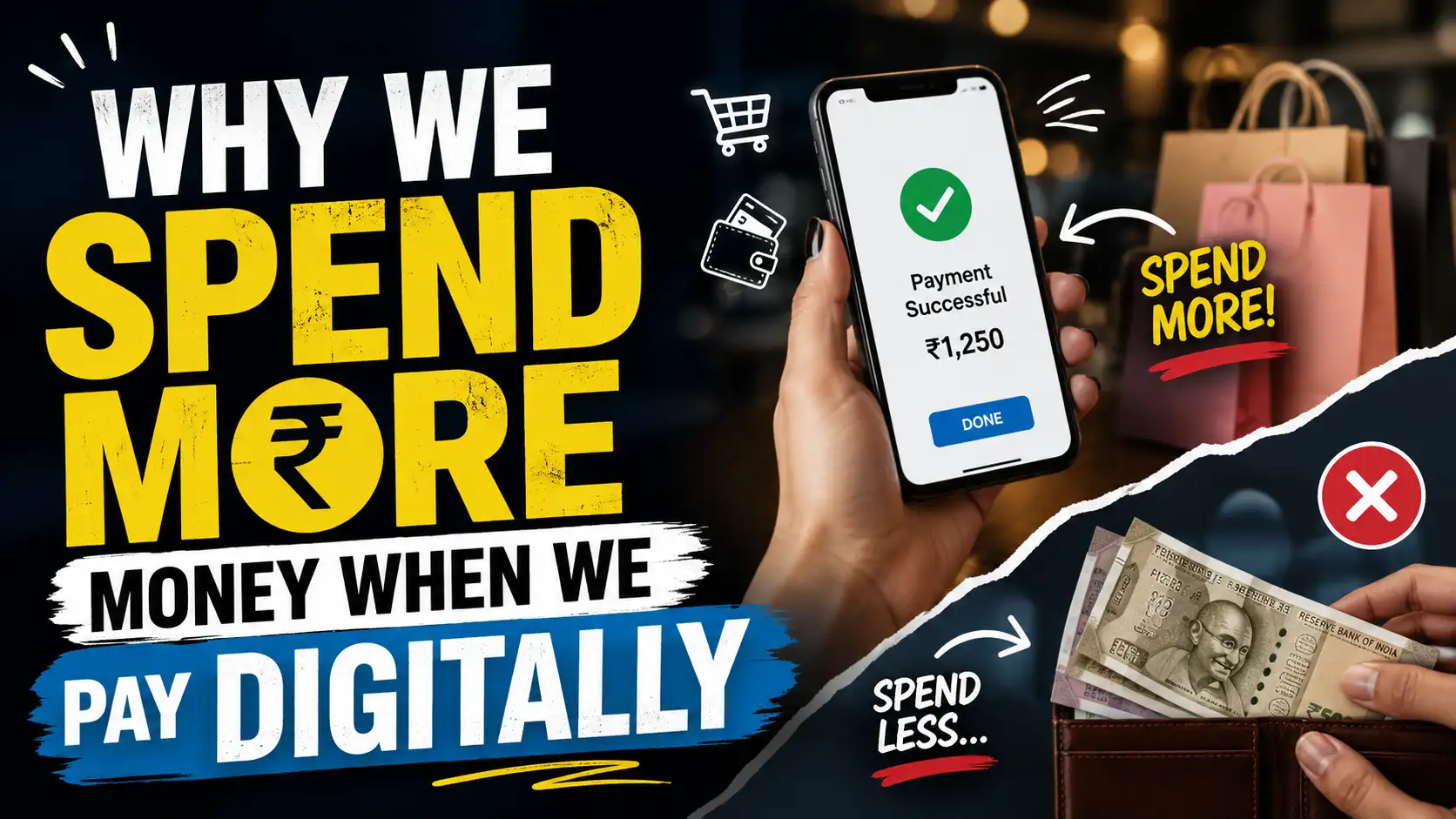
The Advantage of Convenience
Digital payments have made our lives incredibly convenient. We no longer need to carry cash, search for change or think twice before ordering something online. But there is something interesting about the way we spend money when money exists only as numbers on a screen. When we pay digitally, spending can feel almost invisible. And that might be one of the reasons we end up spending more.
There is something psychologically different about handing over physical cash. When you give someone a ₹500 note, you physically feel the transaction. You see the note leave your hand. Your wallet feels lighter. That tiny moment can make you pause and think, Do I really want to spend this? Digital payments remove that pause.
You scan a QR code, tap your phone or enter your UPI PIN, and the money is gone before your brain has fully processed the purchase. The transaction is quick, convenient and almost completely painless.
Spending money can actually feel uncomfortable. This feeling is often referred to as the “pain of paying”. When you use cash, that feeling is more obvious because you physically lose something.
Digital payments make the process feel smoother. There is no empty wallet, no counting notes and no visible reminder of what you have spent. Your money simply moves from one digital balance to another. This makes spending feel less emotional. And when something feels less painful, we may be more likely to do it again.
The biggest problem is often not one major purchase. It is the ₹99 coffee. The ₹149 delivery fee. The extra ₹299 was spent on something that was “on sale”. Individually, these purchases do not seem like a big deal.
But when you pay digitally, small transactions can become almost automatic. Since there is no physical money leaving your hands, you may not even notice how quickly they add up. By the end of the month, those “small” purchases can become a surprisingly large amount because each transaction feels too insignificant to worry about at the time. The problem is not necessarily one expensive purchase but the accumulation of dozens of small, unnoticed expenses.
Digital payments have also made spending easier than ever. You do not have to plan a shopping trip. You do not even have to leave your bed. One click can buy food, clothes, subscriptions, gadgets and practically anything else.
The easier it becomes to spend money, the less time we have to think about whether we actually want something. Sometimes, convenience removes the pause that could have stopped us from making an unnecessary purchase.
Digital payments are not bad. In fact, they have made everyday life much easier. The real problem is that when spending becomes invisible, it can also become mindless. The solution is not necessarily to stop using digital payments. It is to become more conscious of them.
Check your bank statements. Track your expenses. Set a monthly spending limit. And before making a small purchase, ask yourself one simple question:
Would I still buy this if I had to pay in cash? Sometimes, that one question is enough to make you pause. Because the money may be digital, but the spending is still very real.
The Advantage of Convenience
Digital payments have made our lives incredibly convenient. We no longer need to carry cash, search for change or think twice before ordering something online. But there is something interesting about the way we spend money when money exists only as numbers on a screen. When we pay digitally, spending can feel almost invisible. And that might be one of the reasons we end up spending more.
Cash Makes Spending Feel More Real
There is something psychologically different about handing over physical cash. When you give someone a ₹500 note, you physically feel the transaction. You see the note leave your hand. Your wallet feels lighter. That tiny moment can make you pause and think, Do I really want to spend this? Digital payments remove that pause.
You scan a QR code, tap your phone or enter your UPI PIN, and the money is gone before your brain has fully processed the purchase. The transaction is quick, convenient and almost completely painless.
Digital Payments Reduce the “Pain of Paying”
Spending money can actually feel uncomfortable. This feeling is often referred to as the “pain of paying”. When you use cash, that feeling is more obvious because you physically lose something.
You may also like
- Rajkummar Rao's Comments Spark Debate on Celebrity Pressures in Politics
- Your child always says "I'm fine," but is he really? This webinar will help you learn how to keep your children safe offline and online
- Word of the day: Kakistocracy
- Vijay Sethupathi and Simran encourage a smarter way of purchasing jewellery in new campaign
- He rescued a newborn abandoned in a forest 20 years ago; today, 35 daughters call this Jharkhand man "Baba", and his only promise is, “I will do this till the day I die”
Digital payments make the process feel smoother. There is no empty wallet, no counting notes and no visible reminder of what you have spent. Your money simply moves from one digital balance to another. This makes spending feel less emotional. And when something feels less painful, we may be more likely to do it again.
Small Purchases Start Adding Up
The biggest problem is often not one major purchase. It is the ₹99 coffee. The ₹149 delivery fee. The extra ₹299 was spent on something that was “on sale”. Individually, these purchases do not seem like a big deal.
But when you pay digitally, small transactions can become almost automatic. Since there is no physical money leaving your hands, you may not even notice how quickly they add up. By the end of the month, those “small” purchases can become a surprisingly large amount because each transaction feels too insignificant to worry about at the time. The problem is not necessarily one expensive purchase but the accumulation of dozens of small, unnoticed expenses.
Convenience Can Make Us Spend More
Digital payments have also made spending easier than ever. You do not have to plan a shopping trip. You do not even have to leave your bed. One click can buy food, clothes, subscriptions, gadgets and practically anything else.
The easier it becomes to spend money, the less time we have to think about whether we actually want something. Sometimes, convenience removes the pause that could have stopped us from making an unnecessary purchase.
The Problem Isn't Digital Payment
Digital payments are not bad. In fact, they have made everyday life much easier. The real problem is that when spending becomes invisible, it can also become mindless. The solution is not necessarily to stop using digital payments. It is to become more conscious of them.
Check your bank statements. Track your expenses. Set a monthly spending limit. And before making a small purchase, ask yourself one simple question:
Would I still buy this if I had to pay in cash? Sometimes, that one question is enough to make you pause. Because the money may be digital, but the spending is still very real.






Loving Newspoint? Download the app now
