
Why Does Bread Become Hard But Biscuits Become Soft?

Have you ever opened a biscuit packet expecting that familiar crunch, only to find the biscuits strangely soft? At the same time, a loaf of bread left on the kitchen counter seems to go in the opposite direction, becoming dry and hard.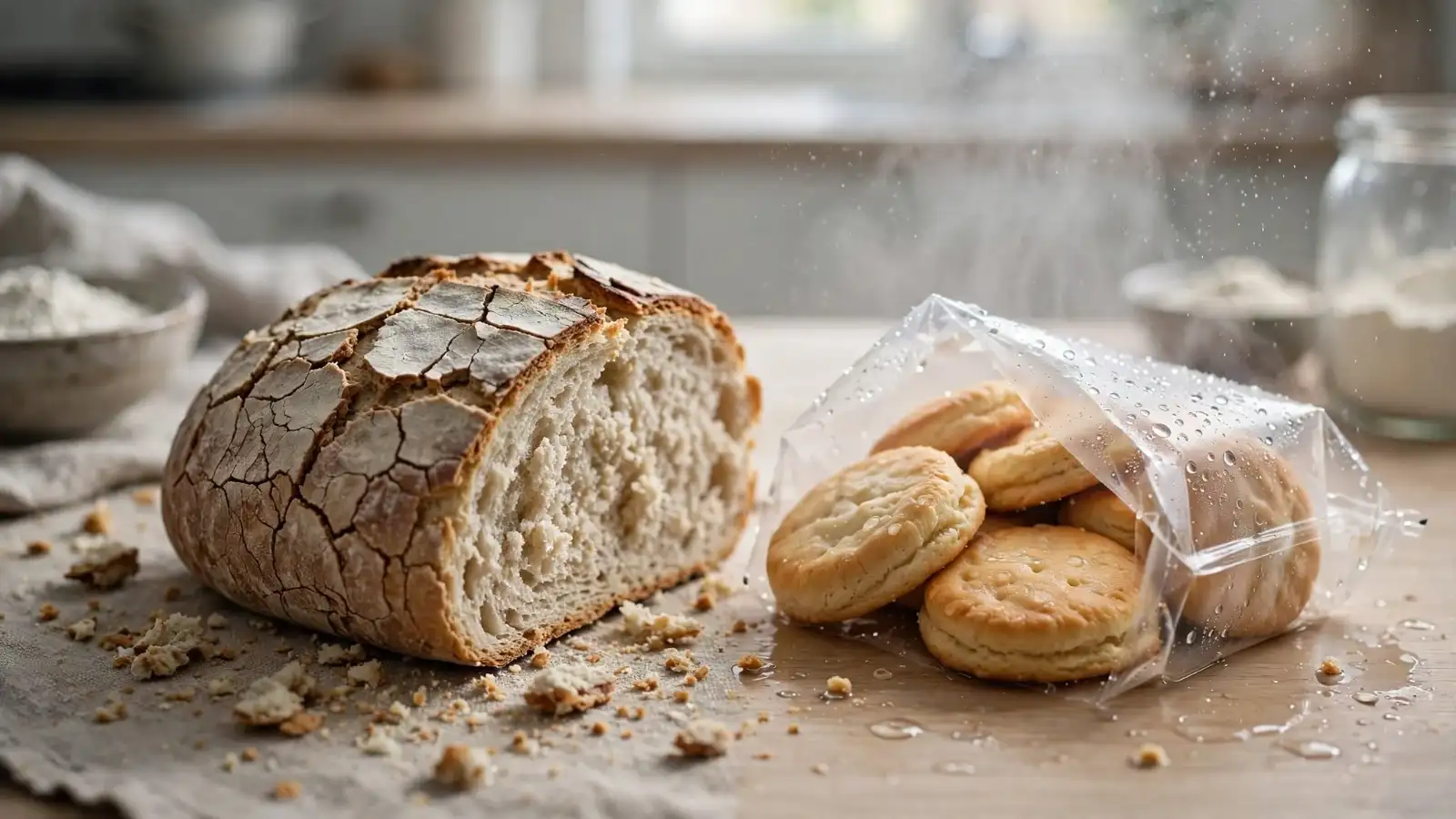
It sounds contradictory because both foods are made mainly from flour. So why does bread become hard while biscuits become soft ?
The answer lies largely in moisture, starch and how these foods are made.
Fresh bread contains water distributed through its soft structure. It also contains starch, which changes its arrangement as the bread cools and ages. Over time, some of the starch molecules reorganise into a more ordered structure. This process, known as starch retrogradation, contributes to the firming of bread.
Moisture also moves around inside the loaf. Water can migrate away from the softer crumb and towards other parts of the bread, while some moisture may eventually escape into the surrounding air.
That is why an older loaf can feel noticeably firmer, even if it has not become completely dry.
The problem begins when biscuits are exposed to humid air.
Because the surrounding atmosphere contains moisture, dry biscuits can absorb some of it. Their structure gradually takes in water, reducing the crispness that made them crunchy in the first place.
This is why an open packet of biscuits can become soft after a while, particularly in humid weather.
Bread is often kept in a bread bag or container to slow moisture loss and protect it from the surrounding environment. Biscuits, meanwhile, are usually sealed in moisture-resistant packaging to prevent humidity from reaching them.
Once that packaging is opened, however, the biscuits are exposed to the air. In a humid environment, they can absorb moisture surprisingly quickly.
The simple answer is that bread and biscuits respond differently to moisture and starch because they begin with very different structures and moisture levels.
Bread tends to firm up as its starch changes and moisture redistributes or escapes. Biscuits, which start out dry and crisp, can absorb moisture from humid air and lose that crunch.
The next time a biscuit packet mysteriously turns soft, or yesterday's bread feels tougher than expected, there is a little food science happening right in your kitchen.
It sounds contradictory because both foods are made mainly from flour. So why does bread become hard while biscuits become soft ?
The answer lies largely in moisture, starch and how these foods are made.
Bread Loses Its Fresh Texture
When people say bread has gone stale, they often assume it has simply dried out. That is part of the story, but not the whole explanation.Fresh bread contains water distributed through its soft structure. It also contains starch, which changes its arrangement as the bread cools and ages. Over time, some of the starch molecules reorganise into a more ordered structure. This process, known as starch retrogradation, contributes to the firming of bread.
Moisture also moves around inside the loaf. Water can migrate away from the softer crumb and towards other parts of the bread, while some moisture may eventually escape into the surrounding air.
That is why an older loaf can feel noticeably firmer, even if it has not become completely dry.
Biscuits Have The Opposite Problem
Biscuits are generally made with much less water than bread. Their crisp texture depends on being relatively dry.The problem begins when biscuits are exposed to humid air.
Because the surrounding atmosphere contains moisture, dry biscuits can absorb some of it. Their structure gradually takes in water, reducing the crispness that made them crunchy in the first place.
This is why an open packet of biscuits can become soft after a while, particularly in humid weather.
Why Packaging Matters
The difference becomes especially obvious when you compare storage.Bread is often kept in a bread bag or container to slow moisture loss and protect it from the surrounding environment. Biscuits, meanwhile, are usually sealed in moisture-resistant packaging to prevent humidity from reaching them.
Once that packaging is opened, however, the biscuits are exposed to the air. In a humid environment, they can absorb moisture surprisingly quickly.
It Is All About Moisture Balance
So, why does bread become hard but biscuits become soft?The simple answer is that bread and biscuits respond differently to moisture and starch because they begin with very different structures and moisture levels.
Bread tends to firm up as its starch changes and moisture redistributes or escapes. Biscuits, which start out dry and crisp, can absorb moisture from humid air and lose that crunch.
The next time a biscuit packet mysteriously turns soft, or yesterday's bread feels tougher than expected, there is a little food science happening right in your kitchen.
Next Story