
Why Does Rain Smell So Good After a Long Drought? The Science Behind Petrichor

Most people notice a distinctive smell in the air when it rains after a long drought. It's frequently linked with spring, as the smell of fresh-cut grass is associated with summer. You'll find it in a lot of poetry and also on many inspirational lists of things to be happy about.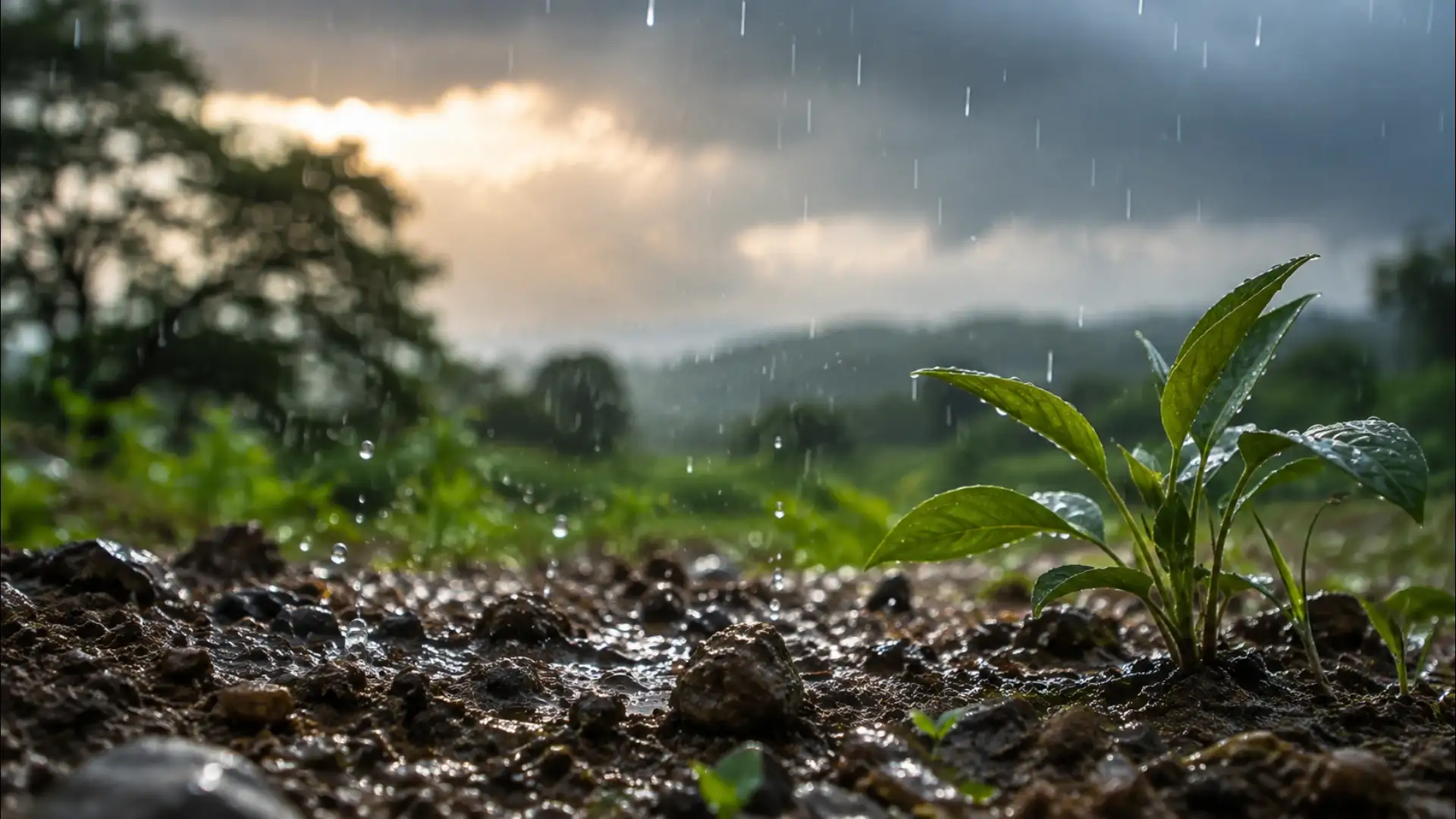
The scientific name for this scent is petrichor , and it was first named by two Australian researchers in the 1960s. It actually comes from the moistening of the earth. Let's take a closer look at the science behind this unique and mysterious smell.
The scientists published their research on the smell of rain and the chemical compounds responsible for it in the journal Nature. For the study, Bear and Thomas investigated the earthy aroma that arises when rain falls on dry soil. They identified two key compounds, geosmin and 2-methylisoborneol, produced by certain types of soil bacteria, as major contributors to the petrichor scent.
The wetness and force of rainfall kick these tiny spores up into the air where the moisture after a rain acts as an aerosol (just like an aerosol air freshener). The moist air easily carries the spores to us so we breathe them in. These spores have a distinctive, earthy smell we often associate with rainfall.
The ‘ rain smell ’ is caused by a chemical in the bacteria called geosin, which is released by the bacteria as they die. Geosin is a type of alcohol molecule with a very strong scent. The bacteria are extremely common and can be found in areas all over the world, which accounts for the universality of this sweet ‘after-the-rain’ smell.
Since the bacteria thrive in moist soil but release the spores once the soil dries out, the smell is most acute after a rain that follows a dry spell. That said, you'll notice it to some degree after most rainstorms.
The scientific name for this scent is petrichor , and it was first named by two Australian researchers in the 1960s. It actually comes from the moistening of the earth. Let's take a closer look at the science behind this unique and mysterious smell.
Origins of the Terms
Australian scientists Isabel Joy Bear and Richard Grenfell Thomas coined the term ‘petrichor’ in 1964. The word ‘petrichor’ itself is derived from two Greek words: ‘petros’, meaning ‘stone’, and ‘ichor’, which in Greek mythology referred to the fluid that flowed in the veins of the gods. The term was chosen to emphasize the connection between the earth and the air, which is fundamental to the release of the scent during rainfall.You may also like
- 5 common bra fit myths we've all believed at some point
- Passenger carrying 'Monkey Skull' in bag detained at Delhi airport by CISF; wildlife case now under investigation
- NHAI: A ₹5,000 fine for a one-minute delay—understand the minute-by-minute penalty structure on national highways.
- Shraddha Kapoor just gave the classic angrakha a stunning makeover: See her ₹33,800 festive look
- Why this family decided to leave America for a small European country: 'We sold our house, both of our cars, and everything we owned'
The scientists published their research on the smell of rain and the chemical compounds responsible for it in the journal Nature. For the study, Bear and Thomas investigated the earthy aroma that arises when rain falls on dry soil. They identified two key compounds, geosmin and 2-methylisoborneol, produced by certain types of soil bacteria, as major contributors to the petrichor scent.
What Causes Petrichor?
As it turns out, the smells people associate with rainstorms can be caused by a number of things, including raindrops themselves. (More on that later.) One of the more pleasant rain smells, the one we often notice in the woods is actually caused by bacteria. Actinomycetes , a type of filamentous bacteria, grow in soil when conditions are damp and warm. When the soil dries out, the bacteria produce spores in the soil.The wetness and force of rainfall kick these tiny spores up into the air where the moisture after a rain acts as an aerosol (just like an aerosol air freshener). The moist air easily carries the spores to us so we breathe them in. These spores have a distinctive, earthy smell we often associate with rainfall.
The ‘ rain smell ’ is caused by a chemical in the bacteria called geosin, which is released by the bacteria as they die. Geosin is a type of alcohol molecule with a very strong scent. The bacteria are extremely common and can be found in areas all over the world, which accounts for the universality of this sweet ‘after-the-rain’ smell.
Since the bacteria thrive in moist soil but release the spores once the soil dries out, the smell is most acute after a rain that follows a dry spell. That said, you'll notice it to some degree after most rainstorms.
Why Do We Enjoy the Smell of Rain?
Humans often enjoy the smell of rain for several reasons, both biological and psychological. Some scientists speculate that humans may have developed an affinity for the smell of rain because it signaled the end of drought and the potential availability of fresh water. In our evolutionary history, access to clean water was crucial for survival, so an attraction to the smell of rain could have been advantageous.





Loving Newspoint? Download the app now
