
Why Dogs Follow Their Owners From Room to Room

You get up from the sofa, and your dog gets up too. You walk towards the kitchen, and there they are. You go into another room, and somehow your dog is already waiting outside the door.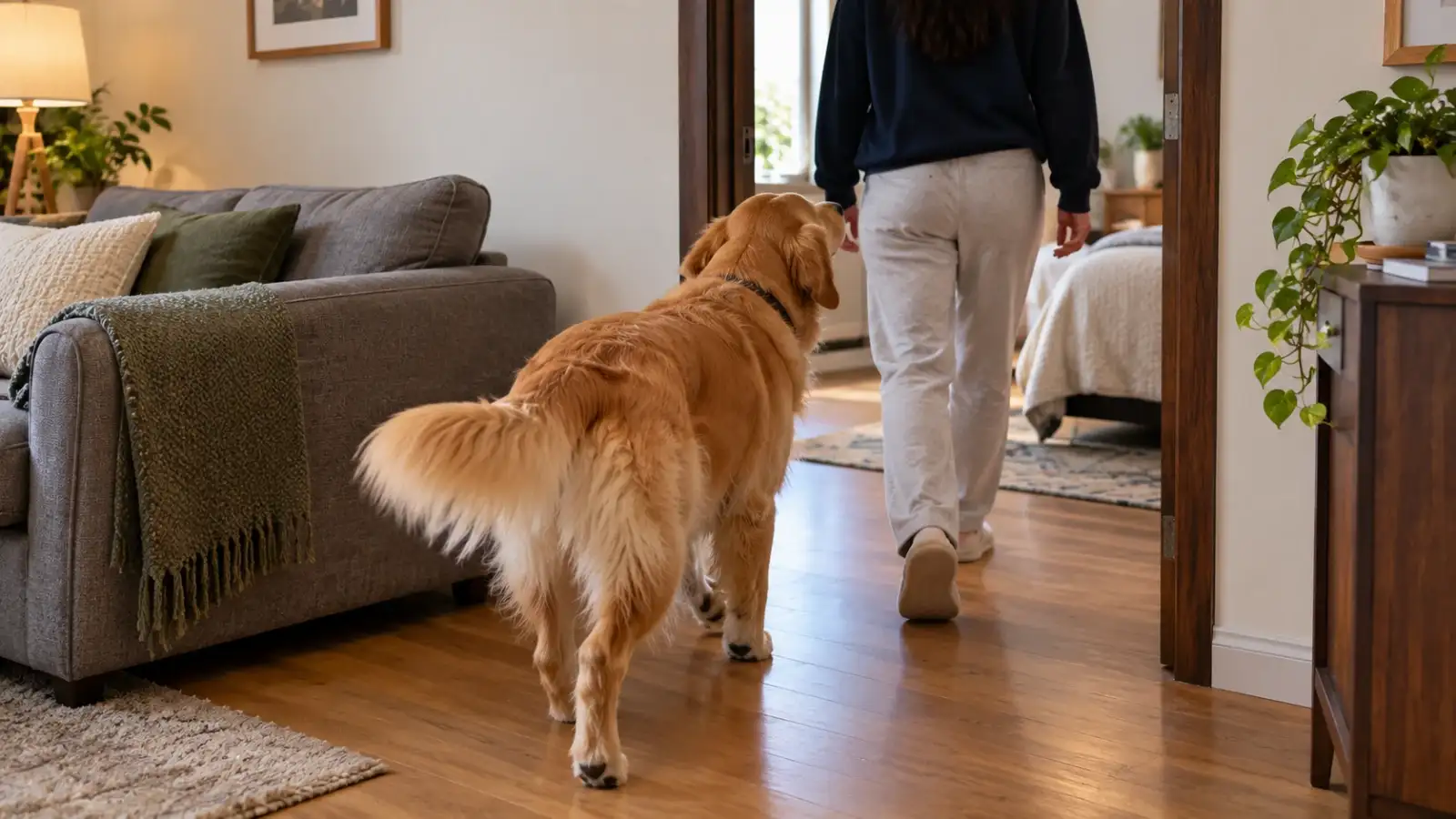
For many dog owners, this is an everyday part of living with a pet. Dogs following their owners from room to room can look almost comical, but the behaviour usually has a few simple explanations.
Dogs are highly social animals, and staying close to their humans can be part of how they interact with their household. Some dogs are naturally more attached than others, while breed, personality, early experiences and daily routines can also influence the behaviour.
You provide meals, walks, treats, toys, affection and access to different parts of the home. If something interesting tends to happen whenever you move, following you makes perfect sense.
A dog may also learn that staying close leads to attention. If every trip to the kitchen results in a snack, a pat or a playful interaction, the dog has another reason to come along.
Over time, following can simply become a habit.
This can be particularly noticeable in dogs that have formed a strong bond with one person in the household. The person who feeds them, takes them outside or spends the most time playing with them may become the person they choose to follow most often.
Some breeds are also naturally inclined to work closely alongside people, which can make this behaviour more noticeable.
It may simply want to know what you are doing.
Dogs are naturally interested in movement, sounds and smells around the home. If you suddenly get up and disappear into another room, your dog may decide that whatever is happening there is worth investigating.
In other words, your dog may be thinking less about separation and more about, 'What are we doing next?'
A dog with separation anxiety may show signs such as excessive barking, pacing, destructive behaviour, attempts to escape or toileting indoors when left alone.
Sudden clinginess can also deserve attention, particularly in an older dog or a dog whose behaviour has changed noticeably. Pain, changes in hearing or vision and other health concerns can sometimes make a dog seek extra reassurance.
Give your dog opportunities to relax on their own bed, play with appropriate toys and spend time with other people in the household. Exercise and mental stimulation can also help reduce boredom and restlessness.
A dog that follows you around the house is often simply a dog that wants to be involved in your world. As long as they can also settle comfortably without you, those little footsteps behind you are usually just another sign of the bond you share.
For many dog owners, this is an everyday part of living with a pet. Dogs following their owners from room to room can look almost comical, but the behaviour usually has a few simple explanations.
Dogs are highly social animals, and staying close to their humans can be part of how they interact with their household. Some dogs are naturally more attached than others, while breed, personality, early experiences and daily routines can also influence the behaviour.
You Are Connected to Everything Good
From a dog's perspective, humans control a lot of exciting things.You provide meals, walks, treats, toys, affection and access to different parts of the home. If something interesting tends to happen whenever you move, following you makes perfect sense.
A dog may also learn that staying close leads to attention. If every trip to the kitchen results in a snack, a pat or a playful interaction, the dog has another reason to come along.
Over time, following can simply become a habit.
Dogs Like Being Part of the Group
Dogs are social by nature. Being close to the people they live with can make them feel secure and connected.This can be particularly noticeable in dogs that have formed a strong bond with one person in the household. The person who feeds them, takes them outside or spends the most time playing with them may become the person they choose to follow most often.
Some breeds are also naturally inclined to work closely alongside people, which can make this behaviour more noticeable.
Sometimes They Are Simply Curious
Your dog may not always be following you because it is emotionally attached.It may simply want to know what you are doing.
Dogs are naturally interested in movement, sounds and smells around the home. If you suddenly get up and disappear into another room, your dog may decide that whatever is happening there is worth investigating.
In other words, your dog may be thinking less about separation and more about, 'What are we doing next?'
When Following Becomes a Concern
There is an important difference between a dog that likes being near you and a dog that becomes distressed whenever you leave.A dog with separation anxiety may show signs such as excessive barking, pacing, destructive behaviour, attempts to escape or toileting indoors when left alone.
Sudden clinginess can also deserve attention, particularly in an older dog or a dog whose behaviour has changed noticeably. Pain, changes in hearing or vision and other health concerns can sometimes make a dog seek extra reassurance.
How to Encourage Healthy Independence
There is nothing wrong with enjoying your dog's company. But it can be useful to help them feel comfortable spending time independently too.Give your dog opportunities to relax on their own bed, play with appropriate toys and spend time with other people in the household. Exercise and mental stimulation can also help reduce boredom and restlessness.
A dog that follows you around the house is often simply a dog that wants to be involved in your world. As long as they can also settle comfortably without you, those little footsteps behind you are usually just another sign of the bond you share.
Next Story