
The End of Logo Luxury? Why More People Are Choosing Dupes Over Designer Brands

Walk into any café today and you'll probably see someone carrying a handbag inspired by a famous designer, wearing trainers that resemble a luxury pair, or talking about a perfume that "smells exactly like" one costing ten times more. The interesting part isn't that these products exist; they always have. What's changed is that nobody seems embarrassed about buying them anymore. In fact, people proudly recommend them. Somewhere between rising prices, endless product reviews, and social media, buying a dupe stopped feeling like settling and started feeling like shopping smarter.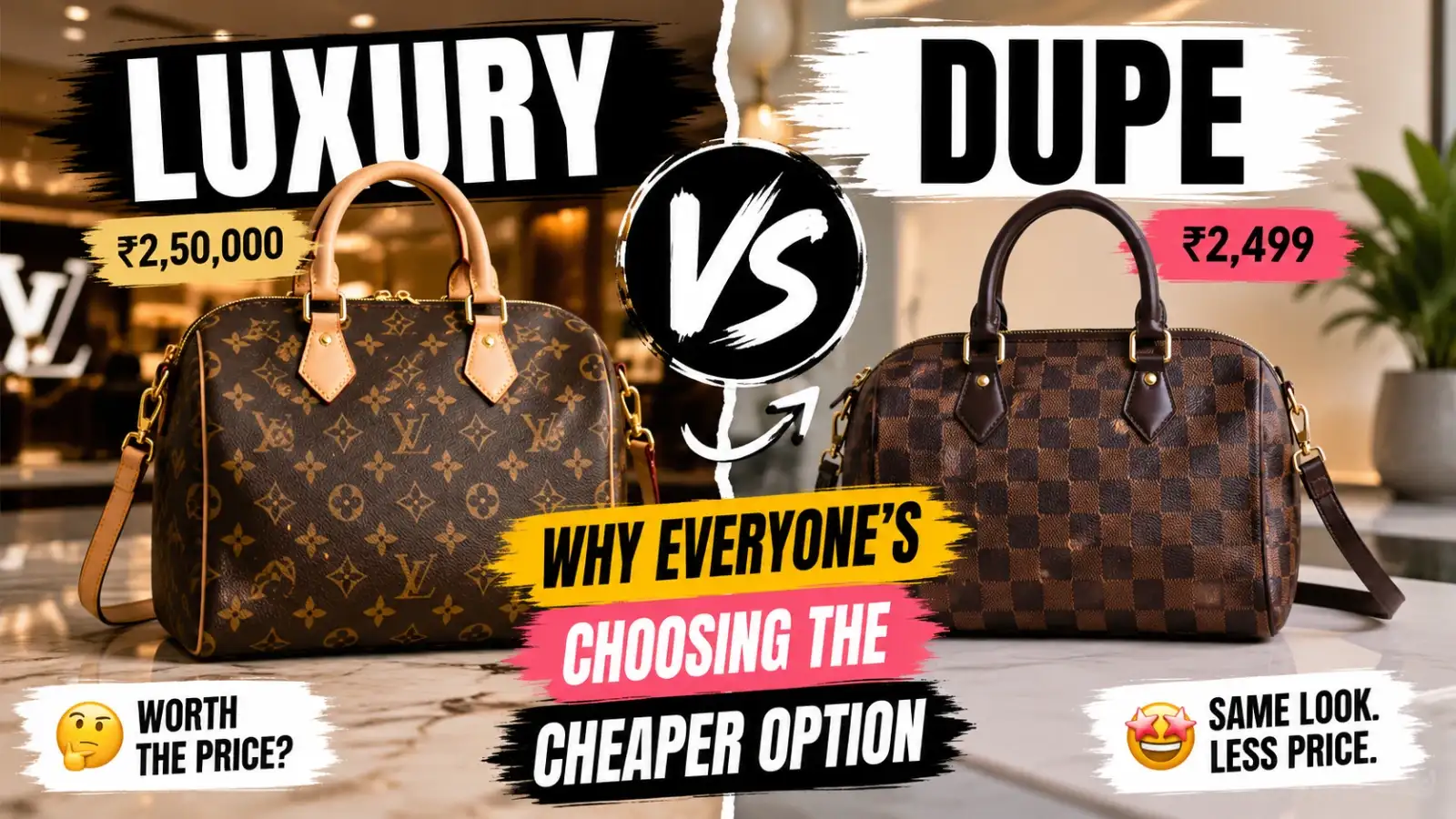
When Did Expensive Stop Being the Goal?
There was a time when owning something luxurious felt deeply personal. People saved for months to buy a watch they had admired for years or treated themselves to an expensive fragrance after getting their first promotion. The purchase wasn't rushed because it meant something. It marked a chapter in life.
Today, many shoppers still appreciate those products, but they don't automatically believe a higher price means better value. Spending thousands on a handbag feels like a bigger decision than it did a decade ago, especially when the same money could pay for a holiday, cover a month's rent, or build an emergency fund. It's not that people dream less. They're simply weighing those dreams against everything else life demands.
The Internet Pulled Back the curtain
Shopping has changed because information has changed. Years ago, brands controlled the story around their products. You saw glossy advertisements, celebrity campaigns, and carefully designed store displays. There wasn't much room to question whether something was worth the price.
Now all it takes is one search. Within minutes you can watch someone compare two moisturisers ingredient by ingredient or test an affordable perfume beside its luxury inspiration. You aren't relying only on advertisements anymore. You're listening to ordinary people who have already spent the money and are happy to tell you what they honestly think. That has made consumers more curious and far less willing to pay simply because a label tells them they should.
It's not always about looking rich.
One assumption about dupe culture is that people buy alternatives because they want others to think they're carrying the original. Sometimes that happens, but it doesn't explain why the trend has grown so quickly.
For many people, the attraction is surprisingly simple. They like the design, the colour, or the functionality, but they don't feel the need to spend several times more just to own the version with a famous logo. They aren't trying to copy someone else's lifestyle. They're making a choice that fits their own.
Luxury Brands Are Facing New Questions
This shift has quietly changed the challenge for luxury brands. In the past, exclusivity was often enough. Today, consumers want to understand what they're paying for. Is it exceptional craftsmanship? Better materials? A product that will last for decades? Or is it mostly branding?
That’s not to say that luxury is losing its place. Truly well-made products still attract buyers who care about quality, heritage, and design. But the days of assuming every customer will pay any price just because a logo goes with it are fading. Modern shoppers ask more questions, compare more options, and take their time before deciding.
Maybe This Isn’t Really a Story About Dupes
Maybe the most interesting part of dupe culture has very little to do with handbags, makeup, or perfumes. It’s really a story about confidence. People are getting more comfortable deciding what something is worth for themselves, instead of letting advertising or social expectations decide for them.
Some will still choose the original because it brings them joy, and that's perfectly valid. Others will happily buy an affordable alternative and never think twice about it. Neither choice is inherently better. What has changed is the freedom to make that decision without feeling judged.
The Redefinition of Fashion
Luxury isn't disappearing, and dupes aren't taking over the world. What we're witnessing is something quieter but far more interesting: people are redefining value on their own terms. In the end, the smartest purchase isn't always the most expensive one or the cheapest one. It's the one that feels right for the person buying it.
When Did Expensive Stop Being the Goal?
There was a time when owning something luxurious felt deeply personal. People saved for months to buy a watch they had admired for years or treated themselves to an expensive fragrance after getting their first promotion. The purchase wasn't rushed because it meant something. It marked a chapter in life.
Today, many shoppers still appreciate those products, but they don't automatically believe a higher price means better value. Spending thousands on a handbag feels like a bigger decision than it did a decade ago, especially when the same money could pay for a holiday, cover a month's rent, or build an emergency fund. It's not that people dream less. They're simply weighing those dreams against everything else life demands.
The Internet Pulled Back the curtain
Shopping has changed because information has changed. Years ago, brands controlled the story around their products. You saw glossy advertisements, celebrity campaigns, and carefully designed store displays. There wasn't much room to question whether something was worth the price.
Now all it takes is one search. Within minutes you can watch someone compare two moisturisers ingredient by ingredient or test an affordable perfume beside its luxury inspiration. You aren't relying only on advertisements anymore. You're listening to ordinary people who have already spent the money and are happy to tell you what they honestly think. That has made consumers more curious and far less willing to pay simply because a label tells them they should.
It's not always about looking rich.
One assumption about dupe culture is that people buy alternatives because they want others to think they're carrying the original. Sometimes that happens, but it doesn't explain why the trend has grown so quickly.
You may also like
- Kangana Ranaut Celebrates National Handloom Day, Advocates for Indian Textile Heritage
- Preparations Underway to Impose New Levy on LPG Cylinders; Costs Likely to Rise
- Building a Healthy Workforce through Reproductive Healthcare Benefits
- Train News: 3AC, Sleeper, or Chair Car? Which is best for a long train journey?
- Deposit money just once in this Post Office scheme offering 7.4% interest and receive ₹6,000 every month..
For many people, the attraction is surprisingly simple. They like the design, the colour, or the functionality, but they don't feel the need to spend several times more just to own the version with a famous logo. They aren't trying to copy someone else's lifestyle. They're making a choice that fits their own.
Luxury Brands Are Facing New Questions
This shift has quietly changed the challenge for luxury brands. In the past, exclusivity was often enough. Today, consumers want to understand what they're paying for. Is it exceptional craftsmanship? Better materials? A product that will last for decades? Or is it mostly branding?
That’s not to say that luxury is losing its place. Truly well-made products still attract buyers who care about quality, heritage, and design. But the days of assuming every customer will pay any price just because a logo goes with it are fading. Modern shoppers ask more questions, compare more options, and take their time before deciding.
Maybe This Isn’t Really a Story About Dupes
Maybe the most interesting part of dupe culture has very little to do with handbags, makeup, or perfumes. It’s really a story about confidence. People are getting more comfortable deciding what something is worth for themselves, instead of letting advertising or social expectations decide for them.
Some will still choose the original because it brings them joy, and that's perfectly valid. Others will happily buy an affordable alternative and never think twice about it. Neither choice is inherently better. What has changed is the freedom to make that decision without feeling judged.
The Redefinition of Fashion
Luxury isn't disappearing, and dupes aren't taking over the world. What we're witnessing is something quieter but far more interesting: people are redefining value on their own terms. In the end, the smartest purchase isn't always the most expensive one or the cheapest one. It's the one that feels right for the person buying it.






Loving Newspoint? Download the app now
