
Screen Time Dining: Why Food Tastes Different When You Eat While Watching Something

Many of us have formed the habit of sitting down with a plate of food only after turning on the television or opening a streaming app on a laptop. Whether it is catching up on a favorite series or scrolling through short videos, pairing a meal with visual entertainment feels like the ultimate way to relax after a long day. However, you may have noticed that your favourite dish feels subtly less flavourful, or that you end up finishing your entire plate without truly tasting the meal. There are clear psychological and neurological reasons why food tastes different when you eat while watching something .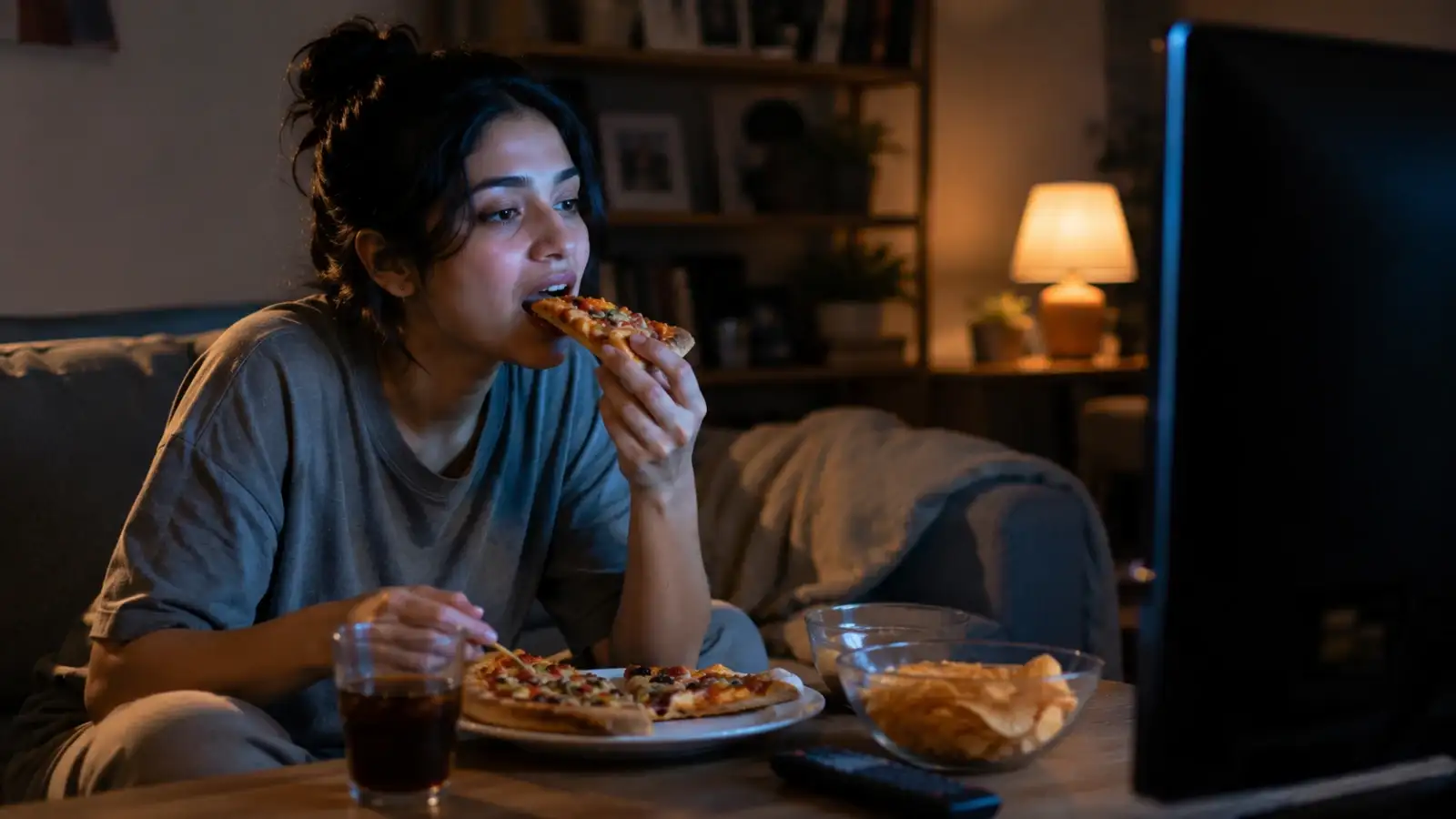
Because your brain is preoccupied with screen content, it pays far less attention to the sensory signals arriving from your taste buds and nose. Psychologists refer to this phenomenon as visual distraction or divided attention . When visual stimulation dominates your brain, your perception of basic flavours becomes dulled. Sweet, salty, and savoury notes feel less intense because your brain simply does not have enough spare capacity to register the full depth of every single bite.
Chewing plays a critical role in releasing volatile compounds in food, which travel up into the back of the nose to create rich flavour profiles. When you rush through chewing while staring at a screen, food remains in your mouth for a shorter time. This rapid pace reduces the time your palate needs to appreciate subtle textures like crispiness or creaminess, resulting in a flat and uninspiring eating experience.
When your attention is focused on a show, you miss these subtle bodily signals. You might consume an entire meal without registering the sensation of becoming satisfied, leading you to reach for extra snacks shortly afterward. Eating without visual or mental presence turns a rich culinary experience into automatic mechanical swallowing, robbing you of both the true flavour of your food and the physical satisfaction of a good meal.
Brain Distraction and Reduced Sensory Processing
The human brain possesses a limited amount of attention to distribute across all five senses at any given moment. When you sit in front of a glowing screen, your brain directs a massive portion of its processing power toward visual and auditory information. Processing fast moving images, dialogue, and plot lines requires heavy mental focus.Because your brain is preoccupied with screen content, it pays far less attention to the sensory signals arriving from your taste buds and nose. Psychologists refer to this phenomenon as visual distraction or divided attention . When visual stimulation dominates your brain, your perception of basic flavours becomes dulled. Sweet, salty, and savoury notes feel less intense because your brain simply does not have enough spare capacity to register the full depth of every single bite.
You may also like
- Teenagers who feel close to their parents may make safer choices as adults, study finds: Why staying connected to your child matters more than parents think
- Dubai teen loses grandma to breast cancer, donates hair, turns grief into advocacy
- No Motivation to Do Anything? These Psychological Reasons May Explain the Feeling
- How Does an Infant's Nutrition Shape Mental Health? 5 Vital Links
- Meet Mieko Catlett: Japanese woman who travelled to Uttarakhand years after her husband's death to fulfil his last wish of immersing his ashes in the sacred Saryu River
Chewing Speed and the Loss of Texture Awareness
Watching an exciting or dramatic show alters the physical rhythm of how you eat. When a storyline becomes intense or fast paced, people naturally match their chewing speed to the energy of what they are viewing. You tend to chew faster, take larger bites, and swallow your food much sooner than you normally would during a quiet meal.Chewing plays a critical role in releasing volatile compounds in food, which travel up into the back of the nose to create rich flavour profiles. When you rush through chewing while staring at a screen, food remains in your mouth for a shorter time. This rapid pace reduces the time your palate needs to appreciate subtle textures like crispiness or creaminess, resulting in a flat and uninspiring eating experience.
Disconnected Fullness Cues and Overeating
Beyond altering taste perception , screen distraction disrupts the communication between your stomach and brain regarding hunger and satiety. Normally, paying attention to the texture, temperature, and flavour of your meal sends signals to the brain that nourish your appetite and signal when you are full.When your attention is focused on a show, you miss these subtle bodily signals. You might consume an entire meal without registering the sensation of becoming satisfied, leading you to reach for extra snacks shortly afterward. Eating without visual or mental presence turns a rich culinary experience into automatic mechanical swallowing, robbing you of both the true flavour of your food and the physical satisfaction of a good meal.






Loving Newspoint? Download the app now
