
Why There Are Places on Earth Where Gravity Is Slightly Weaker

Gravity is one of the fundamental forces shaping life on Earth. It keeps our feet on the ground, holds the atmosphere around the planet and keeps the oceans in place. Yet, surprisingly, gravity is not exactly the same everywhere on Earth. In some locations, it is slightly weaker than in others. These differences are small, but scientists can measure them precisely and use them to understand what lies beneath Earth's surface.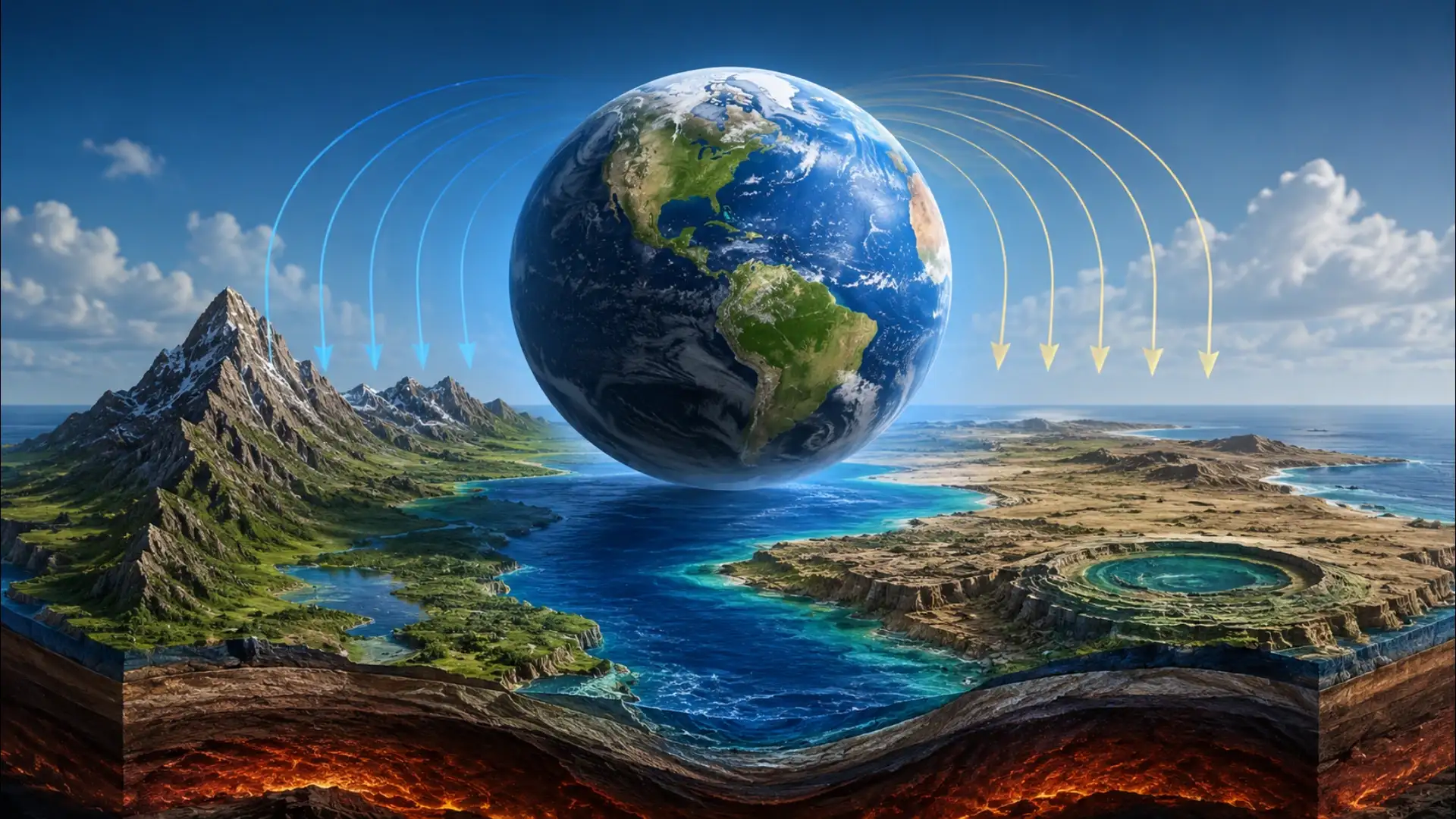
This means that a person standing at the equator is farther from Earth's centre than someone standing near the poles. As a result, gravity is slightly weaker at the equator and somewhat stronger at the poles. Earth's rotation also produces a small outward effect that reduces the apparent force of gravity, particularly around the equator.
In contrast, areas beneath oceans may have a lower average density than regions containing thick continental rock. Underground geological structures can create even more noticeable variations. Dense rocks, mineral deposits and buried geological formations can increase local gravitational strength, while large underground cavities or regions of relatively low-density material can reduce it.
These variations are known as gravity anomalies .
A weaker-than-expected gravitational signal can indicate that an area contains less-dense material underground. A stronger signal may suggest the presence of denser rocks or other geological structures.
Gravity surveys are therefore valuable in geology, mineral exploration, groundwater studies and investigations of Earth's crust. Satellites can also map gravitational variations over huge areas, allowing scientists to identify features that cannot be easily observed from the surface.
Such anomalies do not mean that people in these locations would suddenly feel dramatically lighter. The difference is extremely small, far below what humans can normally notice. However, modern scientific instruments and satellites are sensitive enough to detect these subtle variations.
Gravity may seem constant in everyday life, but Earth's gravitational field is actually a complex landscape of tiny highs and lows. These variations reveal that our planet is far from uniform and that even invisible changes in gravity can provide valuable information about what is happening beneath our feet.
Gravity Is Not Uniform Across the Planet
The strength of gravity depends mainly on Earth's mass and the distance from its centre. Because Earth is not a perfect sphere, gravity varies naturally across the planet. Earth is slightly flattened at the poles and wider around the equator because of its rotation.This means that a person standing at the equator is farther from Earth's centre than someone standing near the poles. As a result, gravity is slightly weaker at the equator and somewhat stronger at the poles. Earth's rotation also produces a small outward effect that reduces the apparent force of gravity, particularly around the equator.
Mountains, Oceans and Underground Structures Matter
Local geography can also influence gravity. Large mountain ranges contain enormous amounts of rock and therefore add mass to a particular region. This extra mass can produce a slightly stronger gravitational attraction.In contrast, areas beneath oceans may have a lower average density than regions containing thick continental rock. Underground geological structures can create even more noticeable variations. Dense rocks, mineral deposits and buried geological formations can increase local gravitational strength, while large underground cavities or regions of relatively low-density material can reduce it.
You may also like
- Understanding Menstrual Pain: Causes and Remedies
- How to Support Your Gut and Vaginal Microbiome Before Pregnancy
- Spilling water for luck! How India, Turkey and Iran share this ancient farewell ritual
- “It's OK mommy, it's OK”: 7-year-old American boy called 'hero' after calmly calling 911 when his mother suffered seizure; parenting lesson to take home
- Kerala to be renamed 'Keralam': Rajya Sabha clears name change bill; what it means for travellers
These variations are known as gravity anomalies .
What Lies Beneath Earth's Surface
One of the most fascinating uses of gravity measurements is studying Earth's interior. Scientists use highly sensitive instruments called gravimeters to detect tiny differences in gravitational acceleration.A weaker-than-expected gravitational signal can indicate that an area contains less-dense material underground. A stronger signal may suggest the presence of denser rocks or other geological structures.
Gravity surveys are therefore valuable in geology, mineral exploration, groundwater studies and investigations of Earth's crust. Satellites can also map gravitational variations over huge areas, allowing scientists to identify features that cannot be easily observed from the surface.
Some Places Have Particularly Low Gravity
Certain regions are famous for unusually low gravitational measurements . The Indian Ocean, for example, contains a major gravitational anomaly. Scientists have studied this region to understand variations in Earth's crust and mantle, as well as the geological processes that shaped the ocean basin.Such anomalies do not mean that people in these locations would suddenly feel dramatically lighter. The difference is extremely small, far below what humans can normally notice. However, modern scientific instruments and satellites are sensitive enough to detect these subtle variations.
Why These Differences Matter
Understanding Earth's uneven gravitational field helps scientists build better models of the planet. It provides clues about the composition and structure of the crust and deeper layers, while satellite gravity measurements can also help scientists study changes in ice sheets, groundwater and ocean circulation.Gravity may seem constant in everyday life, but Earth's gravitational field is actually a complex landscape of tiny highs and lows. These variations reveal that our planet is far from uniform and that even invisible changes in gravity can provide valuable information about what is happening beneath our feet.






Loving Newspoint? Download the app now
