
Why Humans Get Goosebumps Even Though They No Longer Need Them

Cold air hits your skin and suddenly tiny bumps appear everywhere. The same thing can happen during a powerful piece of music, an emotional speech or a frightening moment. Goosebumps are an ancient biological response that humans have inherited from much hairier ancestors. In animals with thick fur, the reaction can make hair stand upright, helping create an insulating layer or making the animal appear larger. Humans have relatively little body hair, so the original benefits are greatly reduced. Yet the underlying machinery remains. Scientists are now discovering that the tiny muscles responsible for goosebumps may have other biological roles too.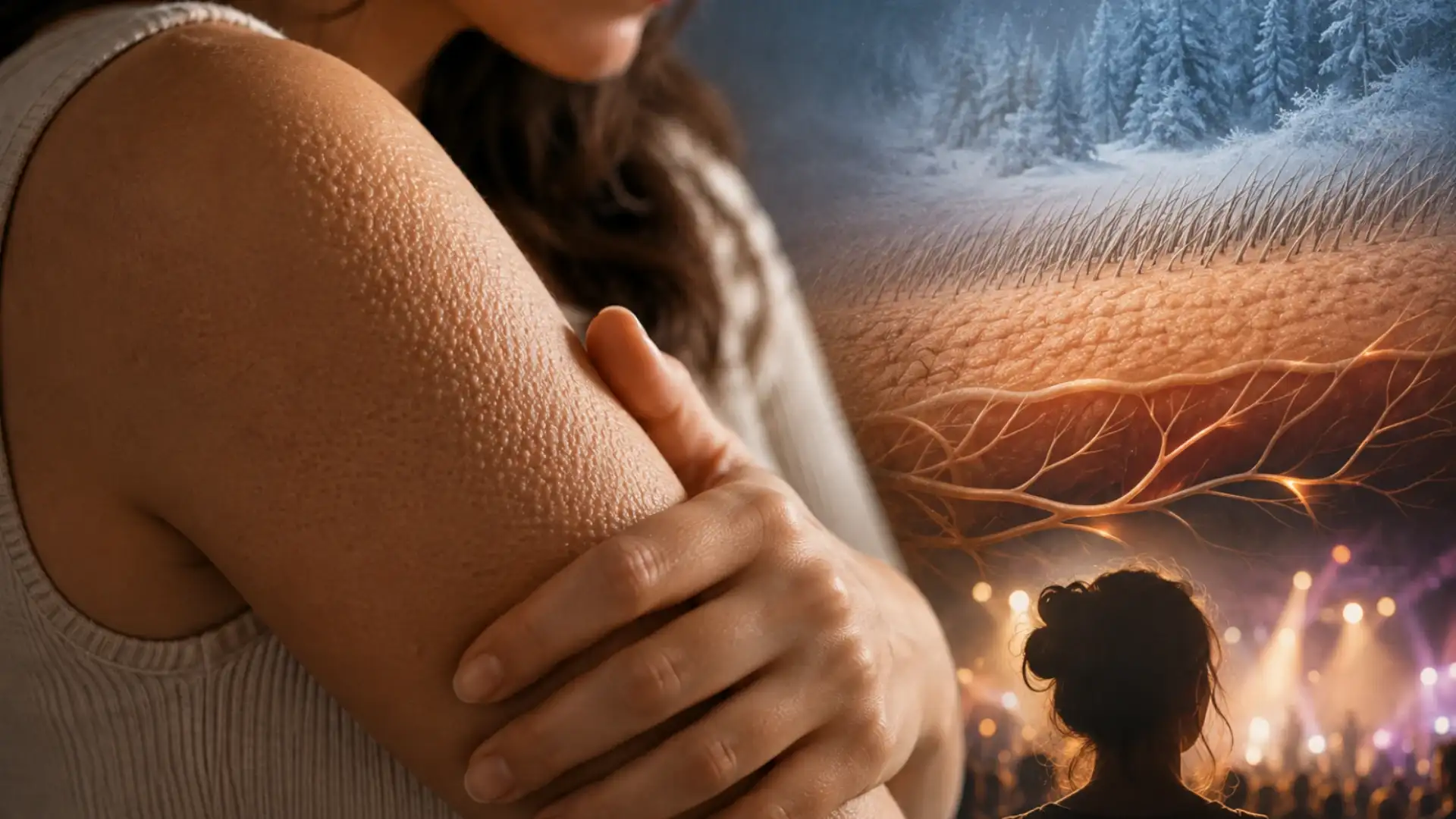
For furry mammals, standing hair can trap a layer of air and improve insulation. It can also make an animal appear larger when threatened.
That is why the response can seem almost comically outdated. We have central heating, winter coats and modern homes, yet our skin still responds as though a thick coat of fur is about to appear.
Evolution does not necessarily remove every feature once its original advantage becomes less important.
Music, fear, excitement and awe can activate the nervous system in ways that produce the same physical response.
This is one reason the phenomenon is particularly interesting. A reflex originally associated with physical conditions can now be triggered by abstract experiences such as a piece of music.
That does not mean human goosebumps exist primarily to grow hair. It does, however, show that an apparently obsolete reflex may be connected to other biological processes.
So those little bumps on your arms are more than a relic of evolution. They are a visible reminder that the human body carries traces of an older world, while sometimes finding new uses for ancient machinery.
The Muscles Behind Goosebumps
Goosebumps occur when tiny muscles attached to hair follicles, called arrector pili muscles , contract. This pulls the hairs upright and creates the familiar raised appearance on the skin.For furry mammals, standing hair can trap a layer of air and improve insulation. It can also make an animal appear larger when threatened.
Why Humans Still Have Them
Human evolution reduced the amount of body hair dramatically, but it did not remove the underlying reflex.That is why the response can seem almost comically outdated. We have central heating, winter coats and modern homes, yet our skin still responds as though a thick coat of fur is about to appear.
You may also like
- Children using social media at younger age perform worse in school tests, study says: What Indian parents need to know
- How much did a Manhattan apartment cost 50 years ago? The numbers reveal how NYC changed
- SIP or ULIP: Which investment is better for building a ₹1 crore fund?
- Spraying vinegar solution on car and home keys: 5 reasons this simple trick may actually help
- Inside Jharipani Castle: What its architecture reveals about life in colonial-era Uttarakhand
Evolution does not necessarily remove every feature once its original advantage becomes less important.
Goosebumps Can Be Emotional
Cold is not the only trigger. Strong emotional experiences can also produce goosebumps.Music, fear, excitement and awe can activate the nervous system in ways that produce the same physical response.
This is one reason the phenomenon is particularly interesting. A reflex originally associated with physical conditions can now be triggered by abstract experiences such as a piece of music.
There May Be More to the Story
Research supported by the National Institutes of Health has found evidence that the muscles and nerves involved in goosebumps can influence stem cells associated with hair growth in mice.That does not mean human goosebumps exist primarily to grow hair. It does, however, show that an apparently obsolete reflex may be connected to other biological processes.
So those little bumps on your arms are more than a relic of evolution. They are a visible reminder that the human body carries traces of an older world, while sometimes finding new uses for ancient machinery.






Loving Newspoint? Download the app now
