
The Achaar Revolution: Why Indian Pickles Are Having a Global Food Moment

For centuries, traditional Indian pickles , affectionately known as achaar , have held a cherished, permanent place on dining tables across the subcontinent. Crafted in large ceramic jars using raw mangoes, limes, garlic, or mixed vegetables submerged in aromatic oils and ground spices, these preserved condiments have traditionally been treated as a comforting homemade staple. Today, however, these fiery, sour, and intensely flavourful creations are breaking out of regional kitchens to make their mark on international dining scenes. Gourmet chefs, international food bloggers, and adventurous home cooks worldwide are embracing these bold preserves to elevate everyday meals. There are clear culinary, health, and cultural reasons why Indian pickles are having a global food moment.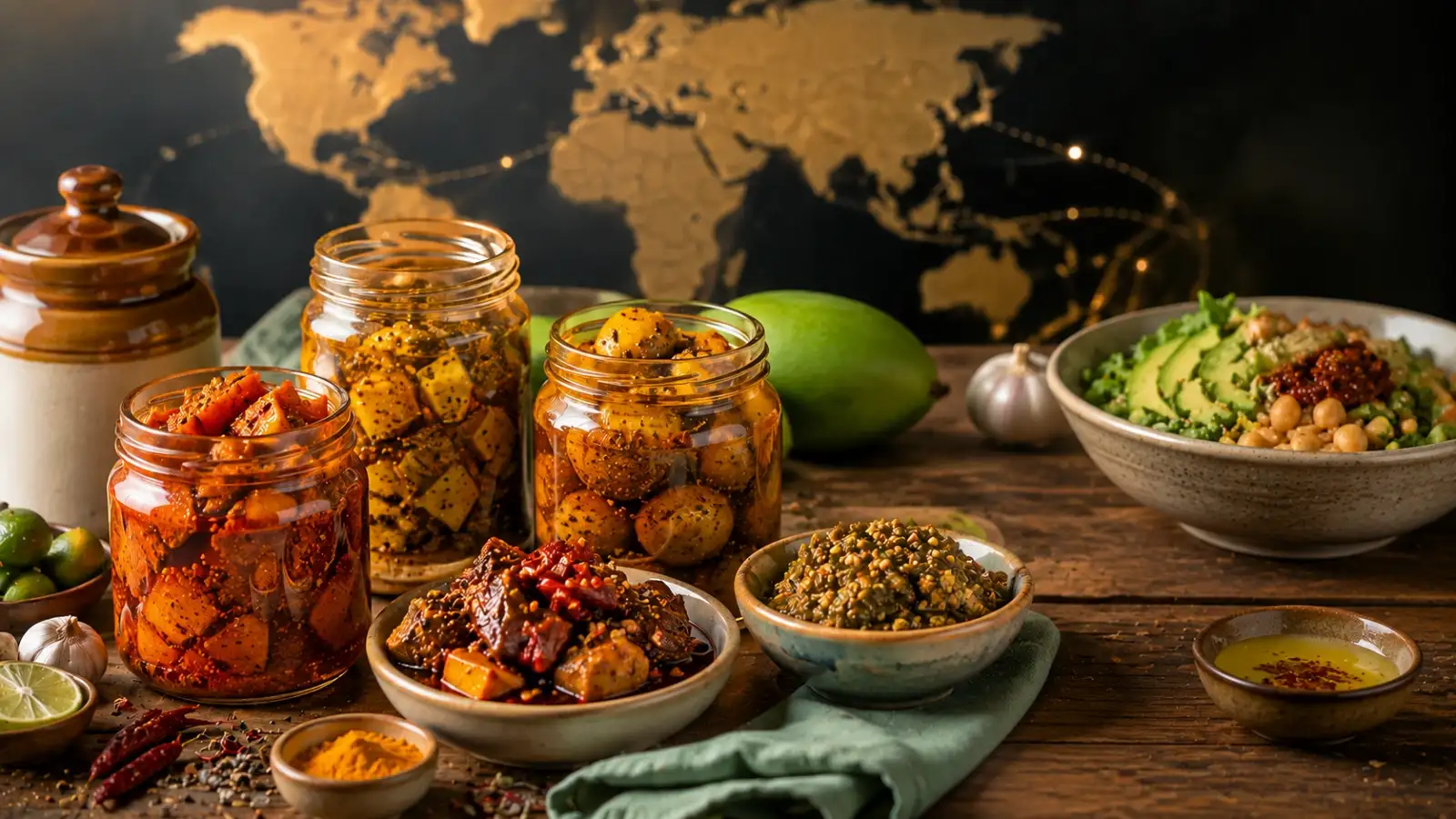
When added to Western staples like avocado toast, sourdough sandwiches, grilled cheese, or roasted vegetables, a single spoonful of tangy achaar can completely transform a dish. International home cooks are treating these rich preserves not just as side dishes, but also as secret cooking ingredients, stirring them into pasta sauces, burger marinades, and grain bowls to add immediate depth and excitement.
Some traditional Indian pickles undergo natural lactic acid fermentation, while others are preserved using salt, oil, spices, or a combination of these methods. Fermented varieties can develop beneficial bacteria, while spices such as turmeric and garlic provide a range of bioactive compounds. As wellness communities explore alternatives to highly processed foods, traditional achaar is gaining attention for combining vibrant flavours with traditional preservation techniques.
Additionally, global fusion restaurants in major food capitals like London, New York, and Sydney are putting regional achaar front and centre on their menus. From spicy mango pickle spreads on artisan burgers to lime pickle salad dressings, contemporary chefs are proving that these historic preserves have a place in modern kitchens. As boundaries between global cuisines continue to blur, this ancient preservation art is earning its place as a celebrated culinary tradition worldwide.
The Craze for Bold Artisanal Flavours and Complex Condiments
Modern international food culture is moving rapidly away from bland, sugary dressings and simple table condiments. Food enthusiasts today crave complex, layered flavour profiles that deliver an instant punch to their taste buds. Indian pickling relies on sophisticated combinations of whole and roasted spices such as fenugreek, mustard seeds, nigella, turmeric, and dried chillies, blended with mustard or sesame oil.When added to Western staples like avocado toast, sourdough sandwiches, grilled cheese, or roasted vegetables, a single spoonful of tangy achaar can completely transform a dish. International home cooks are treating these rich preserves not just as side dishes, but also as secret cooking ingredients, stirring them into pasta sauces, burger marinades, and grain bowls to add immediate depth and excitement.
You may also like
- Have an expensive solar panel on your roof? Follow these simple tips to prevent theft.
- 5 common bra fit myths we've all believed at some point
- Passenger carrying 'Monkey Skull' in bag detained at Delhi airport by CISF; wildlife case now under investigation
- NHAI: A ₹5,000 fine for a one-minute delay—understand the minute-by-minute penalty structure on national highways.
- Shraddha Kapoor just gave the classic angrakha a stunning makeover: See her ₹33,800 festive look
Gut Health Awareness and the Rise of Fermented Foods
Another driving force behind this worldwide trend is the growing interest in functional foods, gut health, and natural digestive support. Health-conscious consumers are actively seeking fermented and naturally preserved foods that may support a healthy gut microbiome.Some traditional Indian pickles undergo natural lactic acid fermentation, while others are preserved using salt, oil, spices, or a combination of these methods. Fermented varieties can develop beneficial bacteria, while spices such as turmeric and garlic provide a range of bioactive compounds. As wellness communities explore alternatives to highly processed foods, traditional achaar is gaining attention for combining vibrant flavours with traditional preservation techniques.
Social Media Exposure and Global Fusion Cooking
The power of digital media and international travel has introduced regional food traditions to millions of curious food lovers worldwide. Short-form videos demonstrating how family recipes are crafted, aged under the warm sun, and paired with modern dishes have gone viral across video-sharing platforms.Additionally, global fusion restaurants in major food capitals like London, New York, and Sydney are putting regional achaar front and centre on their menus. From spicy mango pickle spreads on artisan burgers to lime pickle salad dressings, contemporary chefs are proving that these historic preserves have a place in modern kitchens. As boundaries between global cuisines continue to blur, this ancient preservation art is earning its place as a celebrated culinary tradition worldwide.






Loving Newspoint? Download the app now
