
Why Your Indoor Plant’s Soil Keeps Getting Hard and Dry

Healthy potting soil should generally allow water and air to move through it.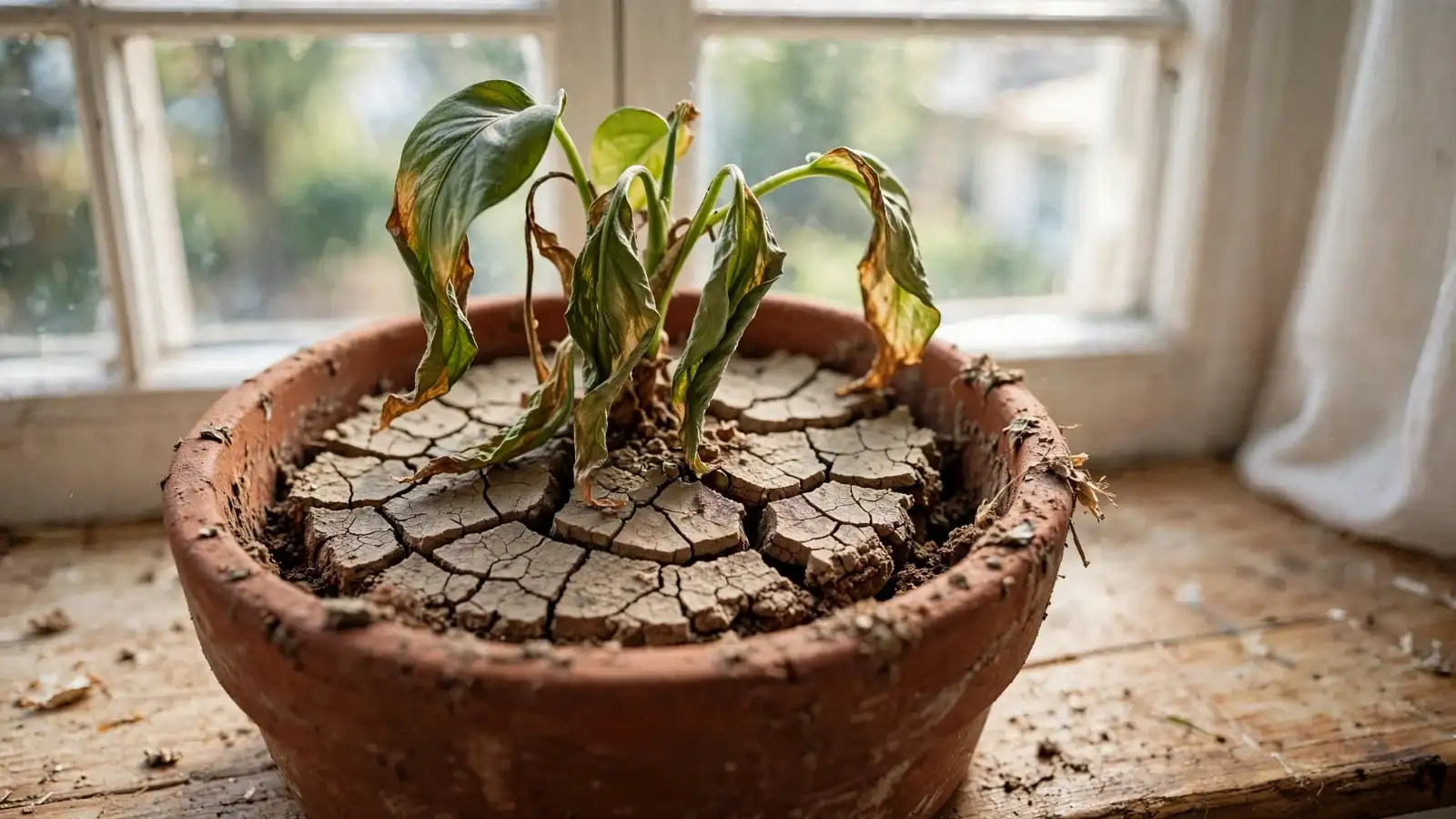
Over time, however, soil can become compacted. Repeated watering and drying can cause fine particles to settle together, particularly when the growing medium has little organic material.
When this happens, water may stop spreading evenly through the root zone.
If water sits on the surface or quickly runs down the sides of the pot instead of soaking into the soil, the growing medium may have become hydrophobic or heavily compacted.
This can leave the surface appearing wet while parts of the root zone remain surprisingly dry.
A plant in a small pot may dry out rapidly, especially in a warm room or near a bright window. Meanwhile, compacted soil can make it difficult to rehydrate evenly.
This creates an annoying cycle where the surface becomes hard and dry soon after watering.
If the soil structure is poor, repeatedly adding water may not solve the underlying issue.
Depending on the plant and severity of the problem, refreshing the potting mix during repotting can improve drainage, aeration and moisture distribution.
Healthy roots need both moisture and oxygen. A suitable potting mix helps create that balance.
Good indoor plant care is often about getting the growing environment right rather than constantly adding water.
Over time, however, soil can become compacted. Repeated watering and drying can cause fine particles to settle together, particularly when the growing medium has little organic material.
When this happens, water may stop spreading evenly through the root zone.
Look at how water behaves
One clue is what happens when you water.If water sits on the surface or quickly runs down the sides of the pot instead of soaking into the soil, the growing medium may have become hydrophobic or heavily compacted.
This can leave the surface appearing wet while parts of the root zone remain surprisingly dry.
Small pots can dry differently
The type and size of the container also matter.A plant in a small pot may dry out rapidly, especially in a warm room or near a bright window. Meanwhile, compacted soil can make it difficult to rehydrate evenly.
This creates an annoying cycle where the surface becomes hard and dry soon after watering.
Do not simply water more often
More frequent watering is not always the answer.If the soil structure is poor, repeatedly adding water may not solve the underlying issue.
Depending on the plant and severity of the problem, refreshing the potting mix during repotting can improve drainage, aeration and moisture distribution.
Check the roots before making major changes
If the plant is struggling, inspect its overall condition rather than focusing only on the soil surface.Healthy roots need both moisture and oxygen. A suitable potting mix helps create that balance.
Good indoor plant care is often about getting the growing environment right rather than constantly adding water.
Next Story