
Why Jellyfish Have Survived For Hundreds Of Millions Of Years Through Evolution

Jellyfish are among the oldest animal groups with a substantial fossil record, with jellyfish-like fossils dating back more than 500 million years. Yet modern jellyfish are not unchanged survivors from that distant past. They have continued evolving, with different lineages developing distinct body forms, life cycles and survival strategies. Their long history offers a useful example of how evolutionary success does not necessarily depend on becoming more structurally complex.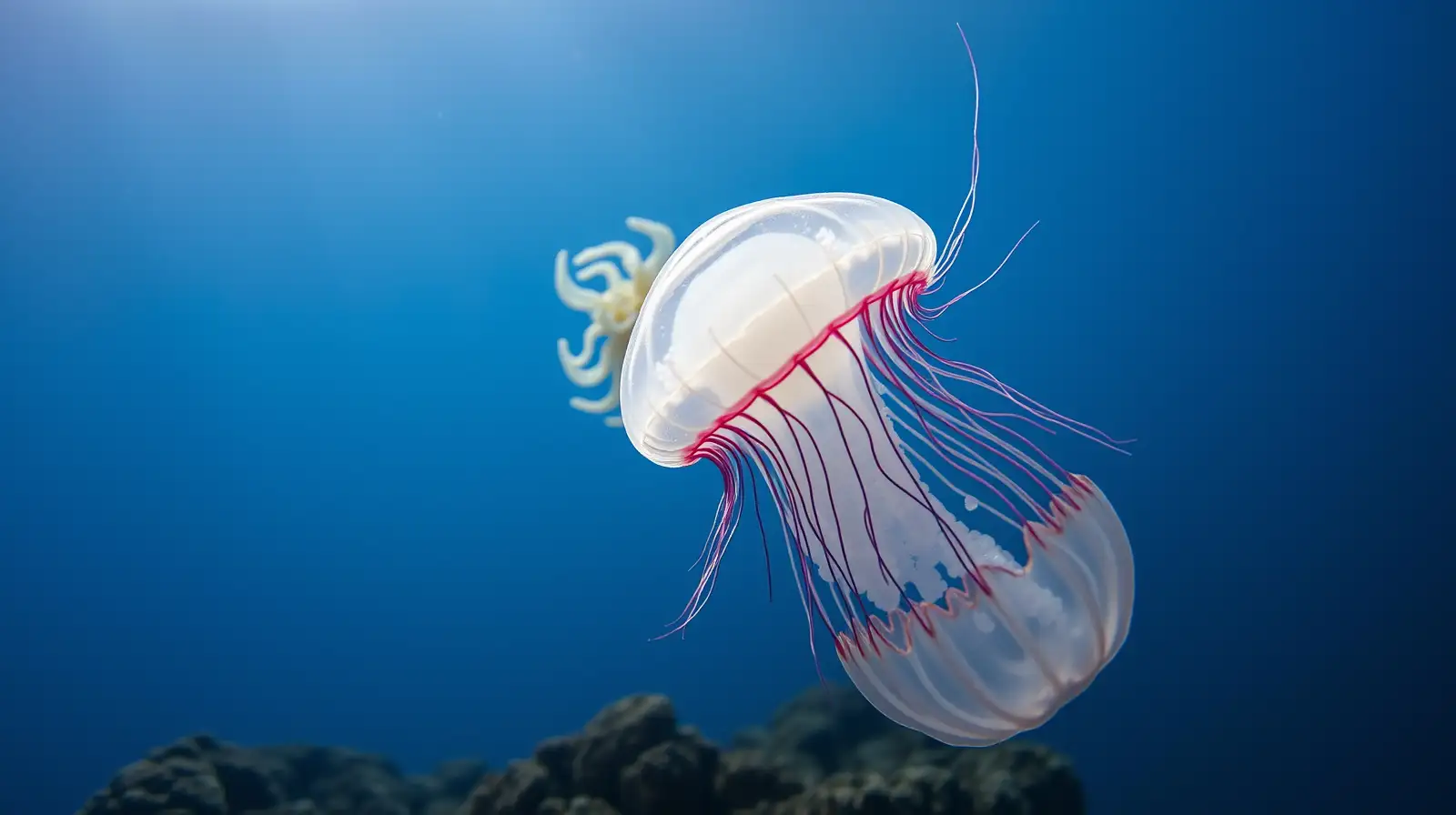
That distinction matters. Modern jellyfish should not be described as unchanged “living fossils”. Like other organisms, their lineages have experienced evolutionary changes over immense periods of time.
Their cnidocytes, or specialised stinging cells, are particularly important. These cells can rapidly discharge structures that help many jellyfish capture prey and defend themselves.
This does not make jellyfish primitive in the everyday sense. Their apparent simplicity is the result of a distinct evolutionary history, and different jellyfish groups have developed their own specialised features.
This means different stages can occupy different habitats and use different ways of feeding and reproducing. However, jellyfish are diverse, so this pattern is not identical across every species.
Their fossil history shows remarkable persistence, but persistence should not be confused with evolutionary stagnation. Jellyfish have survived because their descendants continued adapting as marine environments changed. Their story is therefore less about remaining the same and more about how different forms of life can remain successful while evolving over immense stretches of time.
An Ancient But Evolving Lineage
Jellyfish belong to the cnidarian group, which also includes corals, sea anemones and hydras. Fossils provide evidence of jellyfish-like animals in Cambrian seas more than 500 million years ago, although the evolutionary relationships between some ancient fossils and living groups are not always certain.That distinction matters. Modern jellyfish should not be described as unchanged “living fossils”. Like other organisms, their lineages have experienced evolutionary changes over immense periods of time.
A Simple Body Plan Can Be Effective
Jellyfish have a relatively simple body organisation compared with vertebrate animals. They have no brain, bones, lungs or specialised circulatory system. Instead, they rely on a diffuse nervous system and body structures suited to life in water.Their cnidocytes, or specialised stinging cells, are particularly important. These cells can rapidly discharge structures that help many jellyfish capture prey and defend themselves.
You may also like
- Who will not receive gas cylinder delivery after 4 days?
- Asked for money to get an Ayushman Card made? Here's where to complain
- Your Skin Looks Better Without Skincare? Here Is What May Be Happening
- Major Change Regarding Death Certificates: New Rules to Come into Effect on October 1
- Can't remember your SIM number? Here's how to find your number across Jio, Airtel, Vi, and BSNL
This does not make jellyfish primitive in the everyday sense. Their apparent simplicity is the result of a distinct evolutionary history, and different jellyfish groups have developed their own specialised features.
Different Life Stages Offer Flexibility
In many jellyfish groups, the life cycle includes both a free-swimming medusa and a stationary polyp stage. After reproduction, larvae can settle and develop into polyps. Depending on the group, polyps can reproduce asexually and eventually produce juvenile medusae.This means different stages can occupy different habitats and use different ways of feeding and reproducing. However, jellyfish are diverse, so this pattern is not identical across every species.
Why Have They Lasted So Long?
There is no single evolutionary feature that explains jellyfish longevity as a group. Their success reflects a combination of traits that evolved across different lineages, including specialised feeding cells, efficient body structures and varied reproductive strategies.Their fossil history shows remarkable persistence, but persistence should not be confused with evolutionary stagnation. Jellyfish have survived because their descendants continued adapting as marine environments changed. Their story is therefore less about remaining the same and more about how different forms of life can remain successful while evolving over immense stretches of time.






Loving Newspoint? Download the app now
