
Why Kashmir Looks Different in Every Season

Kashmir is often described as one of the most beautiful regions in India, but its appeal goes far beyond its mountains and lakes. The landscape changes dramatically throughout the year, giving the valley a different appearance, atmosphere and character in every season. From colourful spring blossoms to snow-covered winter landscapes, Kashmir seems to transform with the changing weather.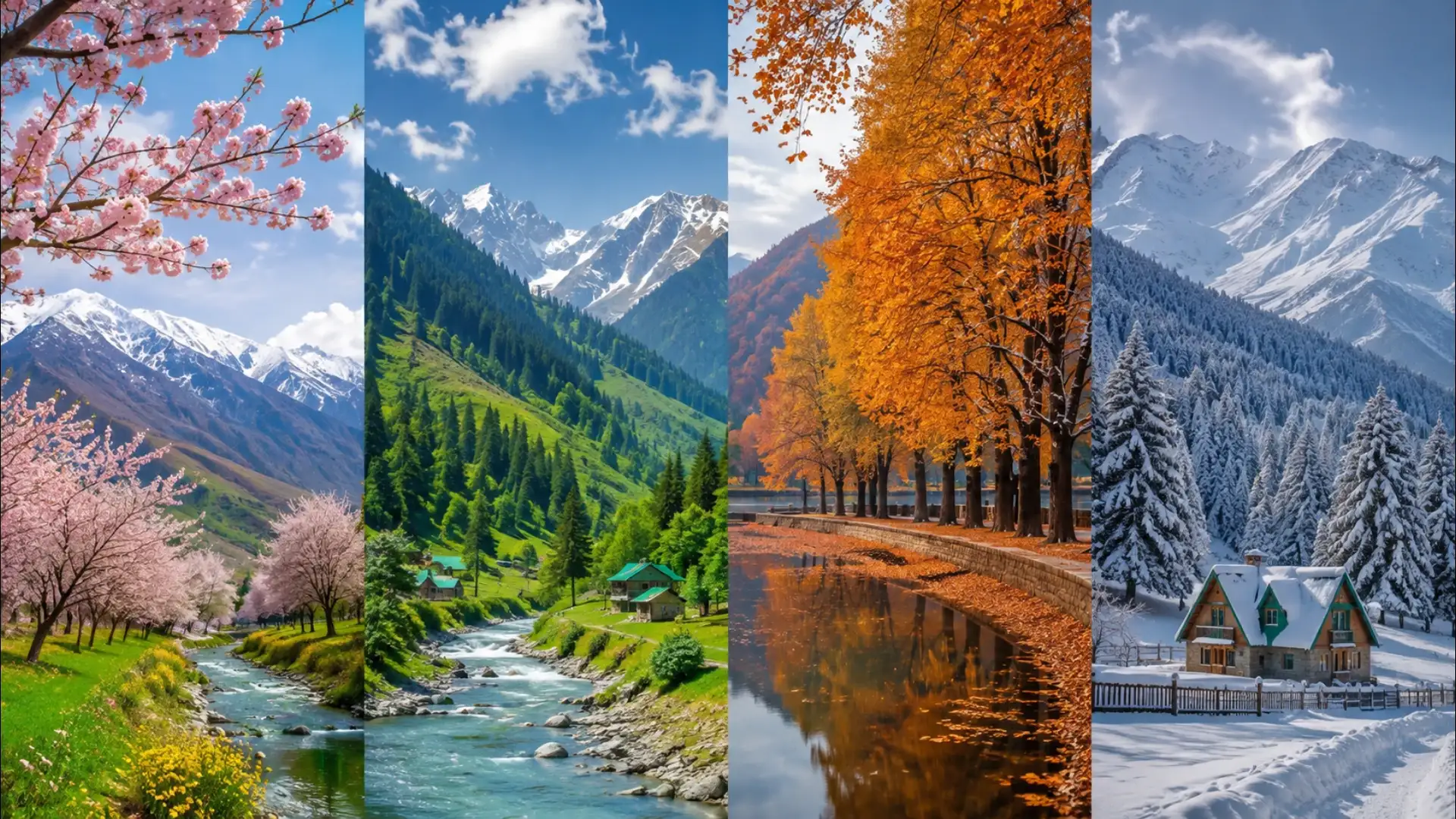
The pleasant temperatures and blooming flowers make spring an ideal season for exploring Kashmir's gardens, valleys and surrounding countryside. The combination of snow-covered mountain peaks and colourful flowers creates a striking contrast.
Places such as Gulmarg, Pahalgam and Sonamarg attract visitors during this period. Dal Lake in Srinagar also becomes particularly lively, with shikaras moving across its calm waters. The comfortable temperatures make summer one of the most popular seasons for tourism.
The golden foliage creates a dramatic landscape, particularly around Srinagar and other parts of the valley. Clear skies and cooler temperatures add to the beauty. Autumn is also associated with the harvesting of apples, making it an important period for Kashmir's agricultural communities.
Gulmarg becomes particularly famous during winter for skiing and other snow activities. Frozen landscapes and snow-covered trees give Kashmir its classic winter appearance, attracting travellers who want to experience a Himalayan snow scene.
As a result, Kashmir does not have just one identity. Spring highlights its flowers, summer its greenery, autumn its golden foliage and winter its snow-covered mountains.
This constant transformation makes Kashmir a destination that can offer a completely new visual experience throughout the year, proving why the valley continues to captivate travellers in every season.
Spring: A Valley Full of Blossoms
Spring arrives in Kashmir around March and brings colour back to the landscape after the cold winter. Trees begin to bloom, gardens become vibrant and the famous almond and cherry blossoms create picturesque views. The Mughal gardens, particularly around Srinagar, became especially attractive during this period.The pleasant temperatures and blooming flowers make spring an ideal season for exploring Kashmir's gardens, valleys and surrounding countryside. The combination of snow-covered mountain peaks and colourful flowers creates a striking contrast.
Summer: Green Mountains and Clear Lakes
Summer transforms Kashmir into a lush green paradise. From May to June, the weather becomes warmer, while the higher mountains continue to retain patches of snow. Meadows and valleys become covered with fresh grass, while forests appear dense and vibrant.Places such as Gulmarg, Pahalgam and Sonamarg attract visitors during this period. Dal Lake in Srinagar also becomes particularly lively, with shikaras moving across its calm waters. The comfortable temperatures make summer one of the most popular seasons for tourism.
You may also like
- Meet Mumbai's Spider-Man, who can be seen on the streets every weekend, not saving the city but doing something really worthwhile
- For travellers, monsoon is no longer the off-season
- Delicious Buckwheat Flour Recipes for Fasting
- Exploring Key Locations of India's Freedom Movement
- Neonatal Hyperthyroidism: Symptoms, Causes, and Treatment
Autumn: Golden Landscapes
Autumn gives Kashmir a completely different appearance. From September to November, the leaves of the region's famous chinar trees gradually change from green to shades of yellow, orange and red before falling.The golden foliage creates a dramatic landscape, particularly around Srinagar and other parts of the valley. Clear skies and cooler temperatures add to the beauty. Autumn is also associated with the harvesting of apples, making it an important period for Kashmir's agricultural communities.
Winter: A Snow-Covered Wonderland
Winter arrives with a major transformation. From December onwards, temperatures fall significantly and many higher-altitude areas receive heavy snowfall. Mountains, rooftops, roads and valleys can become covered in snow, creating a landscape that looks completely different from the greenery of summer.Gulmarg becomes particularly famous during winter for skiing and other snow activities. Frozen landscapes and snow-covered trees give Kashmir its classic winter appearance, attracting travellers who want to experience a Himalayan snow scene.
Why Kashmir Changes So Dramatically
Kashmir's seasonal transformation is largely the result of its Himalayan geography and changing temperatures. Snowfall, rainfall, sunlight and vegetation cycles all influence the appearance of the valley. The region's forests, alpine meadows, rivers and lakes respond differently to these seasonal changes.As a result, Kashmir does not have just one identity. Spring highlights its flowers, summer its greenery, autumn its golden foliage and winter its snow-covered mountains.
A Destination for Every Season
The changing seasons are one of Kashmir's greatest attractions. A traveller visiting the valley in April may see a landscape dominated by blossoms, while someone arriving in October will encounter golden forests. A winter visitor, meanwhile, may find the same places buried beneath snow.This constant transformation makes Kashmir a destination that can offer a completely new visual experience throughout the year, proving why the valley continues to captivate travellers in every season.






Loving Newspoint? Download the app now
