
Why Lord Jagannath Returns to His Natural Form Every Year


Every year, millions of devotees eagerly wait for Lord Jagannath's return after fifteen days of complete seclusion. During this period, the temple doors remain closed, the deities are believed to fall ill, and no one is allowed to have their darshan. But there is another mystery hidden within this sacred tradition. Why is Lord Jagannath black, Balabhadra white, and Subhadra yellow? Many people believe these colors represent the three gunas of nature. Yet ancient scriptures reveal a surprisingly simple explanation one that carries a timeless lesson about identity, authenticity, and the beauty of remaining exactly as you are.
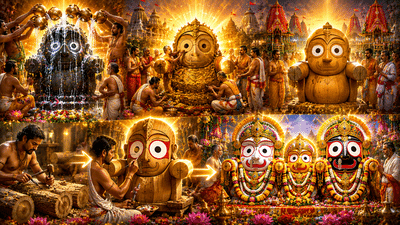
The Fifteen Days When the Temple Doors Close
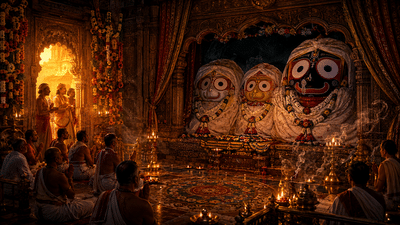
After the grand Snana Yatra, Lord Jagannath, Balabhadra, and Goddess Subhadra are believed to fall ill following their ceremonial bath. This sacred period, known as Anavasara, lasts for fifteen days, during which devotees cannot have darshan. The deities are cared for with herbal treatments, natural applications, and rest. Rather than being viewed as ordinary idols, they are lovingly treated like living members of a family, making this tradition one of the most unique expressions of devotion in Hinduism.
The Real Reason Behind Their Three Colors
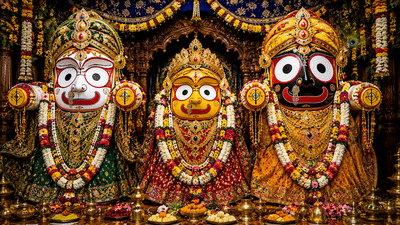
Many people associate the three colors with the three gunas Sattva, Rajas, and Tamas. While this symbolism exists, ancient scriptures also offer a direct explanation. According to traditional texts, these are simply the natural complexions of the divine siblings. Balabhadra is fair, Lord Jagannath is dark like Shyam, and Goddess Subhadra shines with a golden-yellow radiance. Sometimes, the deepest spiritual truths are also the simplest.
What the Scriptures Actually SayThe Garga Samhita describes Balabhadra as having a radiant white complexion. The birth of Shri Krishna is celebrated with descriptions of His enchanting dark, Shyam form. Meanwhile, the Ashramavasika Parva of the Mahabharata compares Subhadra's beauty to shining gold. These descriptions became the foundation for preserving their traditional appearance, ensuring that the deities continue to reflect the forms described in ancient Hindu scriptures.
Nature Itself Restores Their BeautyOne of the most beautiful aspects of the Anavasara ritual is that the deities are repainted using natural materials instead of artificial colors. Balabhadra's white complexion is restored using conch shell powder, Lord Jagannath's dark form is recreated with lamp soot, and Subhadra's golden glow comes from the traditional yellow mineral known as Harital. These sacred materials preserve both tradition and the natural identity of the divine forms.
A Lesson Hidden Behind the RitualThe ritual carries a message that reaches beyond devotion. Lord Jagannath could have been portrayed in any form, yet every year He returns to His original appearance. This reminds devotees that there is no greater joy than accepting who you truly are. In a world where people constantly compare themselves to others, the Jagannath tradition quietly teaches that authenticity is more beautiful than imitation.
Why Millions Wait for Nabayauvana DarshanWhen the fifteen-day Anavasara period ends, devotees eagerly await the Nabayauvana Darshan, the first public appearance of the refreshed deities. Lakhs of pilgrims travel to Puri just to witness this special moment. The excitement is not because the deities look different, but because they have returned in their timeless, original form. Their appearance becomes a celebration of renewal, devotion, and divine beauty.
The Message That Stays Long After the FestivalThe greatest miracle of Jagannath's colors is not their symbolism but the lesson they leave behind. Every year, the Lord reminds humanity that perfection is not about changing your identity but honoring it. Just as devotees wait with love to see Jagannath exactly as He is, people are remembered and loved for their genuine selves. The Anavasara tradition becomes a beautiful reminder that authenticity is the highest form of beauty.
Unlock insightful tips and inspiration on personal growth, productivity, and well-being. Stay motivated and updated with the latest at My Life XP.
Frequently Asked Questions (FAQs)1. Why are Lord Jagannath, Balabhadra, and Subhadra different colors?
According to traditional Hindu scriptures, the three deities represent their natural complexions. Lord Balabhadra is depicted in white, Lord Jagannath in a dark Shyam complexion, and Goddess Subhadra in a radiant yellow or golden color. These appearances are preserved through centuries-old temple traditions.
The Fifteen Days When the Temple Doors Close
Lord Jagannath remains in seclusion after the ceremonial Snana Yatra.
After the grand Snana Yatra, Lord Jagannath, Balabhadra, and Goddess Subhadra are believed to fall ill following their ceremonial bath. This sacred period, known as Anavasara, lasts for fifteen days, during which devotees cannot have darshan. The deities are cared for with herbal treatments, natural applications, and rest. Rather than being viewed as ordinary idols, they are lovingly treated like living members of a family, making this tradition one of the most unique expressions of devotion in Hinduism.
The Real Reason Behind Their Three Colors
Lord Jagannath remains in seclusion after the ceremonial Snana Yatra.
Many people associate the three colors with the three gunas Sattva, Rajas, and Tamas. While this symbolism exists, ancient scriptures also offer a direct explanation. According to traditional texts, these are simply the natural complexions of the divine siblings. Balabhadra is fair, Lord Jagannath is dark like Shyam, and Goddess Subhadra shines with a golden-yellow radiance. Sometimes, the deepest spiritual truths are also the simplest.
What the Scriptures Actually SayThe Garga Samhita describes Balabhadra as having a radiant white complexion. The birth of Shri Krishna is celebrated with descriptions of His enchanting dark, Shyam form. Meanwhile, the Ashramavasika Parva of the Mahabharata compares Subhadra's beauty to shining gold. These descriptions became the foundation for preserving their traditional appearance, ensuring that the deities continue to reflect the forms described in ancient Hindu scriptures.
Nature Itself Restores Their BeautyOne of the most beautiful aspects of the Anavasara ritual is that the deities are repainted using natural materials instead of artificial colors. Balabhadra's white complexion is restored using conch shell powder, Lord Jagannath's dark form is recreated with lamp soot, and Subhadra's golden glow comes from the traditional yellow mineral known as Harital. These sacred materials preserve both tradition and the natural identity of the divine forms.
A Lesson Hidden Behind the RitualThe ritual carries a message that reaches beyond devotion. Lord Jagannath could have been portrayed in any form, yet every year He returns to His original appearance. This reminds devotees that there is no greater joy than accepting who you truly are. In a world where people constantly compare themselves to others, the Jagannath tradition quietly teaches that authenticity is more beautiful than imitation.
Why Millions Wait for Nabayauvana DarshanWhen the fifteen-day Anavasara period ends, devotees eagerly await the Nabayauvana Darshan, the first public appearance of the refreshed deities. Lakhs of pilgrims travel to Puri just to witness this special moment. The excitement is not because the deities look different, but because they have returned in their timeless, original form. Their appearance becomes a celebration of renewal, devotion, and divine beauty.
The Message That Stays Long After the FestivalThe greatest miracle of Jagannath's colors is not their symbolism but the lesson they leave behind. Every year, the Lord reminds humanity that perfection is not about changing your identity but honoring it. Just as devotees wait with love to see Jagannath exactly as He is, people are remembered and loved for their genuine selves. The Anavasara tradition becomes a beautiful reminder that authenticity is the highest form of beauty.
Unlock insightful tips and inspiration on personal growth, productivity, and well-being. Stay motivated and updated with the latest at My Life XP.
Frequently Asked Questions (FAQs)1. Why are Lord Jagannath, Balabhadra, and Subhadra different colors?
According to traditional Hindu scriptures, the three deities represent their natural complexions. Lord Balabhadra is depicted in white, Lord Jagannath in a dark Shyam complexion, and Goddess Subhadra in a radiant yellow or golden color. These appearances are preserved through centuries-old temple traditions.
Next Story