
Why Do We Name Our Plants Like They’re Part Of The Family?

At first, it is just a plant. You bring home a small pothos, monstera or peace lily, find it a nice spot near the window and promise yourself that you will remember to water it. A few weeks later, it has a name. Maybe it is something completely normal. Maybe it is a terrible pun. And somehow, you have also decided that it is dramatic, stubborn, shy or clearly the favourite child. So why do people give their plants names and personalities when the plants obviously cannot answer back?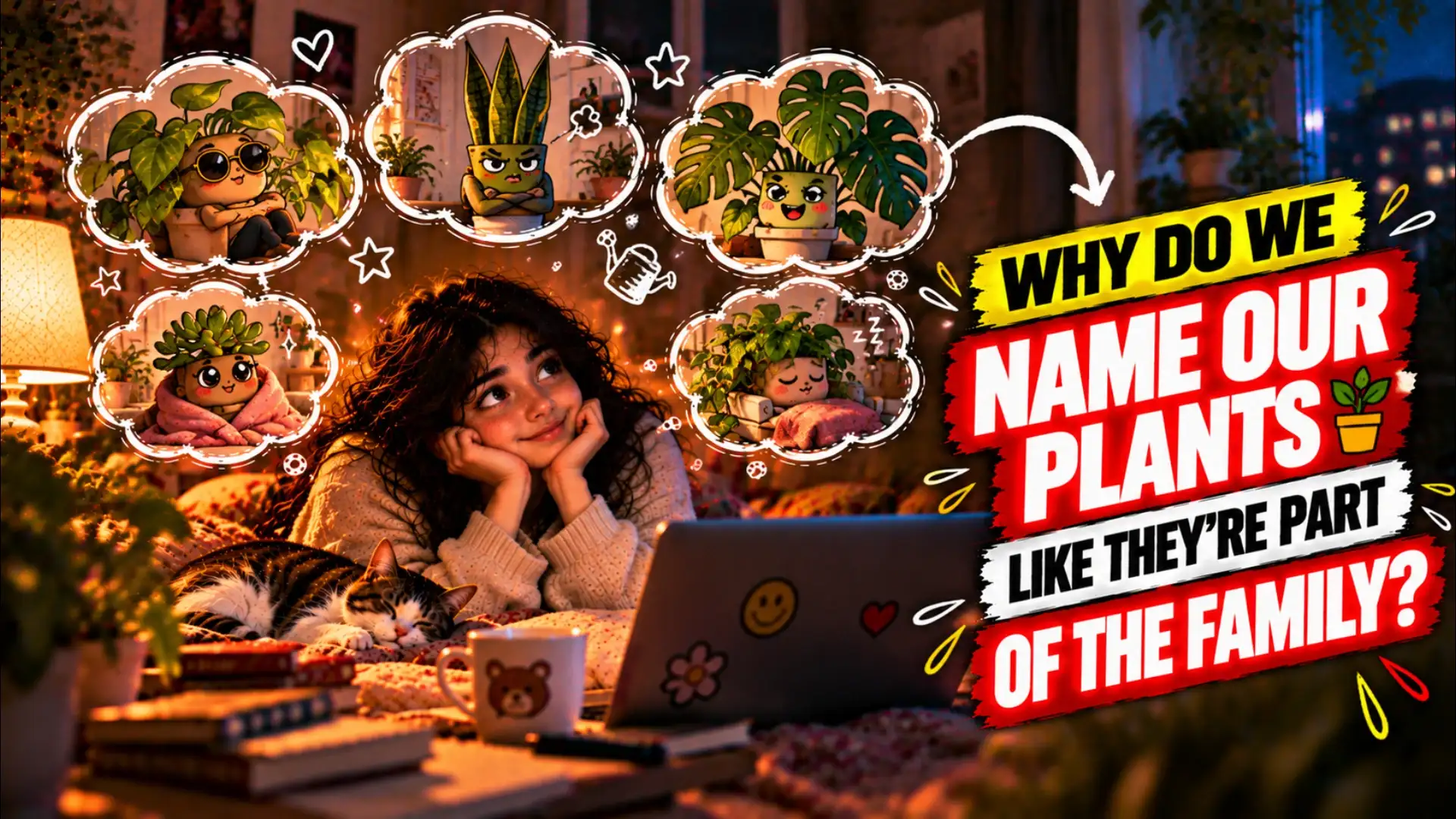
It is similar to how people name cars, stuffed toys or other objects they have become emotionally attached to. A name gives something an identity and makes it easier to think of it as an individual rather than simply part of a category.
Over time, these tiny observations become part of your routine. That repeated interaction can make the plant feel familiar. You begin to notice its habits, even if you know those habits are really just the result of light, watering, temperature and growth. A plant that always grows towards the window can start feeling curious one.
The dramatic plant needs attention. The stubborn one refuses to grow. The tiny new cutting is the baby of the collection. It turns routine care into a small relationship, even though the relationship is mostly happening in our own minds.
None of this means the plant actually has a human personality. We are simply interpreting visible changes using concepts that make sense to us. And that can make caring for plants more emotionally rewarding.
You are not just noticing that a leaf has appeared. You are checking what your favourite plant is doing today. That emotional connection may also explain why people can feel surprisingly upset when a plant dies after months or years of caring for it.
It was never just a pot of leaves. It had a place in the home, a routine and, eventually, a personality. And perhaps that is the fun of being a plant parent. You know perfectly well that your monstera is not actually dramatic or your pothos is not secretly judging you. But giving them a little personality makes looking after them feel that much more special.
Naming Makes A Plant Feel More Personal
Giving something a name changes the way we think about it. Instead of saying, 'I need to water the plant,' you might start thinking, 'I need to check whether Charlie needs water. That small shift makes the plant feel less like an object and more like something familiar.It is similar to how people name cars, stuffed toys or other objects they have become emotionally attached to. A name gives something an identity and makes it easier to think of it as an individual rather than simply part of a category.
Plants Become Part Of Everyday Life
Houseplants are unusual because they are living things that share our everyday spaces. You see them when you wake up. You notice when a new leaf appears. You move them when the sunlight changes. You worry when the leaves suddenly turn yellow.Over time, these tiny observations become part of your routine. That repeated interaction can make the plant feel familiar. You begin to notice its habits, even if you know those habits are really just the result of light, watering, temperature and growth. A plant that always grows towards the window can start feeling curious one.
You may also like
- Inactivated Polio Vaccine (IPV): Benefits, Schedule, and Side Effects
- No crowds, no long queues! Neem Karoli Baba practiced spiritual contemplation at these two places as well, not just at Kainchi Dham.
- HDFC Bank cuts MCLR despite repo rate hike; will loans become cheaper?
- Why Do You Feel Lonely Even When You Have a Partner?
- One festival, many faces: How India celebrates Navratri
Giving Them Personalities Makes Care More Fun
Plant care can sometimes be repetitive. Checking soil, watering, rotating pots and looking for new growth are not exactly thrilling tasks every time. But when the plant has a personality, those little tasks can feel more enjoyable.The dramatic plant needs attention. The stubborn one refuses to grow. The tiny new cutting is the baby of the collection. It turns routine care into a small relationship, even though the relationship is mostly happening in our own minds.
We Naturally Look For Human Traits
People are very good at finding familiar patterns and personalities in things around them. A plant leaning dramatically to one side can look stubborn. A new leaf appearing overnight can feel like an achievement. A plant that suddenly starts growing quickly can seem as though it has finally decided to cooperate.None of this means the plant actually has a human personality. We are simply interpreting visible changes using concepts that make sense to us. And that can make caring for plants more emotionally rewarding.
It Can Make The Home Feel More Alive
There is also something comforting about having living things around you. Unlike furniture or decorations, plants change. They grow, produce new leaves, shed old ones and respond to their surroundings. When you give them names, those changes can become little events in your day.You are not just noticing that a leaf has appeared. You are checking what your favourite plant is doing today. That emotional connection may also explain why people can feel surprisingly upset when a plant dies after months or years of caring for it.
It was never just a pot of leaves. It had a place in the home, a routine and, eventually, a personality. And perhaps that is the fun of being a plant parent. You know perfectly well that your monstera is not actually dramatic or your pothos is not secretly judging you. But giving them a little personality makes looking after them feel that much more special.






Loving Newspoint? Download the app now
