
<b>Why Physical Photo Albums Are Quietly Making a Comeback In The Digital Age</b>

Be honest, when was the last time you actually looked through the photos on your phone? Most of us have thousands of pictures saved, but we rarely go back and revisit them. Birthday celebrations, family holidays, college memories and random moments with friends all end up buried beneath screenshots, memes and blurry selfies. We keep taking more photos without ever stopping to enjoy the ones we've already captured.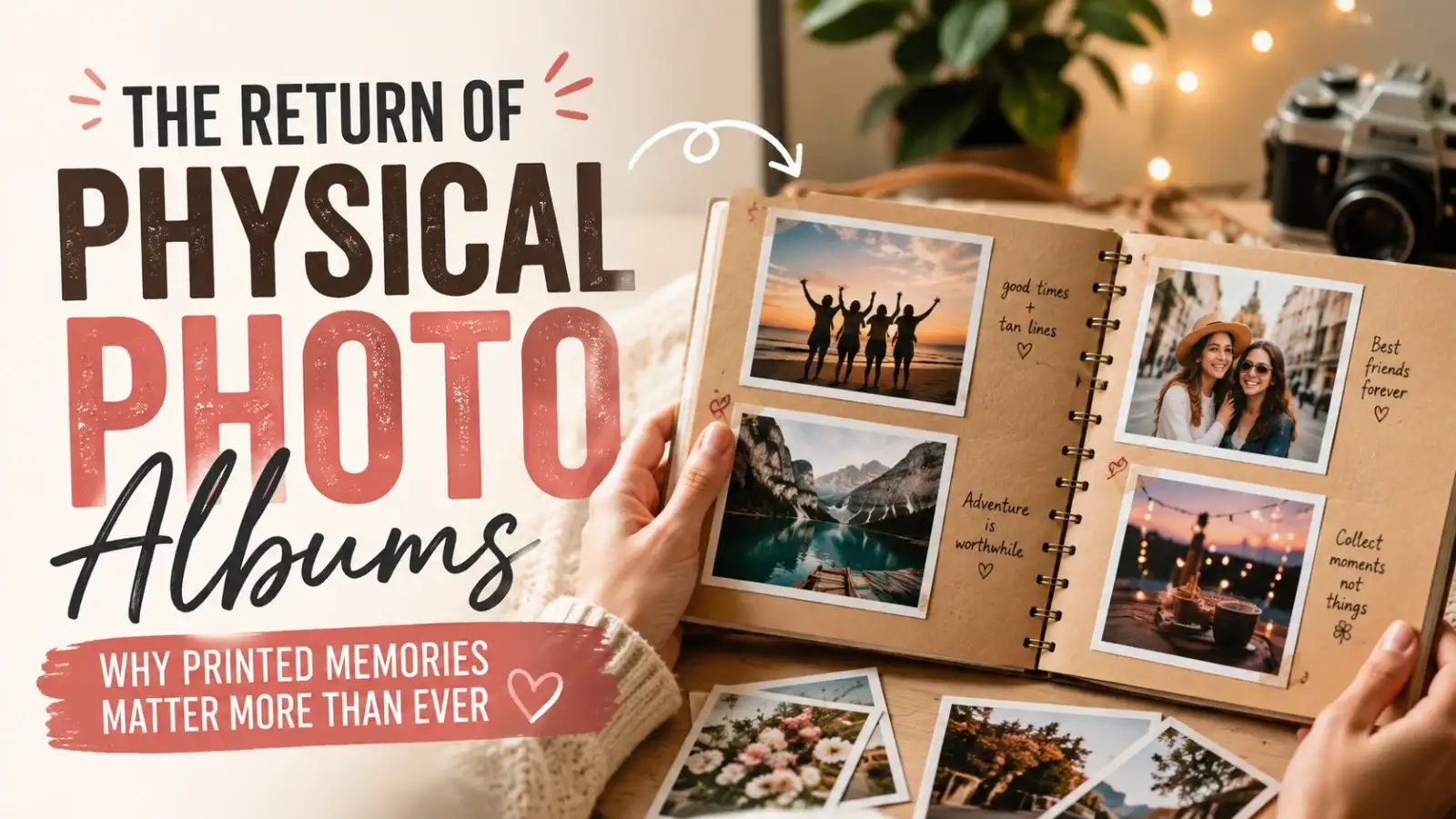
That could be one of the reasons physical photo albums are quietly making a comeback. What once seemed outdated now feels surprisingly meaningful. In a world where almost everything exists on a screen, holding a memory in your hands feels a little more special.
When Memories Get Lost in the Camera Roll
Smartphones have made photography easier than ever. We don't think twice before clicking ten pictures of the same moment because storage is rarely a problem. But convenience has also changed the way we value photographs.
A family vacation that once filled an entire photo album now sits somewhere between grocery lists, WhatsApp downloads and screenshots of funny reels. Unless we're specifically looking for a picture, we hardly come across it again.
A printed album works differently. It forces you to slow down and choose the moments that truly matter. Every photo earns its place, making the album feel less like storage and more like a collection of memories worth keeping. That's probably why flipping through an album feels so different from scrolling through a gallery. One feels rushed. The other invites you to pause.
Gen Z Is Bringing Back an Old Habit
For a generation that's always online, this trend might seem unexpected. But Gen Z has been embracing things that feel more personal and less digital. Vinyl records, handwritten journals, film cameras and scrapbooks have all become popular again. Physical photo albums fit naturally into that shift.
Many young people now create photo books after a vacation, a birthday or even a college farewell. Some print their favourite Instagram pictures simply because they don't want those moments to disappear into an endless feed.
They're not replacing social media. They're choosing to save the memories that matter most in a way that feels permanent.
A Photo Album Tells a Better Story
There's something about opening an old photo album that no phone can recreate. You don't just look at pictures; you remember what happened before and after they were taken. Someone points at a photo and says, "Remember how it started raining five minutes later?" Another person notices someone standing in the background,, and suddenly an entirely different story begins.
Those conversations rarely happen while passing a phone around. Albums have a way of bringing people together. Grandparents tell stories from decades ago, parents laugh about embarrassing childhood pictures, and younger family members get to see moments they were never part of.
Over time, those albums become more than collections of photographs. They become family history.
Technology Is Helping the Comeback
Ironically, technology is one of the biggest reasons this trend has returned. Today, creating a photo album doesn't involve cutting pictures or sticking them into pages with glue. With just a few taps, you can upload photos from your phone, arrange them however you like, add captions and order a professionally printed album online.
Many people now make one every year to document birthdays, festivals, holidays or everyday moments they don't want to forget.
Photo books have also become thoughtful gifts. Instead of giving something expensive that may not last, people are choosing to gift memories. Whether it's an anniversary, graduation, wedding or a parent's birthday, a personalised photo album often means far more than another box of chocolates or a gift voucher.
Some Things Deserve to Exist Beyond a Screen
There's nothing wrong with digital photos. They're convenient, easy to share and always within reach. But they're also surprisingly easy to lose. Phones get replaced, hard drives crash and cloud accounts are forgotten. Even when everything stays safe, most pictures remain untouched for years.
Printed photographs are different. They sit on bookshelves, coffee tables or inside cupboards, waiting to be discovered again. Sometimes you open an album while cleaning the house and end up spending an hour smiling at moments you hadn't thought about in years. That's the magic of something physical. It doesn't send notifications or compete for your attention. It simply waits.
And perhaps that's exactly why people are returning to photo albums. In a world where everything feels temporary, stories disappear in 24 hours, trends change every week and phones become outdated every few years, a printed photograph quietly reminds us that some memories deserve to stay exactly where they are.
Memories over convenience
The return of physical photo albums isn't about choosing paper over technology. It's about choosing memories over convenience.
We'll continue taking photos on our phones, and that's unlikely to change. But instead of letting our best moments disappear into endless camera rolls, more people are choosing to print them, preserve them and pass them on.
Years from now, you may not remember which phone you used or where a picture was stored. But you'll probably remember sitting with your family, turning the pages of an old photo album and smiling at moments that still feel just as real.
That could be one of the reasons physical photo albums are quietly making a comeback. What once seemed outdated now feels surprisingly meaningful. In a world where almost everything exists on a screen, holding a memory in your hands feels a little more special.
When Memories Get Lost in the Camera Roll
Smartphones have made photography easier than ever. We don't think twice before clicking ten pictures of the same moment because storage is rarely a problem. But convenience has also changed the way we value photographs.
A family vacation that once filled an entire photo album now sits somewhere between grocery lists, WhatsApp downloads and screenshots of funny reels. Unless we're specifically looking for a picture, we hardly come across it again.
A printed album works differently. It forces you to slow down and choose the moments that truly matter. Every photo earns its place, making the album feel less like storage and more like a collection of memories worth keeping. That's probably why flipping through an album feels so different from scrolling through a gallery. One feels rushed. The other invites you to pause.
Gen Z Is Bringing Back an Old Habit
For a generation that's always online, this trend might seem unexpected. But Gen Z has been embracing things that feel more personal and less digital. Vinyl records, handwritten journals, film cameras and scrapbooks have all become popular again. Physical photo albums fit naturally into that shift.
Many young people now create photo books after a vacation, a birthday or even a college farewell. Some print their favourite Instagram pictures simply because they don't want those moments to disappear into an endless feed.
They're not replacing social media. They're choosing to save the memories that matter most in a way that feels permanent.
A Photo Album Tells a Better Story
There's something about opening an old photo album that no phone can recreate. You don't just look at pictures; you remember what happened before and after they were taken. Someone points at a photo and says, "Remember how it started raining five minutes later?" Another person notices someone standing in the background,, and suddenly an entirely different story begins.
Those conversations rarely happen while passing a phone around. Albums have a way of bringing people together. Grandparents tell stories from decades ago, parents laugh about embarrassing childhood pictures, and younger family members get to see moments they were never part of.
Over time, those albums become more than collections of photographs. They become family history.
Technology Is Helping the Comeback
Ironically, technology is one of the biggest reasons this trend has returned. Today, creating a photo album doesn't involve cutting pictures or sticking them into pages with glue. With just a few taps, you can upload photos from your phone, arrange them however you like, add captions and order a professionally printed album online.
Many people now make one every year to document birthdays, festivals, holidays or everyday moments they don't want to forget.
Photo books have also become thoughtful gifts. Instead of giving something expensive that may not last, people are choosing to gift memories. Whether it's an anniversary, graduation, wedding or a parent's birthday, a personalised photo album often means far more than another box of chocolates or a gift voucher.
Some Things Deserve to Exist Beyond a Screen
You may also like
- August gardening: 7 heat-tolerant plants that thrive despite soaring temperatures
- Ranthambore safari bookings are filling up faster than ever: 40,000 registrations in just 2 hours; here's how to plan your tiger adventure
- From couture to fine jewellery: Inside Vogue Wedding Atelier 2026
- Good news for those earning abroad! HDFC and ICICI Bank have raised interest rates on FDs..
- Major decision by EPFO regarding PF: Provident Fund limit raised from ₹15,000 to ₹25,000..
There's nothing wrong with digital photos. They're convenient, easy to share and always within reach. But they're also surprisingly easy to lose. Phones get replaced, hard drives crash and cloud accounts are forgotten. Even when everything stays safe, most pictures remain untouched for years.
Printed photographs are different. They sit on bookshelves, coffee tables or inside cupboards, waiting to be discovered again. Sometimes you open an album while cleaning the house and end up spending an hour smiling at moments you hadn't thought about in years. That's the magic of something physical. It doesn't send notifications or compete for your attention. It simply waits.
And perhaps that's exactly why people are returning to photo albums. In a world where everything feels temporary, stories disappear in 24 hours, trends change every week and phones become outdated every few years, a printed photograph quietly reminds us that some memories deserve to stay exactly where they are.
Memories over convenience
The return of physical photo albums isn't about choosing paper over technology. It's about choosing memories over convenience.
We'll continue taking photos on our phones, and that's unlikely to change. But instead of letting our best moments disappear into endless camera rolls, more people are choosing to print them, preserve them and pass them on.
Years from now, you may not remember which phone you used or where a picture was stored. But you'll probably remember sitting with your family, turning the pages of an old photo album and smiling at moments that still feel just as real.






Loving Newspoint? Download the app now
