
Why Rest Feels Productive Only When We’re Burnt Out

Resting early should feel simple. You’re tired, so you stop. That’s it. But for many people, it doesn’t work that way. There’s a mental checklist running in the background all the time, tasks completed, hours used "properly," and productivity measured in invisible units. If the day still has space left in it, rest starts feeling like avoidance. Like you’re skipping something you’re supposed to endure first. So even when the body is fine, the mind refuses permission.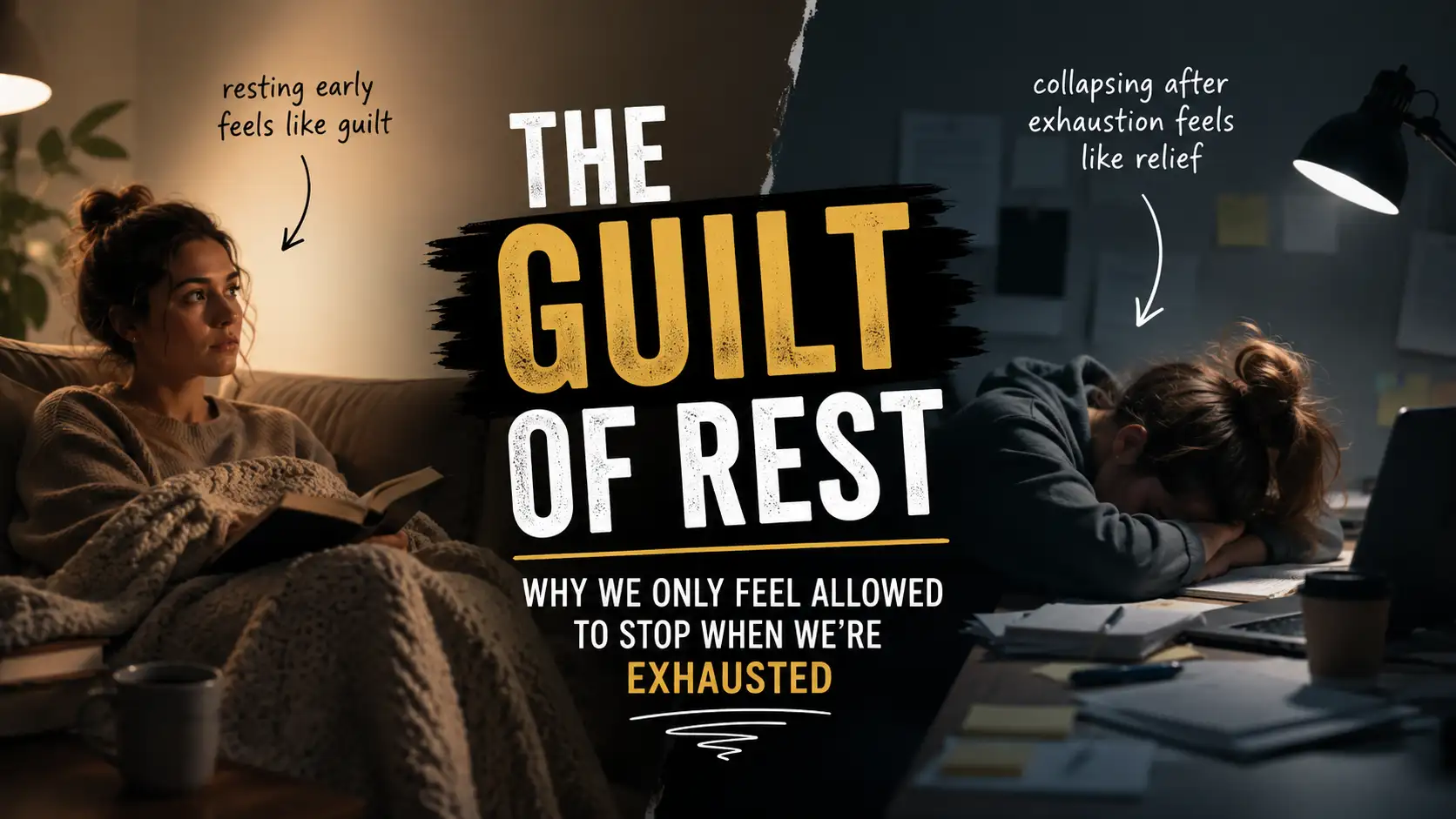
You lie down, but you don’t fully relax. You scroll a little too long. You think about what you could be doing. You try to rest, but it feels borrowed, like you’ll have to pay it back later with guilt or extra effort. Rest becomes conditional. Not natural.
And then you stop, not because you chose to, but because your body forces you to. You sit down and everything goes quiet. And strangely, in that moment, rest feels completely valid. There’s no guilt, no questioning. Only surrender. It feels earned because it was paid for in full, through exhaustion. But that “relief” has a hidden cost. It usually comes after overstepping your limits, after ignoring the small signals that were asking for care much earlier.
So we begin to treat rest like a prize instead of a need. And prizes, by definition, must be deserved.
So we don’t rest when we’re slightly tired. We rest when we’re completely drained. Not because that’s healthier, but because that’s when we finally believe we’re allowed to.
You may also like
- Delhi weather may have more surprises in store over the coming days: What travellers need to know
- Group Captain Shubhanshu Shukla Launches Memoir on Historic Space Mission
- The Hidden Dangers of Makeup: Understanding Cancer Risks
- Essential Tips for Consuming Beetroot for Optimal Health
- Understanding Telephobia: The Fear of Phone Calls
You lie down, but you don’t fully relax. You scroll a little too long. You think about what you could be doing. You try to rest, but it feels borrowed, like you’ll have to pay it back later with guilt or extra effort. Rest becomes conditional. Not natural.
The relief of collapsing after exhaustion
Then there’s the other side. The days when you push through everything. When you ignore the headache, the fatigue, the emotional heaviness. When you keep telling yourself, “Just one more thing.” Until you can’t anymore.And then you stop, not because you chose to, but because your body forces you to. You sit down and everything goes quiet. And strangely, in that moment, rest feels completely valid. There’s no guilt, no questioning. Only surrender. It feels earned because it was paid for in full, through exhaustion. But that “relief” has a hidden cost. It usually comes after overstepping your limits, after ignoring the small signals that were asking for care much earlier.
Where did we learn to deserve rest?
No one is born thinking rest must be earned. A child lies down when tired without negotiating with themselves. But somewhere along the way, rest gets tied to productivity. School rewards completion. Work rewards output. Even social media rewards constant presence. Slowly, stillness starts feeling suspicious like something must be wrong if you’re not “doing.”So we begin to treat rest like a prize instead of a need. And prizes, by definition, must be deserved.
The body doesn’t understand deadlines
Your body doesn’t wait for burnout to justify rest. It sends smaller signals first, slower focus, irritability, heaviness, zoning out, that quiet urge to pause. But modern life teaches us to override those signals until they become impossible to ignore.So we don’t rest when we’re slightly tired. We rest when we’re completely drained. Not because that’s healthier, but because that’s when we finally believe we’re allowed to.
Learning to rest without permission
The uncomfortable truth is this: rest doesn’t become more valid when you suffer more. It doesn’t need exhaustion to justify it. It doesn’t need a breaking point. It only needs awareness. Resting early feels unfamiliar at first because it breaks a pattern, doing nothing before you “prove” you’ve done enough. But slowly, something shifts. You start noticing that early rest doesn’t steal time. It protects it. It prevents the crash, the burnout, and the emotional flatness that comes after pushing too far.Maybe rest was never supposed to feel like this
Rest was never meant to be a reward for surviving the day. It was supposed to be part of living the day. Not something you collapse into at the end, but something that exists gently inside it, like pauses in a conversation, like breath between sentences. And maybe the real shift isn’t learning how to rest harder after exhaustion. It’s learning that you didn’t need to reach exhaustion in the first place.





More from our partners


Loving Newspoint? Download the app now
