
Why Do Some Beaches Glow Blue at Night?

Imagine standing on a dark beach and watching a wave break at your feet. Instead of disappearing into the sand, its edges flash blue, leaving a brief trail of light across the water.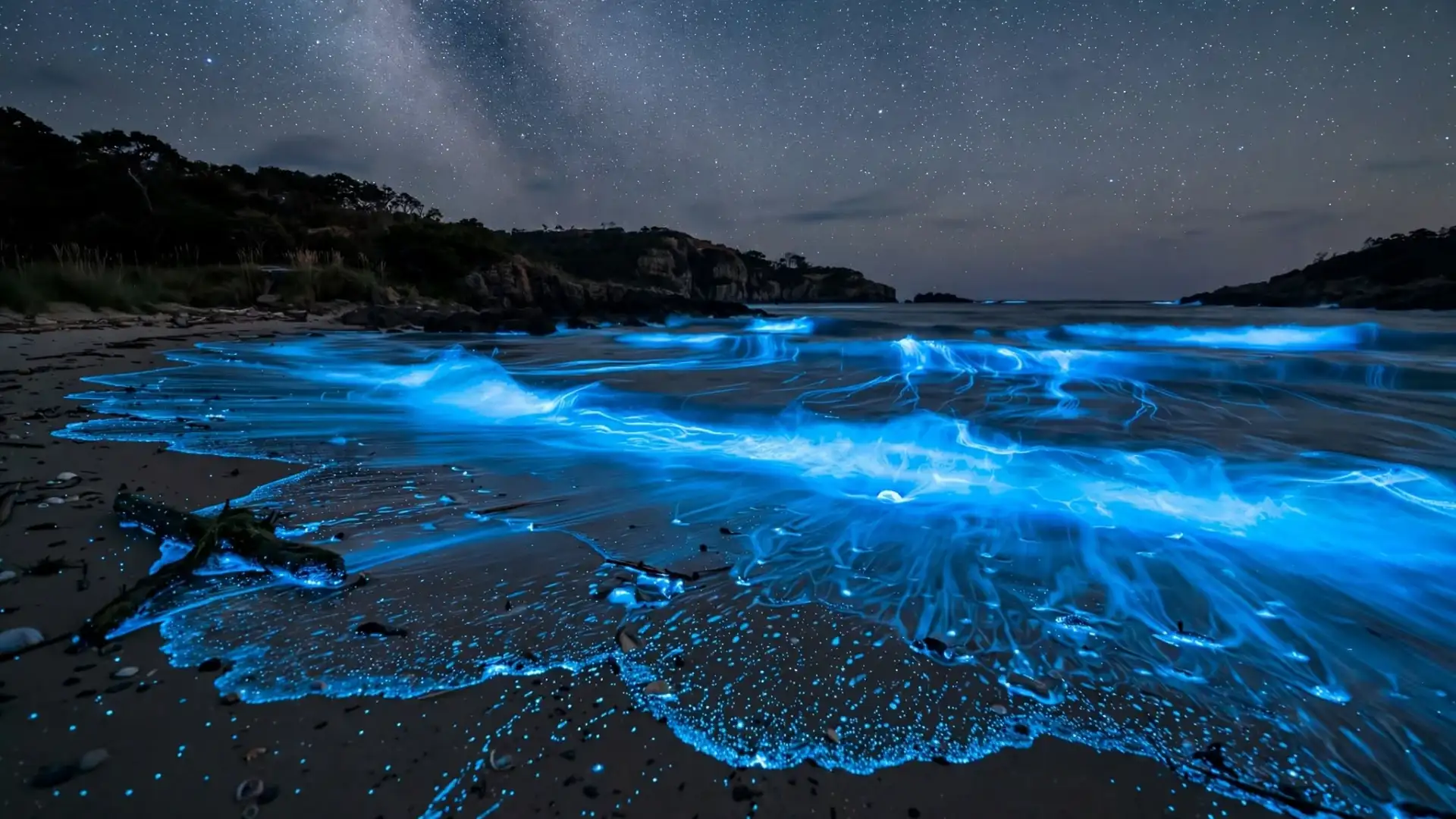
The effect can look almost unreal, as though the sea is carrying its own stars. Yet glowing beaches are the result of a natural process called bioluminescence, in which living organisms produce light through chemical reactions.
Although the phenomenon is sometimes described as a glowing ocean, it does not happen everywhere or every night.
These organisms contain chemical systems that generate light. In many cases, a molecule called luciferin reacts in the presence of oxygen, with the help of an enzyme or other biological components. The exact mechanism varies between organisms.
When bioluminescent plankton are disturbed by moving water, waves or footsteps, they may emit brief flashes of light. In the right conditions, thousands of these tiny flashes can combine to create the impression of a glowing shoreline.
The blue colour is common because blue light travels relatively well through seawater, although the appearance can vary with the species and viewing conditions.
The effect is especially striking on beaches with little artificial lighting. When a wave disturbs the water, the glowing organisms may create luminous outlines along the shore.
However, not every bright patch of blue water is caused by plankton. Other organisms can produce bioluminescence, and the precise cause depends on the location.
The glow may also vary from one night to another. The presence of suitable organisms, water movement, temperature and other environmental conditions can influence whether the effect is visible.
India has also had reports of bioluminescence along parts of its coastline, including areas around the Andaman and Nicobar Islands. However, sightings are not guaranteed, and the timing and intensity can vary.
Travellers should be cautious about tours that promise a glowing beach on a specific night. It is a natural phenomenon rather than a scheduled light show.
Visitors should follow local guidance, avoid disturbing wildlife unnecessarily and never assume that an unusual natural display indicates clean water.
Bioluminescent beaches are a reminder that nature can produce spectacular effects without artificial lighting. What looks like magic is actually biology at work, turning the movement of ordinary waves into a brief display of living light.
The effect can look almost unreal, as though the sea is carrying its own stars. Yet glowing beaches are the result of a natural process called bioluminescence, in which living organisms produce light through chemical reactions.
Although the phenomenon is sometimes described as a glowing ocean, it does not happen everywhere or every night.
What makes the water glow blue?
Marine bioluminescence can be produced by different organisms, including certain types of plankton. Some microscopic organisms, such as dinoflagellates, are responsible for the blue flashes seen in particular coastal waters.These organisms contain chemical systems that generate light. In many cases, a molecule called luciferin reacts in the presence of oxygen, with the help of an enzyme or other biological components. The exact mechanism varies between organisms.
When bioluminescent plankton are disturbed by moving water, waves or footsteps, they may emit brief flashes of light. In the right conditions, thousands of these tiny flashes can combine to create the impression of a glowing shoreline.
The blue colour is common because blue light travels relatively well through seawater, although the appearance can vary with the species and viewing conditions.
Why does the glow appear at night?
Daylight makes it difficult to notice the light produced by these organisms. After dark, their flashes become more visible against the surrounding water.The effect is especially striking on beaches with little artificial lighting. When a wave disturbs the water, the glowing organisms may create luminous outlines along the shore.
However, not every bright patch of blue water is caused by plankton. Other organisms can produce bioluminescence, and the precise cause depends on the location.
The glow may also vary from one night to another. The presence of suitable organisms, water movement, temperature and other environmental conditions can influence whether the effect is visible.
Where can travellers see glowing beaches?
Bioluminescent displays have been reported in several parts of the world, including coastal areas of the Maldives, Puerto Rico and other regions with suitable marine conditions.India has also had reports of bioluminescence along parts of its coastline, including areas around the Andaman and Nicobar Islands. However, sightings are not guaranteed, and the timing and intensity can vary.
Travellers should be cautious about tours that promise a glowing beach on a specific night. It is a natural phenomenon rather than a scheduled light show.
Is the glowing water safe?
A blue glow does not automatically mean that water is safe for swimming. The organisms responsible and the surrounding water conditions matter, and some algal blooms can be associated with harmful effects.Visitors should follow local guidance, avoid disturbing wildlife unnecessarily and never assume that an unusual natural display indicates clean water.
Bioluminescent beaches are a reminder that nature can produce spectacular effects without artificial lighting. What looks like magic is actually biology at work, turning the movement of ordinary waves into a brief display of living light.
Next Story