
Why Some Clouds Appear to Glow Around Sunrise and Sunset

Clouds can look dramatically different around sunrise and sunset. Their edges may appear golden, orange, pink or even reddish, creating a glowing effect that can make ordinary clouds look illuminated from within. This phenomenon is mainly caused by the way sunlight travels through the atmosphere and interacts with cloud droplets and ice crystals.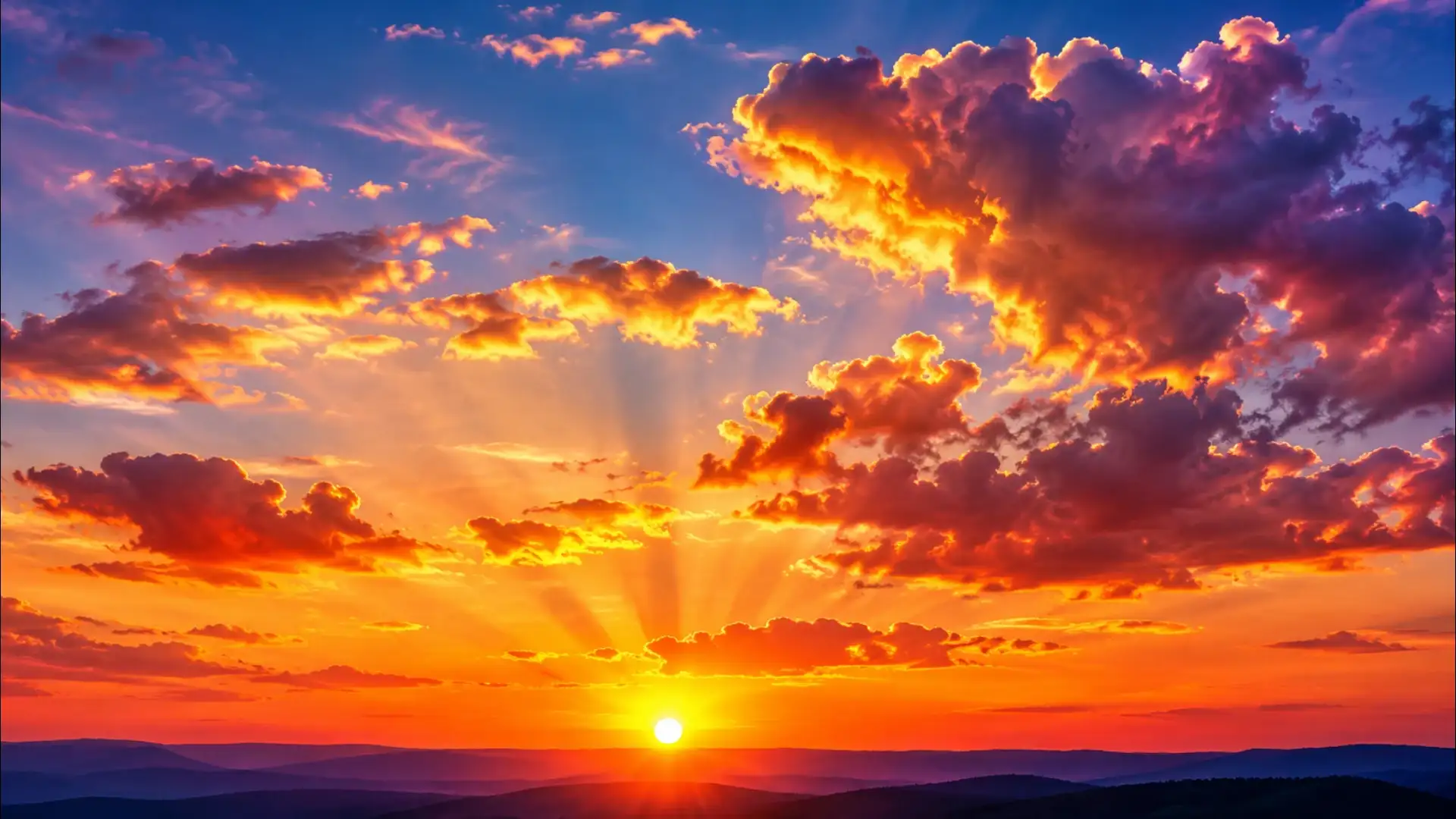
As sunlight passes through the atmosphere, shorter wavelengths such as blue and violet are scattered more strongly by air molecules. More of the longer red, orange and yellow wavelengths continue along the low-angle path. When this warmer-colored light reaches clouds, it can illuminate their surfaces and edges, producing the familiar golden or orange glow.
The effect is particularly striking when the Sun is just below or near the horizon. The lower atmosphere may already be in shadow from the observer's perspective, while high-altitude clouds can still receive direct sunlight. These clouds can therefore appear to shine against a darker background.
When the atmosphere contains more particles, sunlight can lose additional blue and green wavelengths as it travels toward the observer. This can produce deeper orange, red or pink colors. After volcanic eruptions, large wildfires or periods of significant atmospheric dust, sunsets can sometimes become unusually vivid.
As the Sun moves closer to the horizon, the light reaching the clouds becomes increasingly dominated by warmer wavelengths. A golden cloud can therefore gradually shift toward orange, pink and red before eventually fading into the darkness.
The combination of the Sun's low position, atmospheric scattering , cloud altitude and weather conditions creates a constantly changing display. That is why no two sunrise or sunset cloudscapes look exactly alike, making these brief moments among the most visually striking natural phenomena in the sky.
Low-Angle Sunlight Creates the Glow
During midday, sunlight reaches clouds from relatively high overhead. Around sunrise and sunset, however, the Sun is close to the horizon, so its light travels through a much greater thickness of Earth's atmosphere before reaching the clouds.As sunlight passes through the atmosphere, shorter wavelengths such as blue and violet are scattered more strongly by air molecules. More of the longer red, orange and yellow wavelengths continue along the low-angle path. When this warmer-colored light reaches clouds, it can illuminate their surfaces and edges, producing the familiar golden or orange glow.
Why Cloud Edges Look Especially Bright
Clouds are made of countless tiny water droplets or ice crystals. These particles scatter sunlight in many directions. When a cloud is positioned so that it catches direct sunlight while the surrounding sky is relatively darker, its illuminated edges can stand out dramatically.The effect is particularly striking when the Sun is just below or near the horizon. The lower atmosphere may already be in shadow from the observer's perspective, while high-altitude clouds can still receive direct sunlight. These clouds can therefore appear to shine against a darker background.
You may also like
- Meet Mumbai's Spider-Man, who can be seen on the streets every weekend, not saving the city but doing something really worthwhile
- For travellers, monsoon is no longer the off-season
- Delicious Buckwheat Flour Recipes for Fasting
- Exploring Key Locations of India's Freedom Movement
- Neonatal Hyperthyroidism: Symptoms, Causes, and Treatment
The Role of Atmospheric Dust and Moisture
The exact color of a glowing cloud depends on atmospheric conditions. Dust, pollution, smoke, water vapor and other particles can alter how sunlight is scattered and absorbed.When the atmosphere contains more particles, sunlight can lose additional blue and green wavelengths as it travels toward the observer. This can produce deeper orange, red or pink colors. After volcanic eruptions, large wildfires or periods of significant atmospheric dust, sunsets can sometimes become unusually vivid.
Why Some Clouds Turn Pink or Red
Cloud height also influences the appearance of the glow. High clouds, such as cirrus clouds, can remain directly illuminated after lower clouds and the ground have fallen into shadow. Because these clouds are high in the atmosphere, they can catch sunlight for several minutes after sunset or before sunrise.As the Sun moves closer to the horizon, the light reaching the clouds becomes increasingly dominated by warmer wavelengths. A golden cloud can therefore gradually shift toward orange, pink and red before eventually fading into the darkness.
A Temporary Atmospheric Light Show
The glowing appearance of clouds is not caused by the clouds producing their own light. Instead, it is sunlight being filtered, scattered and reflected by Earth's atmosphere and the tiny particles within clouds.The combination of the Sun's low position, atmospheric scattering , cloud altitude and weather conditions creates a constantly changing display. That is why no two sunrise or sunset cloudscapes look exactly alike, making these brief moments among the most visually striking natural phenomena in the sky.






Loving Newspoint? Download the app now
